
How to Send a Text Message via Satellite on iPhone
Quick steps to use satellite messaging on iPhone when there is no cellular or Wi-Fi connection available.
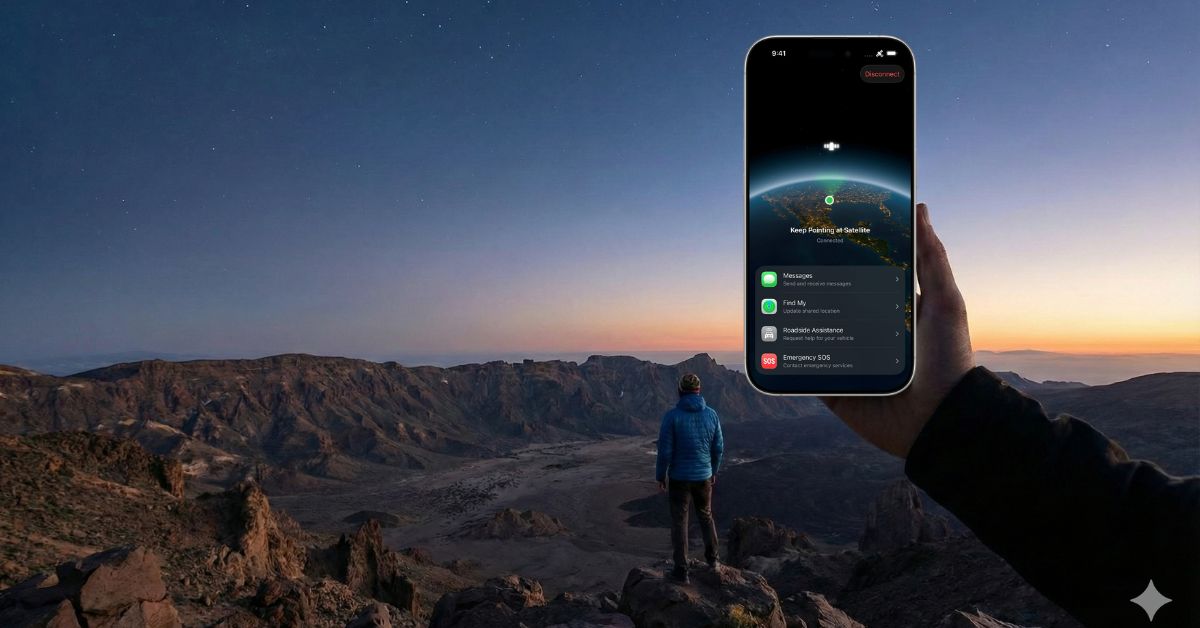
Staying connected isn’t always guaranteed, especially when you are in remote regions or facing a temporary network shutdown. That’s where satellite messaging technology steps in. Your iPhone has the option to connect to satellites orbiting Earth to send and receive messages.
With iOS 26, Apple has made satellite messaging faster, more reliable, and easier to use. In this guide, I’ll break down what satellite messaging is, how it works, which iPhones support it, and how to use it step by step, so you’re never completely off the grid.
What Is Text Message via Satellite on iPhone and How It Works
Satellite messaging allows your iPhone to communicate through low-Earth-orbit satellites when cellular or Wi-Fi connections are unavailable. Instead of connecting to a tower nearby, your phone points toward a satellite in the sky to send your message.
Here’s how it works:
- Your iPhone detects that you have no signal.
- It automatically sends a Use Messages via Satellite notification.
- You point your phone toward the sky so it can lock onto a satellite.
- Your message is compressed, optimized, and sent through the satellite network. It stays end-to-end encrypted for privacy and can take 30 seconds to a minute (or longer under trees) to send.
- The message reaches Apple’s relay stations and then gets delivered to the recipient.
You can send standard texts, location information, and emergency messages if needed.
Supported iPhone Models, iOS Versions, and Countries
Satellite texting is available on:
- iPhone 14 series
- iPhone 15 series
- iPhone 16 series
- iPhone 17 series
These models include the necessary satellite antennas and hardware to connect to low-Earth-orbit networks. You must be running iOS 18 or later to access the latest satellite messaging features.
However, if you purchased your iPhone in Armenia, Belarus, China mainland, Kyrgyzstan, Kazakhstan and Russia, the feature is unavailable. In Hong Kong and Macao, satellite connectivity is only offered on iPhone 16e and later.
Supported Countries/Regions
Apple continues expanding availability, but satellite messaging is supported in:
- The United States
- Canada
- Mexico
- Japan
Emergency SOS via satellite covers more countries, including parts of Europe, Australia, New Zealand, and Japan.
Before You Go Off-Grid
After you ensure you can access the satellite features, you need to do a basic setup while having an active internet connection:
- Enable iMessage: go to Settings > Apps > Message and toggle on iMessage.
- Active SIM: Your iPhone must have a working SIM card or eSIM.
- Set up Family Sharing and add emergency contact: Members of your Family Sharing group, and your emergency contacts can send you an SMS when you’re off the grid without you having to message them first. You will get their messages when you connect to a satellite.
- Urge your contacts to upgrade their iPhone: They must have iOS 18 or later to receive and respond to your messages via satellite.
Tip:
You may practice connecting to the satellite with the demo. Go to Settings > Apps > Messages and tap Satellite Connection Demo.
How to Send a Text Message via Satellite on iPhone
When you’re out of cellular range, your iPhone will automatically offer the satellite option. Here’s how to use it:
- Open the Messages app and start a new conversation or open an existing one.
- If you have No Service, you’ll see an alert. Tap Use Messages via Satellite on the prompt.
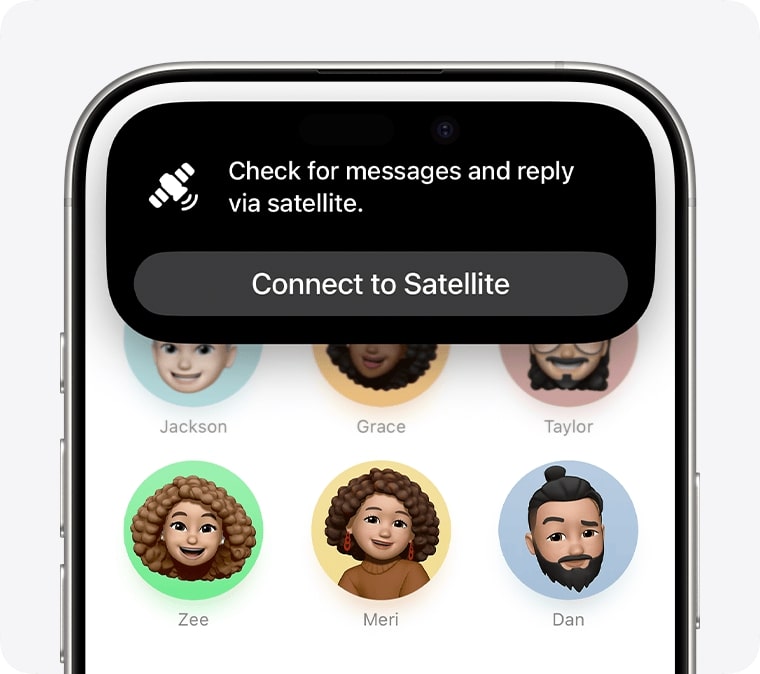
Image credit: Apple
- If you have No Service, you’ll see an alert. Tap Use Messages via Satellite on the prompt.
- Compose your message as usual. Keep it short, as satellite bandwidth is limited.
- Follow the on-screen instructions to point your iPhone toward the sky. Your phone shows arrows guiding you to position it correctly.
- Hold your phone steadily without raising it until the connection is established. You will see a green dot and a satellite banner on Dynamic Island.
- Once connected, tap the Send button. Messages may take 15–30 seconds to send, depending on the movement of the satellite.
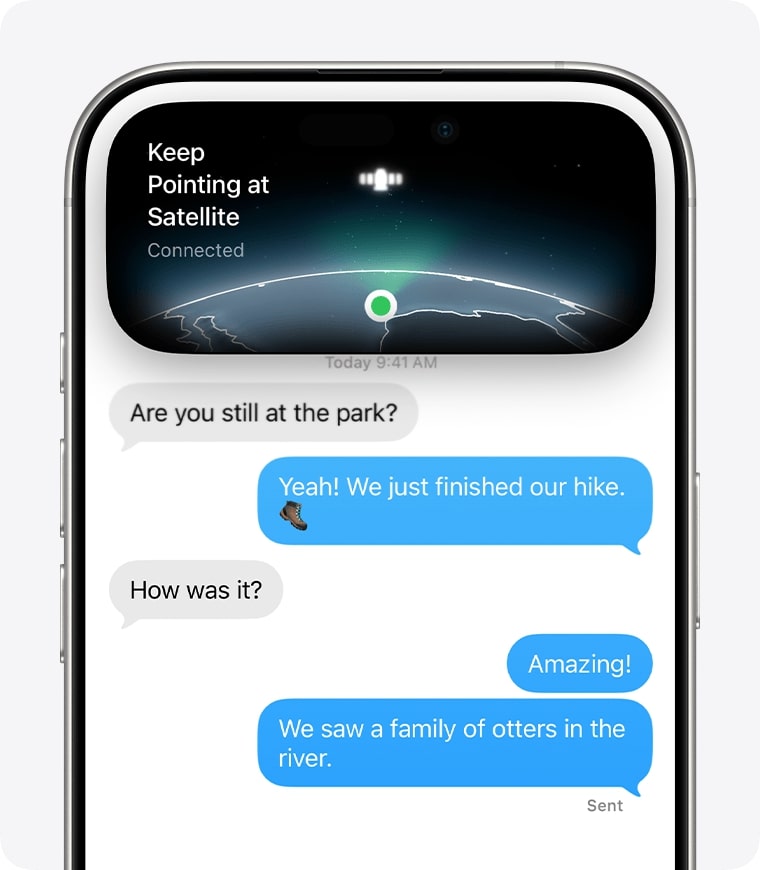
Image credit: Apple
- Once connected, tap the Send button. Messages may take 15–30 seconds to send, depending on the movement of the satellite.
For a stronger satellite connection, stay outside with a clear view of the sky and horizon. Also, avoid tall buildings, mountains, and dense tree cover, as they may restrict the signals. Additionally, it may not work in areas above 62° latitude, such as the northern parts of Alaska.
The best part is that your message will be sent as an SMS via satellite if the contact doesn’t use iMessage, runs an older iOS version, or has a non-Apple device. Also, if you haven’t communicated with them over iMessage in the past month or more, the message becomes SMS.
Note:
Receiving Messages via Satellite in Remote Areas
One question people often ask is: “Can I receive messages via satellite even when I’m back in normal coverage?”
Yes! If someone sends you a text via satellite while you have regular cellular or Wi-Fi, it will simply appear in Messages like a normal SMS. You’ll see an alert that your contact is accepting messages via satellite. To reply to the conversation:
- Type your message and tap the send button.
- A Send via Satellite option appears under the message bubble. Tap it to successfully deliver your message.
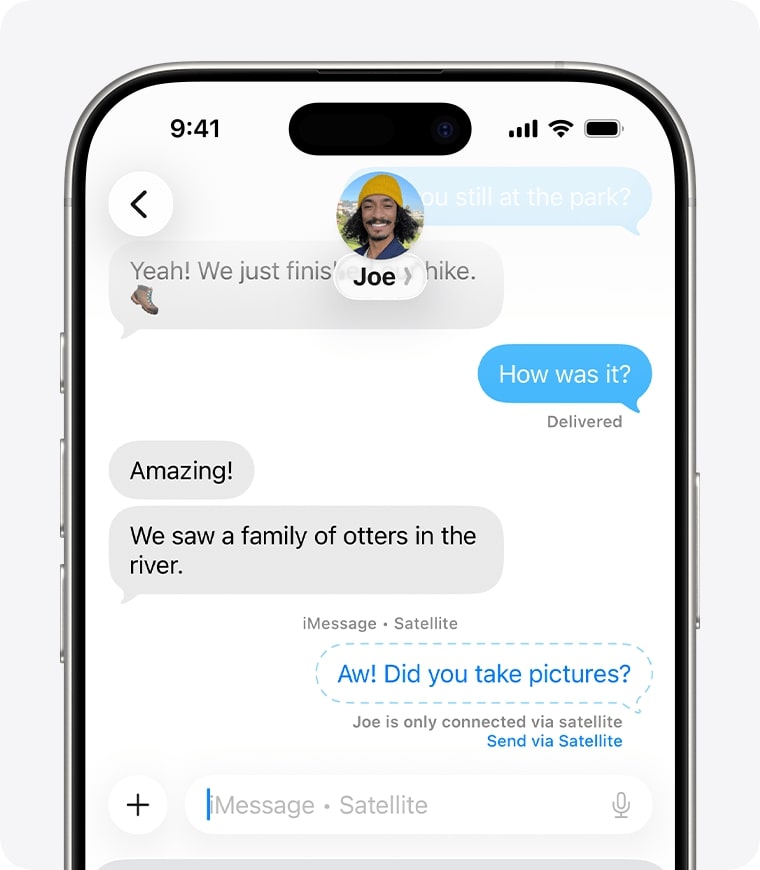
Image credit: Apple
- A Send via Satellite option appears under the message bubble. Tap it to successfully deliver your message.
Once they have a signal, all texts sync. Thus, your friends and family can reach you without a hitch; no different than when you are using normal texting.
Using Satellite Messaging for Emergencies
Satellite messaging is especially valuable in emergency situations. That’s why Apple added satellite SOS features to help you reach help even with no service.
Emergency SOS via Satellite
When you try to call emergency services with no coverage, your iPhone automatically offers Emergency SOS via Satellite. Ensure you have your Medical ID and emergency contacts set up beforehand.
- On the emergency call screen, tap Emergency Text via Satellite.
- Select Report Emergency.
- You will be prompted to answer some emergency questions (injury, stranded, trapped, etc.) to best describe your situation.
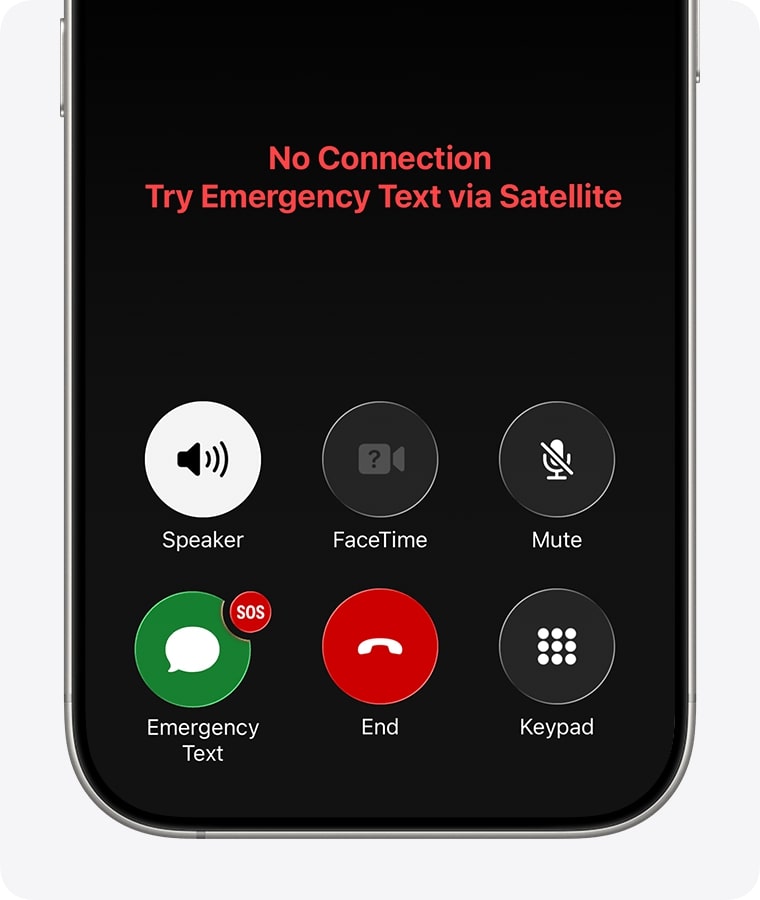
Image credit: Apple
- You will be prompted to answer some emergency questions (injury, stranded, trapped, etc.) to best describe your situation.
- Now, you can alert your emergency contacts about your situation along with your location.
- Follow the onscreen instructions to connect to a satellite.
- After you’ve connected, continue following the instructions to stay connected and deliver your message to the emergency services.
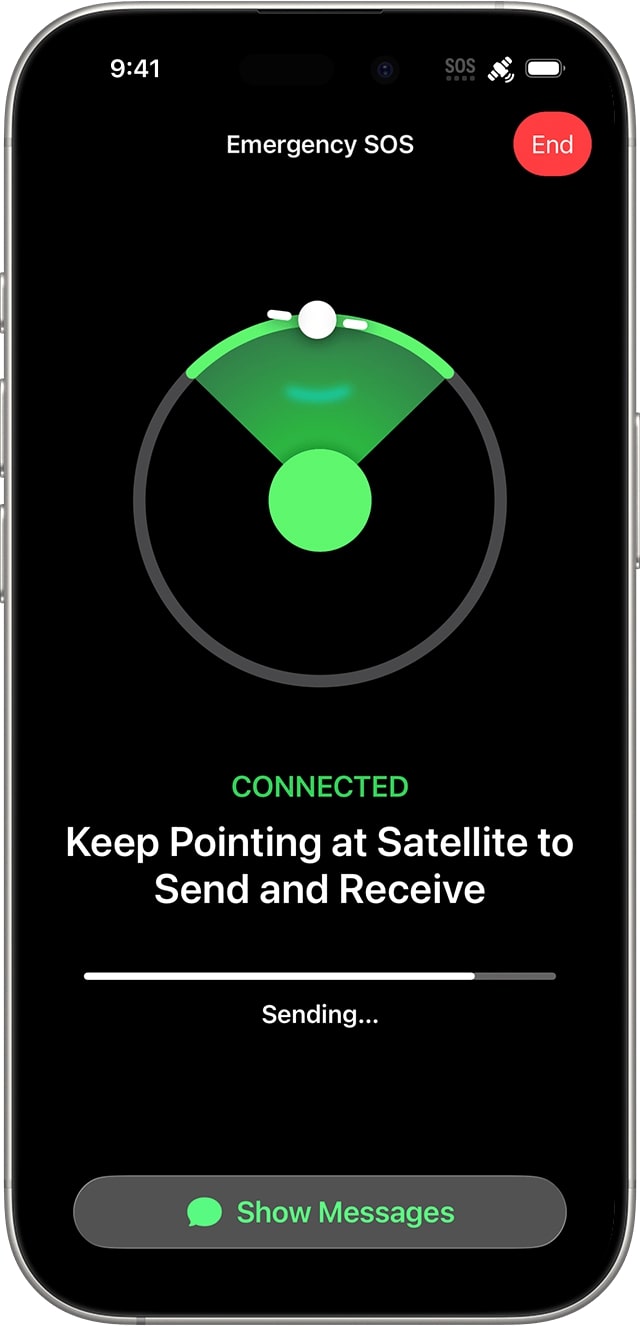
Image credit: Apple
- After you’ve connected, continue following the instructions to stay connected and deliver your message to the emergency services.
Send Location via Find My
While on a trip, I always share my location with my family and loved ones, so they can keep tabs on my whereabouts. Now, even if you go off-grid, you can continue sharing your location thanks to satellite support in Find My.
- Open Find My, go to the Me tab, and select Send My Location under My Location via Satellite
- Follow the onscreen instructions to connect to the satellite and send the message successfully. It may take a few minutes.
- Your contacts can see your most recent location for up to 7 days, even when you’re offline.
Great for hiking, camping, and road trips. However, you can’t see your friend’s location on Find My while on satellite.
Request Roadside Assistance via Satellite
In supported countries, you can request help from roadside services if your car breaks down and you have no signal.
To get Roadside Assistance via satellite:
- Open Messages and tap the pen icon.
- Enter Roadside in the To field.
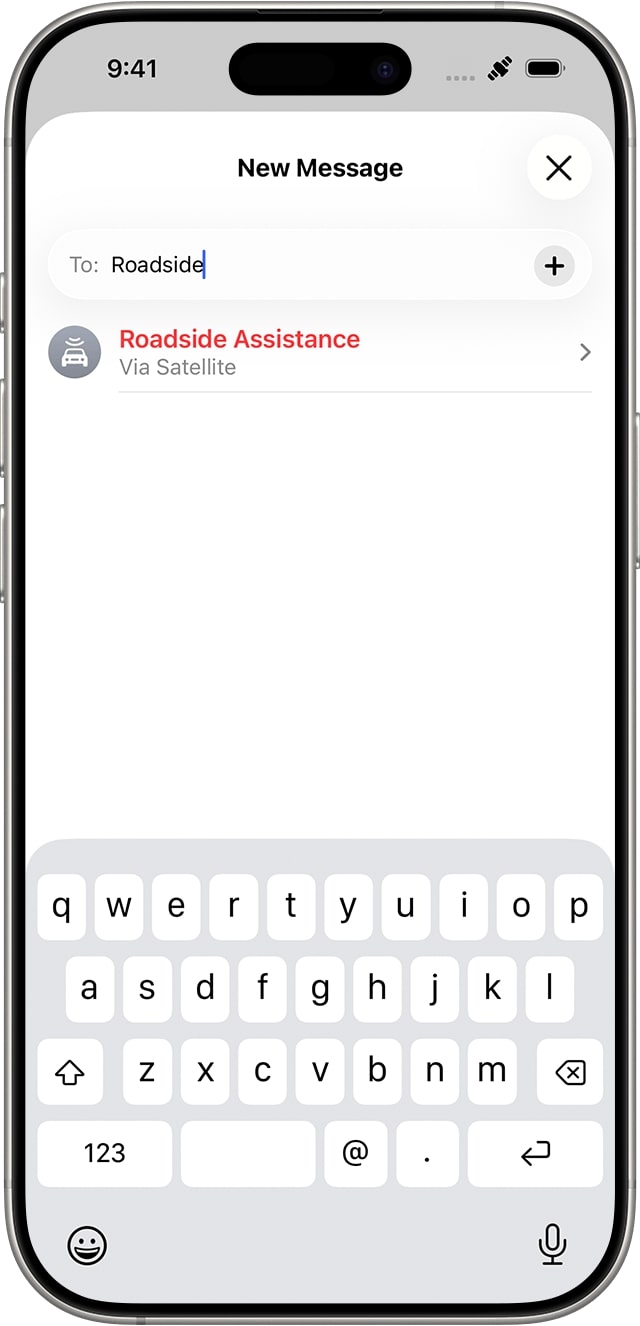
Image credit: Apple
- Enter Roadside in the To field.
- Now, tap Roadside Assistance.
- Describe your situation like dead battery, flat tire, out of fuel, etc. along with your car model name.
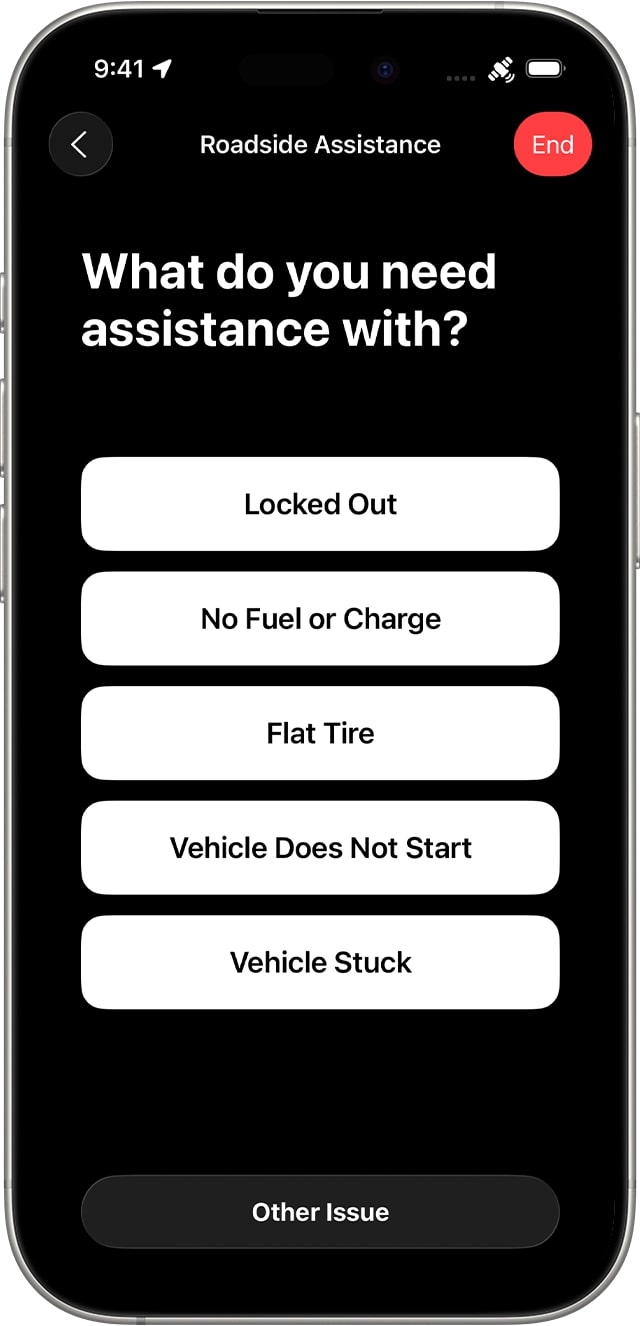
Image credit: Apple
- Describe your situation like dead battery, flat tire, out of fuel, etc. along with your car model name.
- Follow the steps to connect to a satellite and start a conversation with an assistance provider.
Cost and Pricing of Satellite Messaging Services
Apple has offered satellite messaging for free for the first two years on new eligible iPhones. The free period starts from your iPhone’s activation date.
Right now, Apple has extended the trial for existing users and hasn’t made post-free-period pricing publicly fixed.
Here’s what you need to know:
- Emergency SOS and all other satellite features are included at no cost as of now.
- Standard satellite messages can become a part of a subscription in the future.
- Roadside assistance can come with third-party charges.
Benefits of Using Satellite Messaging for iPhone Users
Here’s why satellite messaging is a game changer:
- You can keep in touch almost everywhere, including in remote regions.
- Be safe during natural disasters or in case of network outages.
- Works seamlessly with the Messages app; no new app is needed.
- Location sharing improves safety for solo or adventure travelers.
- Privacy focused with end-to-end iMessage encryption.
- Emergency SOS features can truly be lifesaving.
In short, satellite messaging brings peace of mind. It’s especially valuable for adventurers, campers, sailors, rural dwellers, or anyone in disaster-prone areas.
Final Thoughts: Should You Use Satellite Messaging?
Absolutely! If you value safety, travel often, or live in areas with spotty signals, satellite messaging is one of the most important features Apple has ever added.
You may not need it every day, but the moment you find yourself without service, you’ll be glad your iPhone can still reach the outside world. iOS 26 makes the entire process smooth, intuitive, and reliable, turning your iPhone into a communication lifeline when you need it most.
If you haven’t tried the feature yet, take the demo today and be ready for any unexpected situations. Stay safe!
Read more:

Written by
Ava BiswasAva is a die-hard Apple aficionado and seasoned writer with a knack for breaking down complex tech concepts into easily digestible content. Having honed her writing and editing skills over 4 years at renowned media houses like TechBurner, Ava crafts informative and engaging articles including troubleshooting guides, product reviews, editorials at iGeeksBlog. When not typing, you can find her exploring the latest Apple releases or pondering the future of tech innovation.
View all posts →More from How-to

Snapchat Parental Controls: How to Set Up Family Center and Keep Your Teen Safe
Snapchat’s Family Center lets parents monitor their teen’s friend activity and screen time without reading private messages. Here’s how to set it up and what to expect.
 VikhyatMarch 3, 2026
How to Block and Unblock Someone on Instagram
Instagram lets you block or unblock someone in seconds. Follow these simple steps to take full control of your privacy and online peace.
Ava BiswasMarch 2, 2026
Apple Watch Not Responding? 8 Fixes That Actually Work
Is your Apple Watch unresponsive or stuck on a black screen? Here are 8 proven fixes to help you unfreeze it and get it working again quickly.
VikhyatMarch 3, 2026