

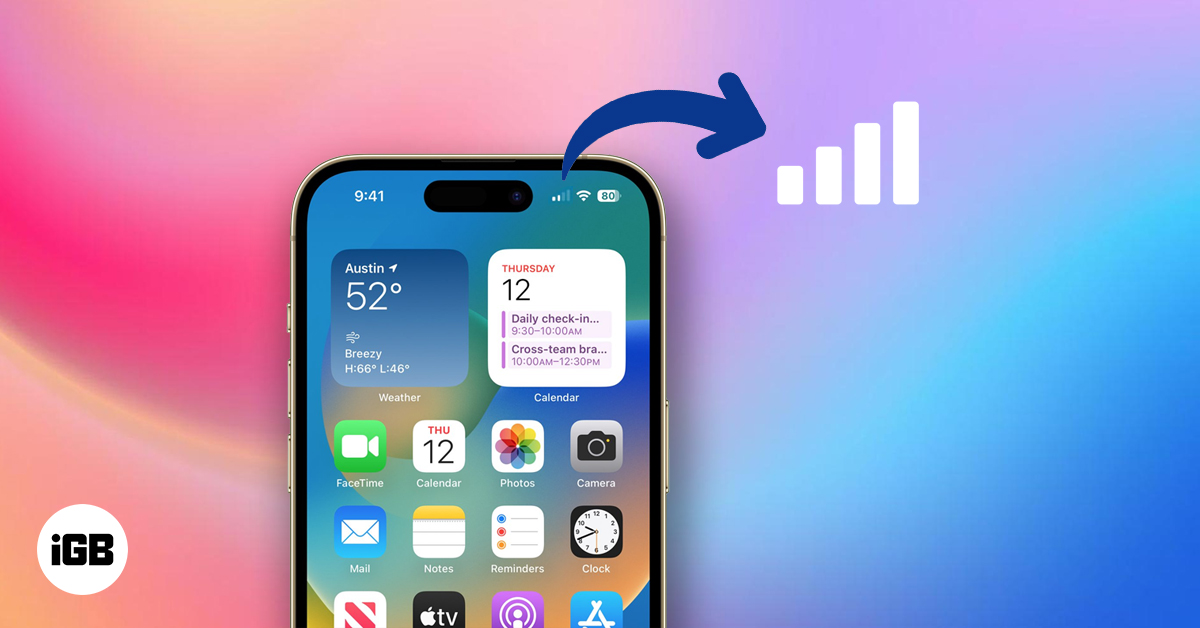
No matter how advanced your iPhone is, it’s of little help if it struggles with basic functions like making calls or accessing the internet.
A weak signal can make everything feel sluggish, whether you’re browsing Safari or sending a simple iMessage or SMS. While it’s common for signal strength to vary based on your location, experiencing consistent issues can be frustrating.
The good news is that you don’t need much technical know-how to improve your iPhone’s network signal. Keep reading to learn how to fix it.
1. Check Coverage in Your Area
Before blaming your iPhone, make sure the problem isn’t with your carrier. You can:
- Visit your carrier’s official coverage map.
- Use apps like OpenSignal, CellMapper, or Speedtest to check network performance.
- Ask neighbors or friends on the same network if they’re having similar issues.
If the signal is weak for everyone around you, the issue is likely related to your carrier’s infrastructure or a nearby tower outage.
2. Toggle Airplane Mode
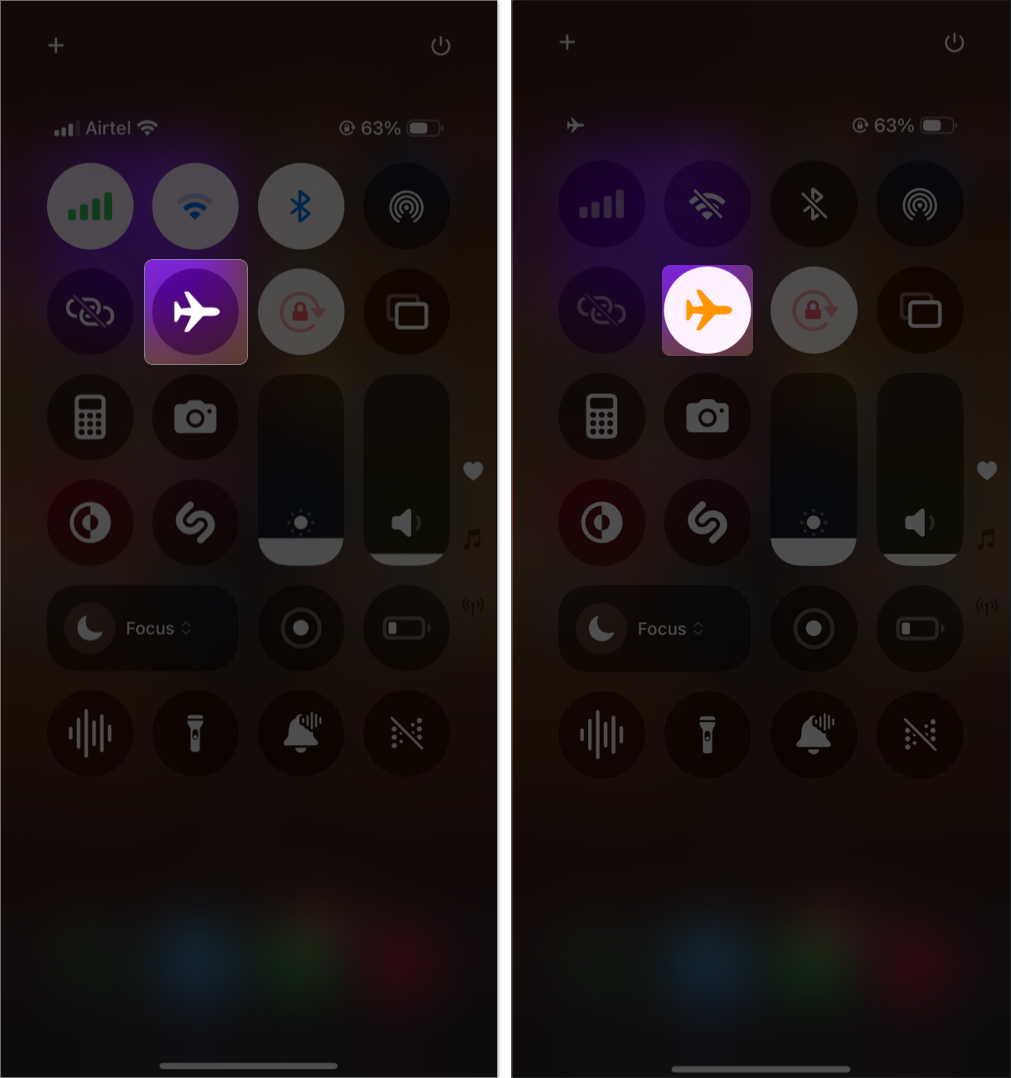
Toggling Airplane Mode on and off is one of the quickest ways to reconnect your iPhone to the nearest cell tower. This action resets the radio connection and often fixes temporary signal problems.
How to do it:
- Pull down the Control Center.
- Tap the Airplane Mode button.
- Wait a few seconds, then tap the icon again to turn it off.
3. Restart Your iPhone
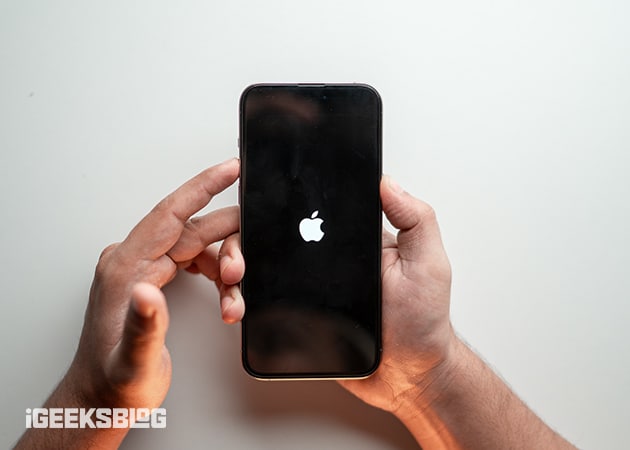
If Airplane Mode doesn’t resolve the issue, try restarting your iPhone. A reboot can clear out background processes or network conflicts that may be affecting signal strength.
4. Update iOS and Carrier Settings
Apple and your mobile provider frequently release updates designed to improve connectivity and fix bugs.
To check for updates:
- Go to Settings → General → Software Update.
- Then navigate to Settings → General → About.
If a carrier update is available, your iPhone will prompt you to install it.
Even if everything seems fine, installing the latest iOS and carrier settings can improve network performance.
5. Reinsert or Replace Your SIM Card
If your iPhone isn’t picking up a signal but other nearby phones are, your SIM card might be misaligned, or the tray could be damaged.
In that case:
- Use a SIM ejector tool to remove the SIM tray.
- Clean both the SIM card and tray with a soft microfiber cloth.
- Reinsert the SIM properly.
If the SIM appears damaged, contact your carrier to request a replacement.
6. Reset Network Settings
Corrupted network settings can lead to dropped calls, missing signal, or an inability to make calls. Resetting these settings can often resolve the issue.
To reset:
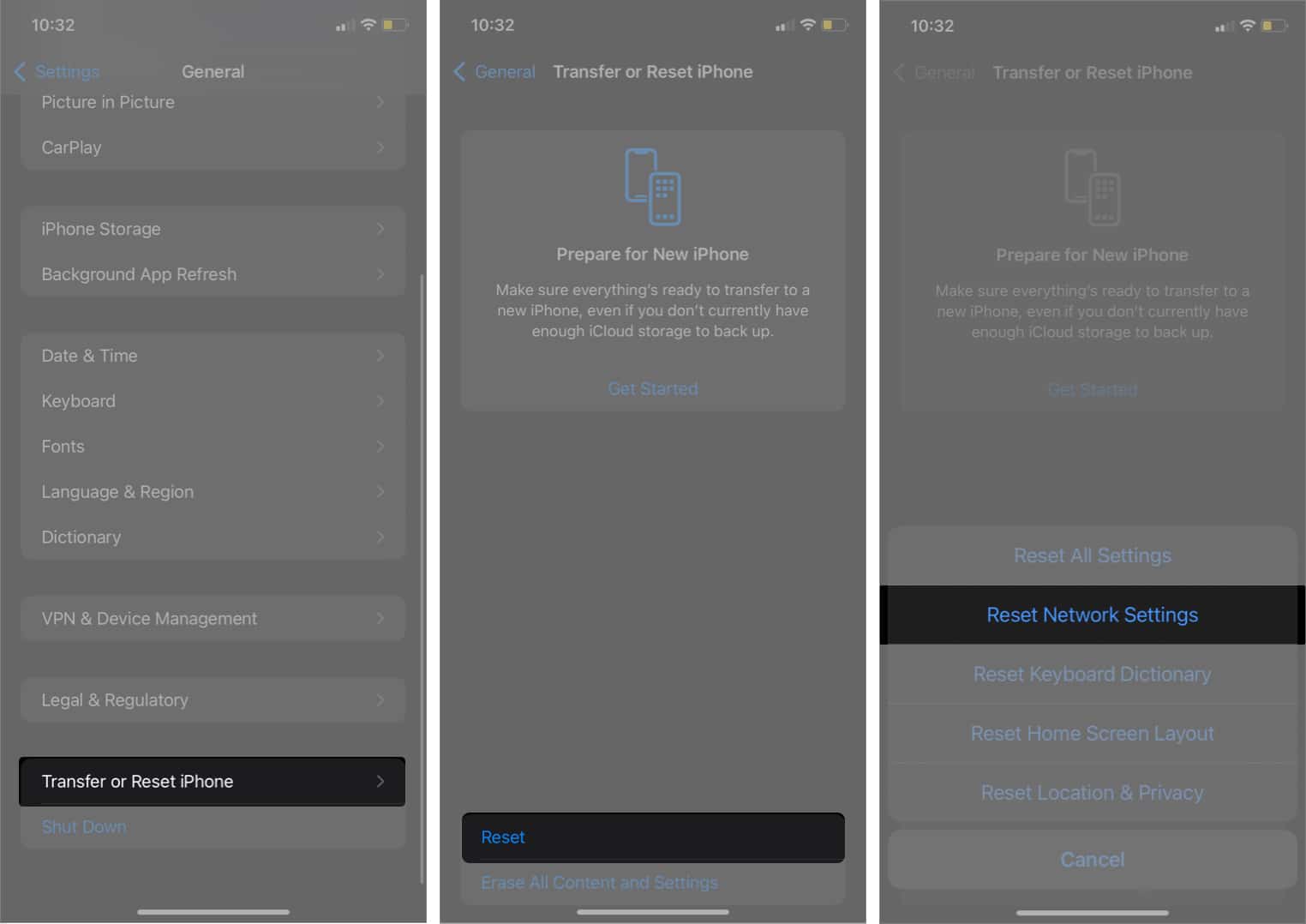
- Open Settings → General → Transfer or Reset iPhone.
- Tap Reset, then select Reset Network Settings.
- Follow the on-screen instructions.
7. Enable Wi-Fi Calling
If your cellular signal is weak but your Wi-Fi connection is strong, enabling Wi-Fi Calling can help. This feature allows your iPhone to use Wi-Fi for calls and texts.
To enable it:
- Open Settings → Apps → Phone.
- Tap Wi-Fi Calling.
- Turn on Wi-Fi Calling on This iPhone.
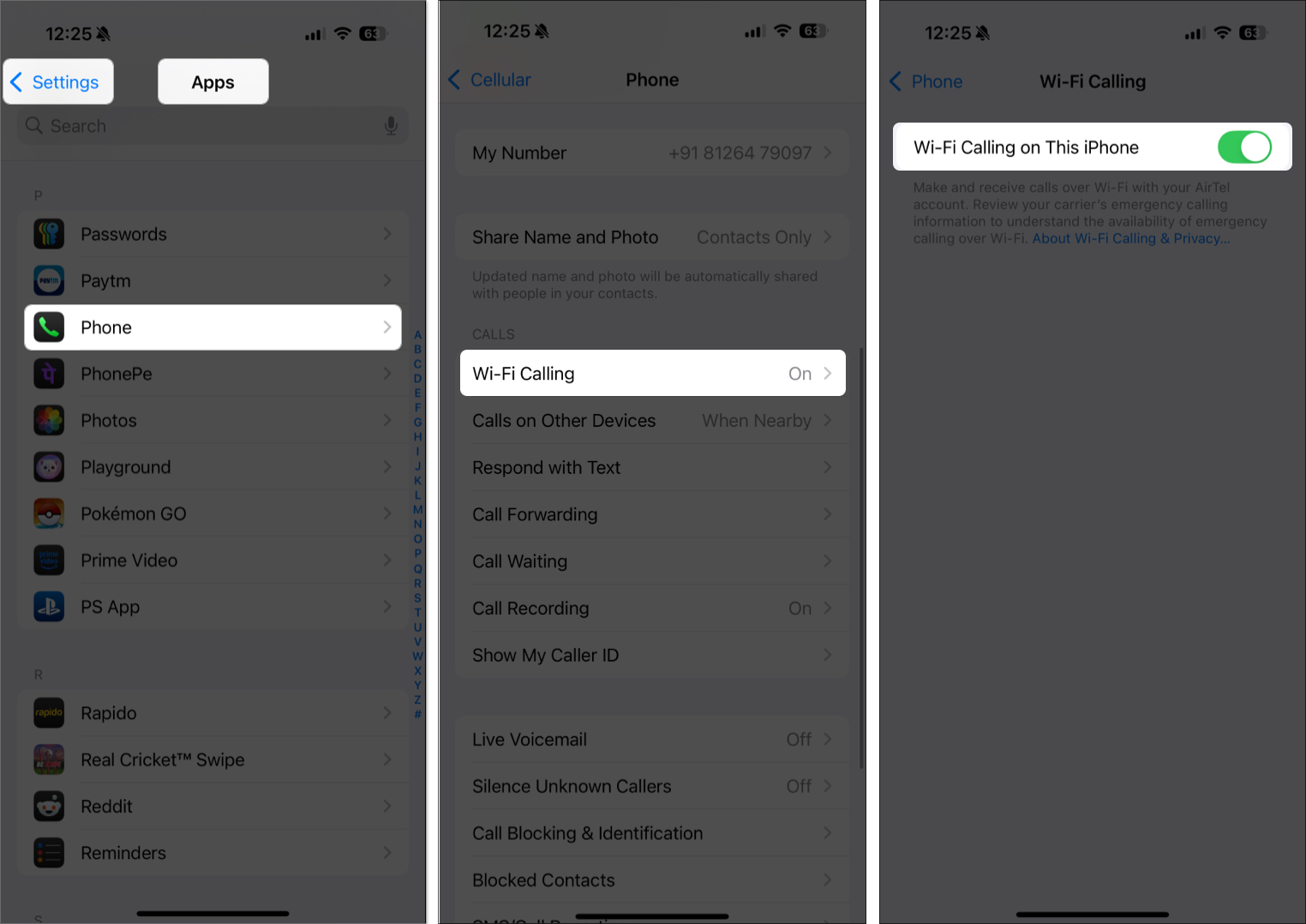

This will allow you to make and receive calls even when you’re in an area with no cellular service.
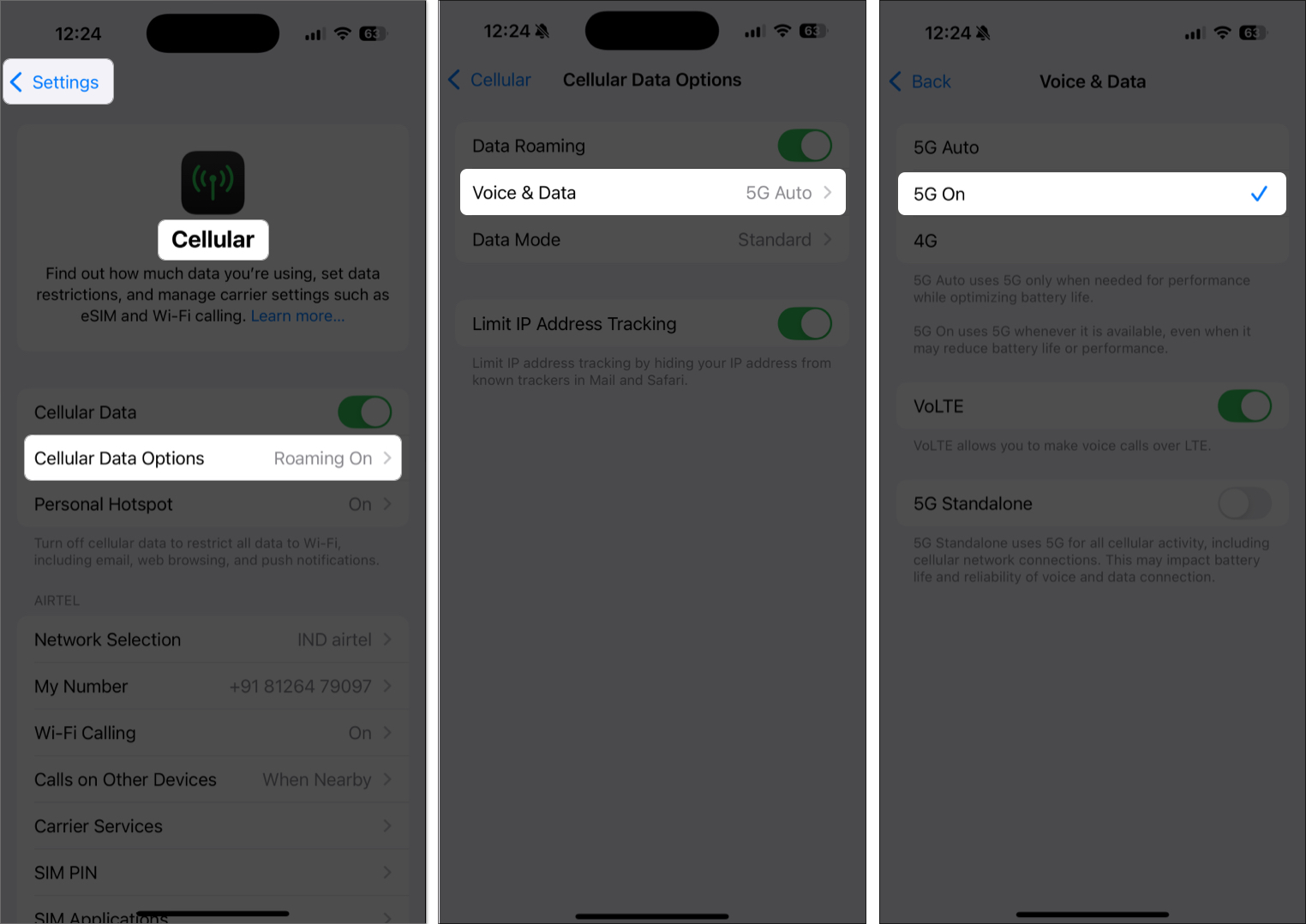
8. Switch to 4G/LTE or Use 5G Auto
If your iPhone is set to “5G On,” it will stay connected to the 5G network even when the signal is poor. This can cause dropped calls and slow data speeds.
It’s better to switch to “5G Auto” so your phone can switch between 5G and 4G/LTE depending on signal strength. You can also manually select 4G/LTE if 5G isn’t reliable in your area.
To change this setting:
- Open Settings → Cellular → Cellular Data Options.
- Tap Voice & Data.
- Choose 5G Auto or 4G/LTE.

9. Use Signal Boosters or Network Extenders
If you live in a remote location or a building with thick walls, a signal booster or network extender can make a big difference.
A signal booster amplifies weak signals from nearby towers and rebroadcasts them inside your home. A network extender works like a small cell tower and plugs into a wall outlet.
Recommended signal boosters (FCC-certified):
Carriers like Verizon and AT&T also offer femtocells or microcells to help you maintain a strong signal indoors.
Note:
10. Contact Your Carrier or Apple Support
If nothing else works, reach out for professional support.
- Contact your carrier to report the issue. They can check for tower problems, re-provision your SIM, or offer a signal booster.
- Use the Apple Support app to run diagnostics that may uncover hardware issues like antenna or modem failures.
- If hardware damage is confirmed, visit an Apple Authorized Service Provider to have your iPhone inspected and repaired.
11. Bonus Tips for Travelers
If you’re traveling and experiencing poor signal, try the following:
- Use an eSIM with a local plan for better network coverage and reduced roaming charges.
- Enable Data Roaming in Settings → Cellular to stay connected outside your carrier’s primary area.
- Manually select a local carrier: Go to Settings → Cellular → Network Selection, turn off Automatic, and choose a local provider.
- Toggle Airplane Mode on and off when switching countries or carriers to refresh the signal.
No More Missed Calls or Dead Zones
Now you know how to stop dealing with poor iPhone signal issues. From simple steps like toggling Airplane Mode to more advanced solutions like installing a certified signal booster or enabling Wi-Fi Calling, these methods can significantly improve your network experience.
Have you tried any of these tips? Let us know what worked best for you in the comments below.