
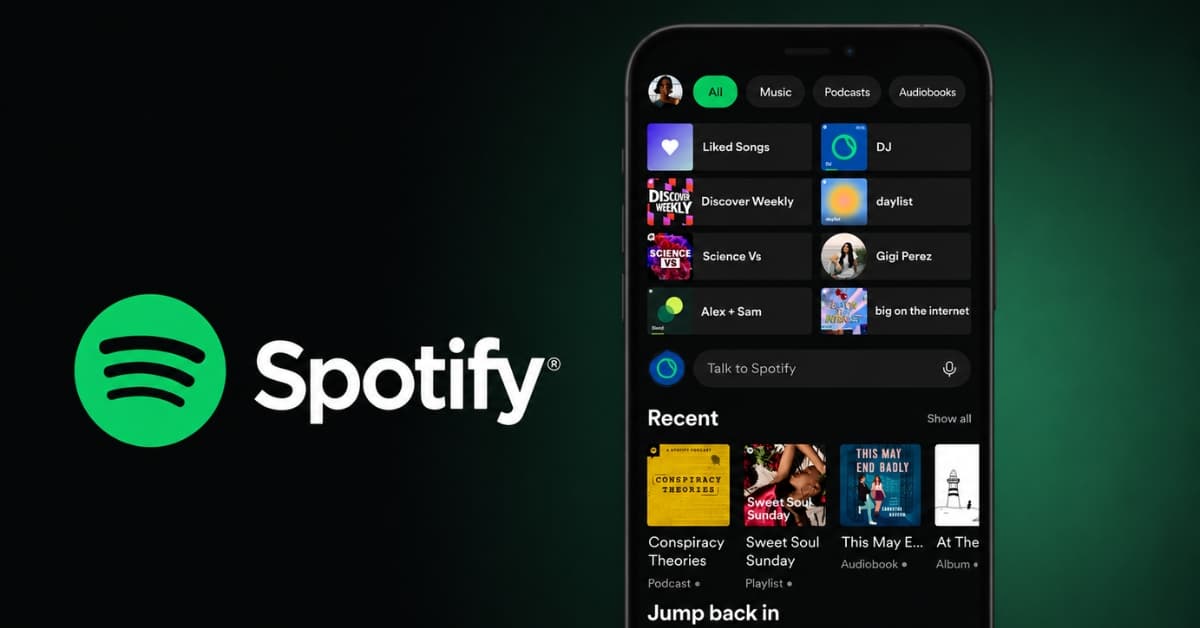
Spotify has spent the last few years adding AI features one by one, from AI DJ to prompt-based playlists. Now, Premium users have a brand-new way to discover and control music with an AI-powered conversational assistant called Talk to Spotify.
Instead of tapping through menus or searching with exact keywords, you can simply talk to the app like you would ChatGPT or Gemini. But after testing those features, I think this is the first feature that actually changes how people will use the app every day.
Spotify is turning into a conversational music assistant
Spotify’s new experience adds a chat box directly inside the Home screen and the Now Playing page on Android and iPhone. You can either type or press the microphone button to speak prompts naturally. Rather than issuing one-off commands, Spotify lets you have an ongoing conversation that keeps the previous context.
That means you can say something like:
- Play some artists I’ve never listened to
- Actually, make it more upbeat
- Only songs from the last five years
Instead of generating a playlist once and making you start over, Spotify lets you keep refining your request through an ongoing conversation. So, it’s a much more natural way to discover new music and generate new playlists than repeatedly editing search terms.
To me, that’s the biggest difference. Previous Spotify searches often felt like filling in a database. This feels much closer to talking with an assistant.
It goes far beyond music search
Most AI features stop after recommending songs. Spotify’s chatbot keeps going.
According to Spotify, you can ask questions about songs and albums, artists and their influences, genres, podcasts, and audiobooks from the Now Playing screen.
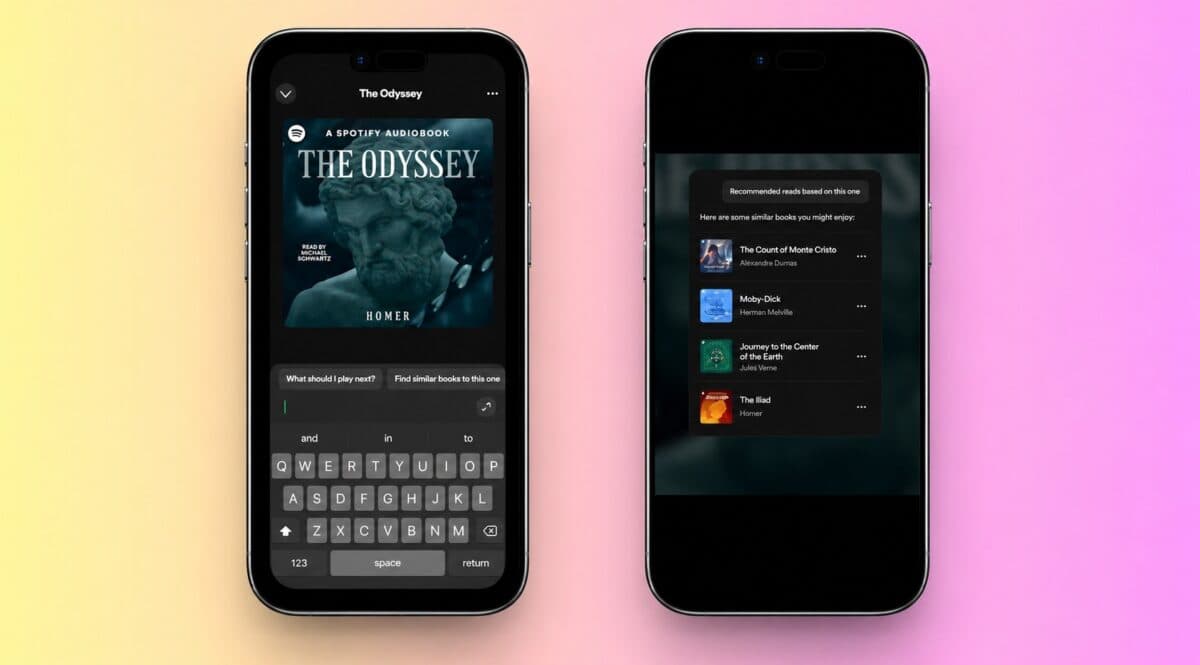
Some examples include:
- What inspired Dua Lipa’s latest album?
- When was this album released?
- What genre is this?
- What other books has this author written?
- What other podcasts has this guest appeared on?
Rather than sending you to a web search, Spotify answers these questions inside the app and can recommend related artists, albums, podcasts, or audiobooks to continue your discovery.
This makes Spotify feel less like a streaming service and more like an entertainment knowledge assistant.
Search your Spotify listening history with AI
This is the feature I would probably use the most.
Spotify already knows an incredible amount about what you listen to, your playlists, favorite artists, repeat listens, and listening history. But most of that data only appears once a year during Spotify Wrapped.
Now you can ask personalized questions about your music habits.
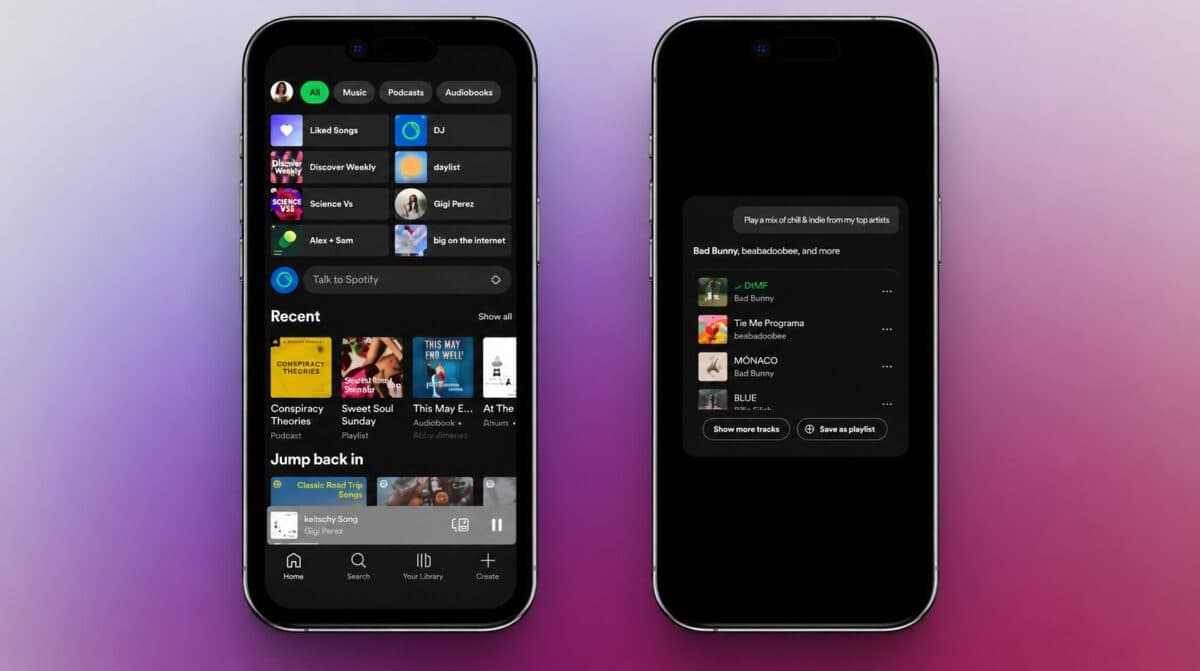
That means you can ask things like:
- When did I first listen to this song?
- Which artists do I play the most?
- How many times have I played this song?
- What genres have I been listening to lately?
- Play songs I loved in 2024 but haven’t played in 2025.
Spotify describes this as a new way to “explore the story of your taste” instead of waiting for Spotify Wrapped at the end of the year.
It can control Spotify too
The chatbot isn’t just there to answer questions. It can also perform actions inside Spotify.
Examples include:
- Add this song to my queue
- Save this track
- Follow this artist
- Play recent releases
- Start a playlist
- Switch what’s playing
This turns the chat interface into a voice-powered remote control for Spotify itself.
Here’s the catch
Not everyone can try it today.
The feature is rolling out gradually in beta and is currently limited to:
- Spotify Premium subscribers
- Users aged 18 or older
- United States, Ireland, and Sweden
- iOS and Android
- English language only
But note that responses won’t always be accurate because the feature is still being developed. Spotify says user feedback will help shape future improvements.
Why this matters
Almost every major tech company has added an AI chatbot over the past two years.
Spotify’s approach feels different because it isn’t trying to become another general-purpose assistant. Instead, it’s using something no other chatbot has: years of your personal listening history.
ChatGPT can recommend music, Claude can generate albums, whereas Gemini can explain an album. However, none of them knows what old song you used to listen to every single day three summers ago or what genre has gradually become your favorite one recently.
That’s the advantage Spotify is leaning into.
If the beta works as advertised, this could become the fastest way to interact with Spotify, especially for people who spend more time searching than actually listening.
You may like to read: