


For years, social media has rewarded one thing above everything else: reach. More views, more followers, and bigger audiences have become the goal on nearly every platform. Whether you open Instagram or TikTok, success often comes down to how many people your content reaches.
Snapchat’s new friends-only experience for users under 16 takes a different approach. Instead of encouraging younger teens to grow an audience, it keeps sharing focused on mutual friends.
It’s a noticeable shift from the way most social platforms are designed. Here’s what Snapchat is doing differently.
Why most social media apps prioritize public reach
Instagram and TikTok are built around discovery. The better your content performs, the more people the algorithm shows it to. That’s what makes these platforms exciting for creators, but it also means they’re constantly encouraging users to think beyond the people they actually know.
Even if you only want to share with friends, many of these features are designed around public discovery. Public profiles, follower counts, recommendations, trending sounds, and engagement metrics all encourage content that reaches more people.
For adults, that’s simply how social media works today. For younger teens, though, it can change the way they think about sharing. A photo or video stops feeling like something you share with friends and starts feeling like something that needs to perform.
How Snapchat’s friends-only experience works
Snapchat has introduced a dedicated friends-only experience for users under 16, keeping their content within a trusted network instead of pushing it toward a public audience.
Previously, Snapchatters under 16 could post videos to Spotlight, but those posts weren’t linked to their profile. They now have a dedicated profile where they can create, save, and showcase their favorite Stories and Spotlight videos. However, that profile is only visible to mutually accepted friends, and their Spotlight videos are no longer shown to people outside their friend network.
The experience also removes favorite counts for users under 16, so they won’t see public engagement metrics on their content. Snapchat says the goal is to encourage creativity and self-expression within a trusted audience instead of a broader public one.
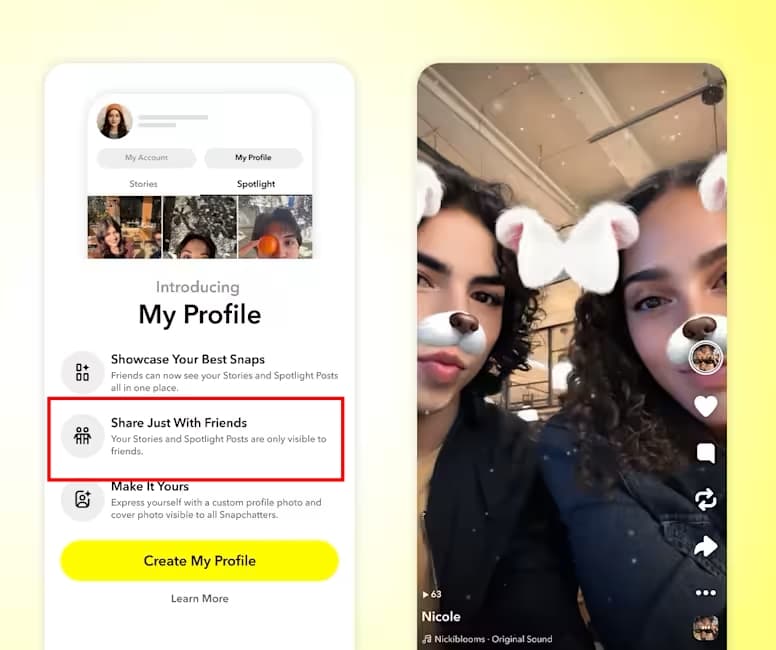
The experience changes as teens get older:
- Ages 13–15: Can create and share content in a friends-only environment. Stories and Spotlight videos are only visible to mutually accepted friends, and favorite counts aren’t shown.
- Ages 16–17: Can choose to share publicly with additional safeguards, limited distribution, and parental visibility.
- 18+: Get full access to public profiles and broader distribution tools.
Why Snapchat’s friends-first approach reduces pressure
The friends-only experience isn’t the only safeguard Snapchat has built for younger users. Every account under 18 uses stricter privacy settings by default, and teens can’t receive messages from people they haven’t added as friends or don’t have in their contacts. If Snapchat detects they’re chatting with someone they may not know, it shows a warning and encourages them to block or report the account.
Snapchat also reviews public content before recommending it to a broader audience, helping reduce the chances of teens being exposed to inappropriate content. Parents can use Family Center to see their teen’s friends list, recent contacts, set content restrictions, disable My AI, share location, and report concerning accounts.
Together, these features reinforce Snapchat’s broader philosophy: younger teens shouldn’t need a public audience to enjoy social media.
Why Instagram and TikTok still optimize for reach
Instagram and TikTok are built to help content travel beyond your followers. A single Reel or video can quickly reach people who have never interacted with your account before. That’s the foundation of both platforms, and it’s why they’ve become so valuable for creators, businesses, and influencers.
Features like public profiles, recommendations, follower counts, and engagement metrics all support that goal. The more people your content reaches, the more opportunities you have to grow an audience.
Snapchat isn’t rejecting this model altogether. Instead, it’s delaying it until users are older. Teens aged 13 to 15 stay in a friends-only environment, while public sharing becomes an option with additional safeguards at 16 and 17. Full public profiles and broader distribution only arrive at 18.
Could this be a better model for younger teens?
Snapchat’s friends-only experience isn’t likely to change how Instagram, TikTok, or YouTube work. Those platforms rely on public discovery because that’s how creators, businesses, and communities reach new people.
Snapchat has gone in a different direction for younger teens. Instead of introducing them to public sharing from the start, it keeps the experience centered on friends and gradually expands it as users get older.
Public reach has become the default across social media. Snapchat is one of the few major platforms treating private sharing as the starting point instead.
Do you think more social platforms should introduce a friends-first experience for younger teens? Let us know in the comments.
In case you missed: