
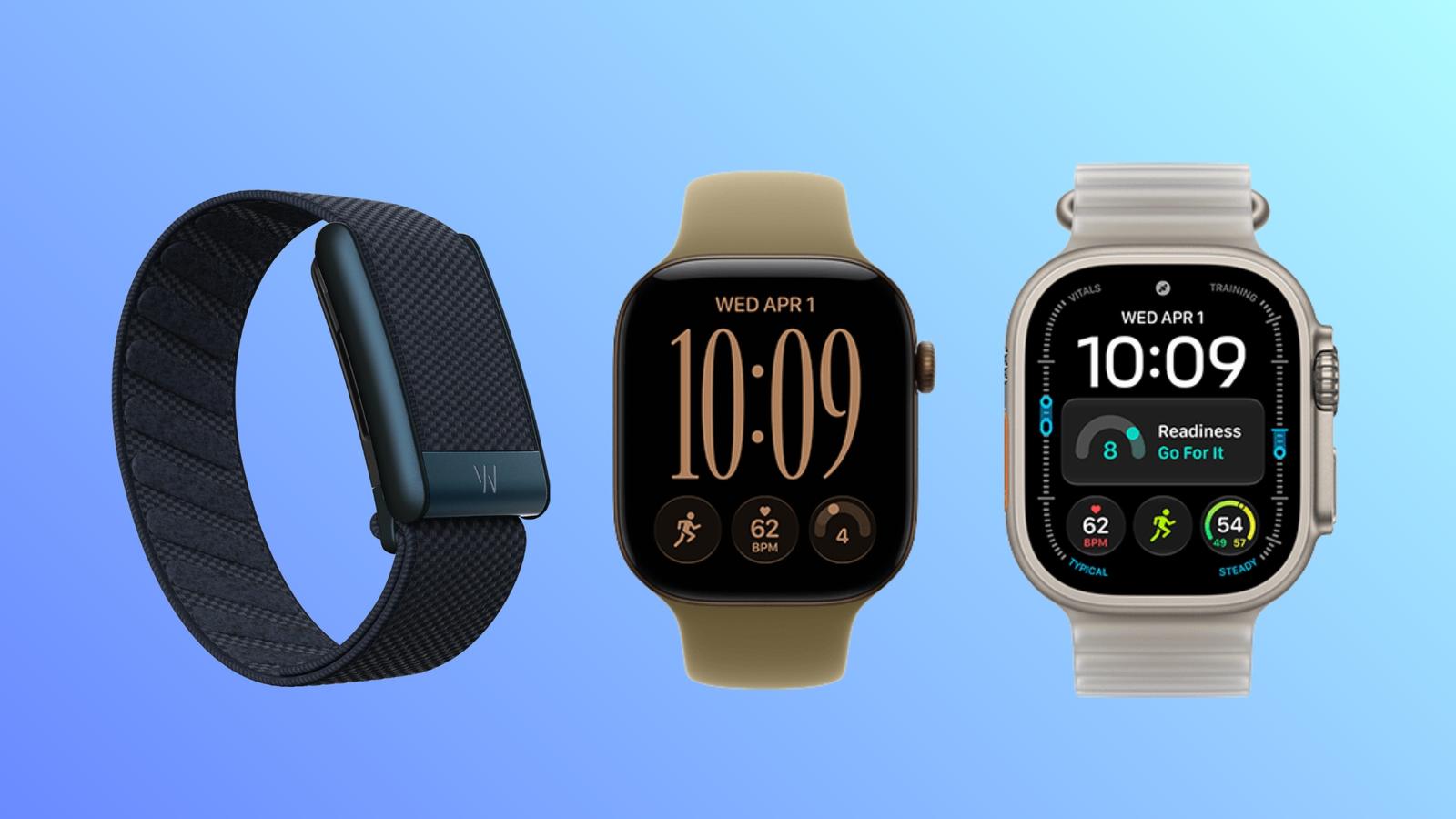
Fitness wearables have evolved far beyond counting steps. In 2026, the real question is whether your device can help you sleep better, train smarter, and understand when your body needs recovery. That’s what makes the comparison between WHOOP 5.0, Apple Watch Series 12, and Apple Watch Ultra 4 so interesting.
WHOOP built its reputation on recovery tracking and personalized coaching. Apple Watch combines health monitoring with smartwatch convenience. With the latest Apple models, launched in September 2026 at $399 (Series 12) and $799 (Ultra 4), introducing a dedicated Readiness score and more frequent heart rate monitoring, the difference between these two approaches has narrowed.
If your Apple Watch can now help you understand your recovery, is WHOOP still worth paying for? The answer depends on how you train, how much you value personalized insights, and whether you want one versatile device or a dedicated recovery tracker.
WHOOP vs Apple Watch: Quick comparison
| Feature | WHOOP 5.0 | Apple Watch Series 12 | Apple Watch Ultra 4 |
|---|---|---|---|
| Primary purpose | Recovery and performance | Everyday health and fitness | Endurance and outdoor sports |
| Price | Membership from $199/year (device included) | From $399 | From $799 |
| Display | Screen-free | Always-On display | Large, rugged display |
| Recovery | Recovery and Strain scores | Readiness score (0–10) | Readiness score (0–10) |
| Sleep tracking | Sleep stages, sleep debt, sleep need | Sleep tracking and sleep score | Sleep tracking and sleep score |
| Battery | Advertised 14+ days | Up to 24 hours | Up to 50 hours |
| Charging while worn | Yes, with Wireless PowerPack (Peak and Life tiers) | No | No |
| Smart features | Primarily app-based | Calls, notifications, apps, Apple Pay | Calls, notifications, apps, Apple Pay |
| Subscription | Required ($199–$359/year) | Optional services | Optional services |
| Best for | Recovery-focused users | Most iPhone users | Outdoor enthusiasts and endurance athletes |
Design and comfort: Minimalism vs everyday convenience
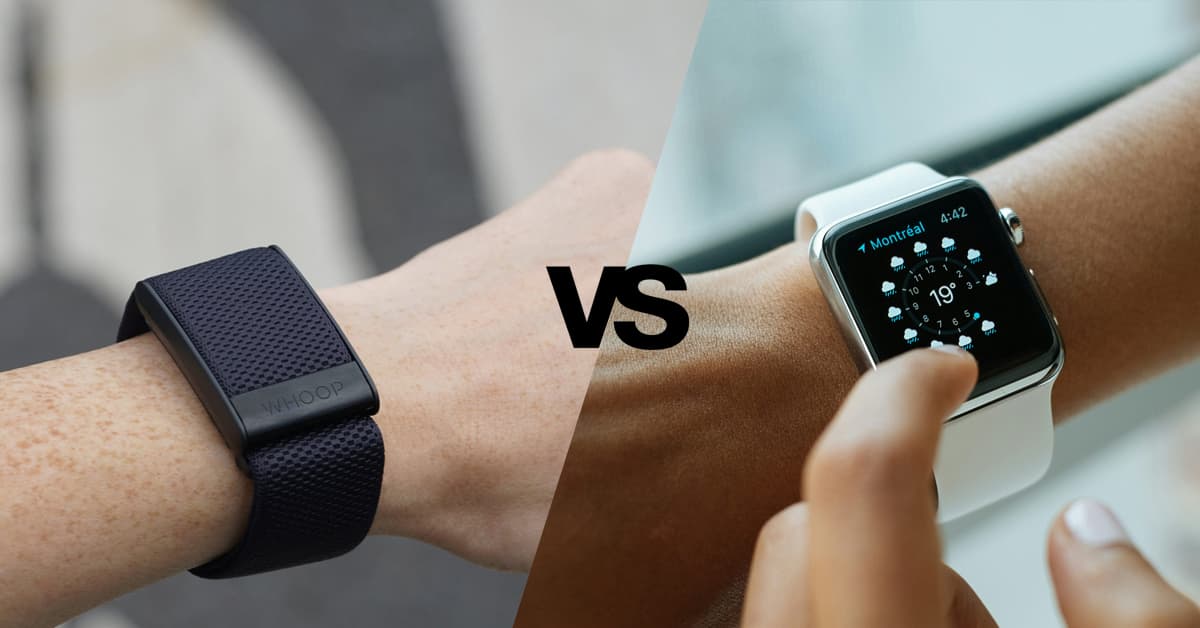
WHOOP’s biggest design advantage is what it leaves out: a screen. There’s no stream of notifications, no watch face competing for attention, and no temptation to check messages during a workout. You wear the tracker, let it collect data, and review your insights in the app.
For people who want continuous monitoring without another screen, that simplicity is appealing. Its Wireless PowerPack (included with the Peak and Life memberships) also lets you charge while wearing it. The downside is that checking your data or interacting with your device requires a phone.
Apple Watch Series 12 takes the opposite approach. Its display, customizable watch faces, interchangeable bands, and on-device controls make it an extension of your iPhone. You can read messages, control your music, pay for products, and track your workouts right from your wrist.
The Ultra 4 takes that experience into more demanding environments. Its titanium construction, sapphire crystal display, customizable Action button, and 100-meter water resistance make it a better fit for outdoor adventures and endurance sports.
The trade-off is size. If you prefer a lightweight wearable that feels unobtrusive during sleep, WHOOP may be more comfortable for your needs.
Verdict: WHOOP wins for screen-free simplicity, Series 12 for everyday convenience, and Ultra 4 for rugged use.
Health and recovery tracking: WHOOP’s biggest advantage is narrowing
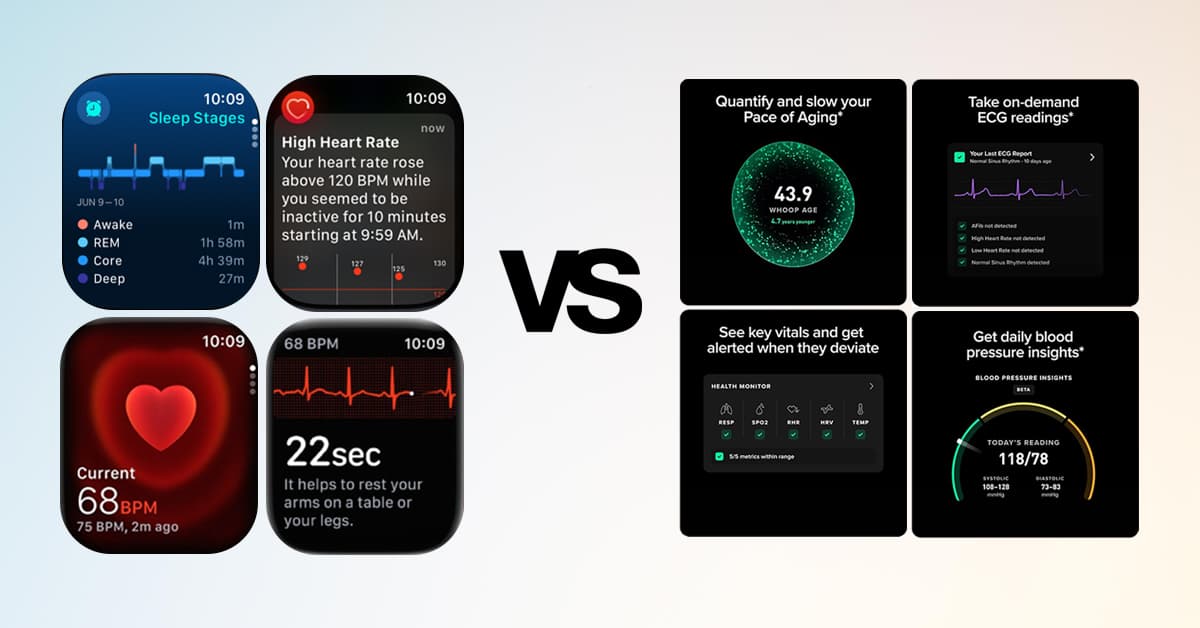
WHOOP organizes its experience around Sleep, Strain, and Recovery. Imagine you’ve trained consistently but have also been sleeping poorly and dealing with a stressful week at work. WHOOP can help you identify patterns linking those habits to your sleep, training, and physiological measurements.
The 5.0 model captures sensor data 26 times per second and adds habit tracking, stress insights, recovery percentage, VO₂ max, respiratory rate, menstrual cycle tracking, and a new Healthspan feature that uses nine long-term health metrics to calculate your WHOOP Age and Pace of Aging. Healthspan and the Stress Monitor require the Peak membership or higher.
Apple introduced the Readiness score in the Series 12 and Ultra 4 to offer recovery guidance alongside everyday health tracking like heart rate zones, blood oxygen, wrist temperature, and built-in sleep apnea detection. Readiness gives you a daily 0–10 score with one of four recommendations: Recover, Pace Yourself, Ready, or Go For It. It needs about a week of overnight wear before your first score appears. Also, its new Health Sensing System measures heart rate every five seconds throughout the day and HRV as often as every five minutes.
For everyday users, the appeal is straightforward: you get a clear starting point for understanding your readiness without needing to interpret multiple charts first.
Verdict: WHOOP remains attractive for people who want recovery coaching at the center of their routine. Apple has narrowed the gap considerably for those who want health tracking and smartwatch functionality in one device.
Battery life: The difference you notice every day
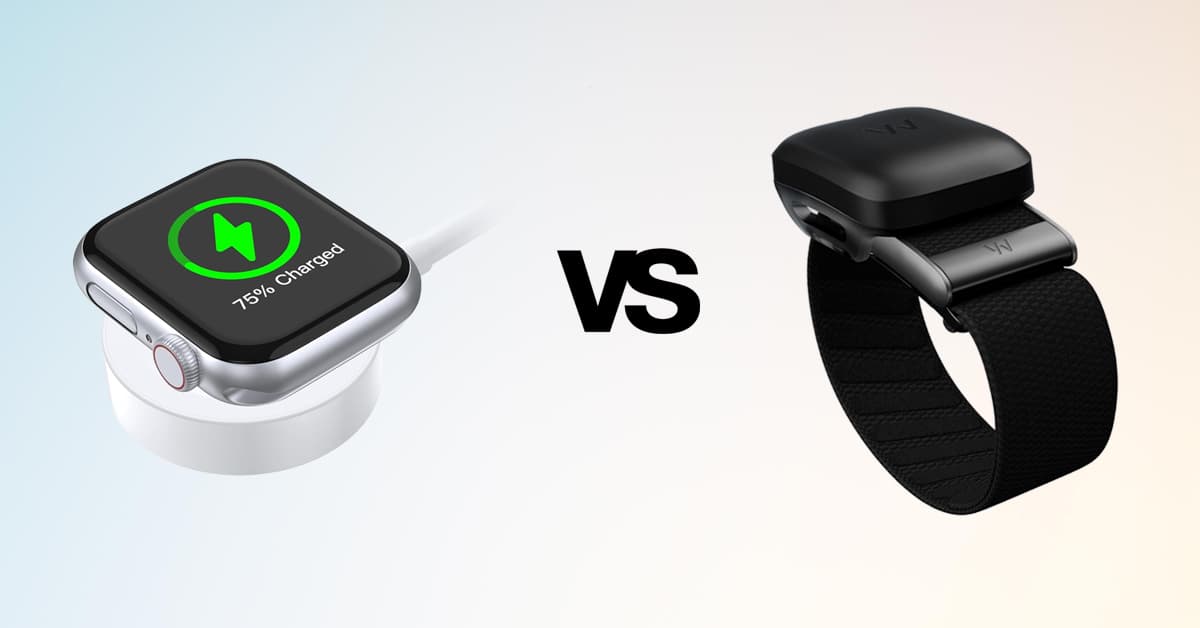
Battery life becomes especially important when you want to track sleep as well as daytime activity.
WHOOP advertises more than 14 days of battery life, depending on the model and usage. Its battery pack lets you charge the tracker without taking it off, making uninterrupted tracking easier.
Apple Watch Series 12 offers up to 24 hours of normal use (38 hours in Low Power Mode), with fast charging that can add up to 12 more hours from a 15-minute charge. That’s manageable if you establish a charging routine. But if you forget to charge before bed, your sleep tracking, and the next morning’s Readiness score, may suffer.
The Ultra 4 offers up to 50 hours of normal use and up to 45 hours of workout tracking in Max Extended Workout mode, making it better suited to long workouts, extended outdoor trips, and days when charging isn’t convenient.
Verdict: WHOOP is better for constant monitoring. Series 12 needs regular charging, while the Ultra 4 offers much more flexibility with extended use.
Subscription costs: Are you paying for a device or a coaching system?
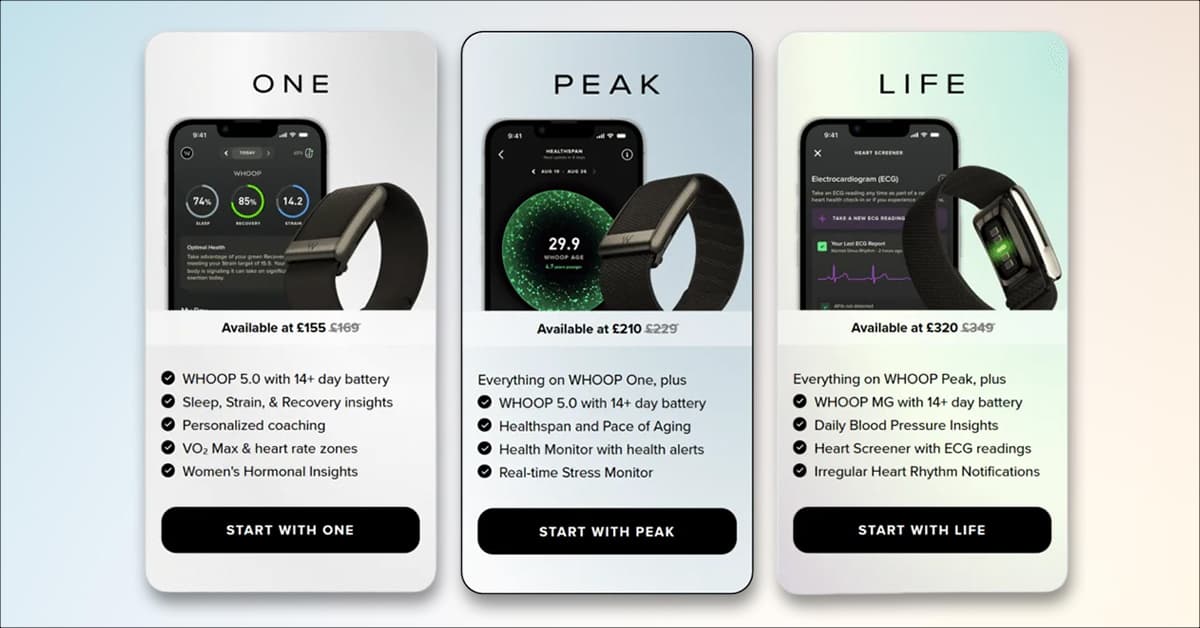
WHOOP combines its wearable with a paid membership in three tiers: WHOOP One ($199/year), Peak ($239/year), and Life ($359/year). Its broader analytics and coaching experience, including Recovery, Strain, sleep insights, and habit-focused features, depends on that ongoing subscription, and some features, such as the sleep and strain coaches and Healthspan, are reserved for Peak and above.
For someone who regularly uses the insights to adjust training and improve sleep, the expense may be worthwhile. But if you only check your recovery score occasionally, the value becomes harder to justify.
Apple Watch works differently. Core features such as heart rate tracking, ECG, sleep tracking, workouts, and Readiness (on Series 12 and Ultra 4) don’t require a separate WHOOP-style membership. You can find your insights and reports in the redesigned Health app. Services such as Apple Fitness+ have their own subscription costs.
Over several years, the difference can be significant, especially if you would otherwise pay for WHOOP alongside an Apple Watch.
Verdict: Apple provides a more straightforward value proposition for the long term. WHOOP is a better option if the coaching features genuinely influence your habits and training.
Smart features: Which device fits your lifestyle?
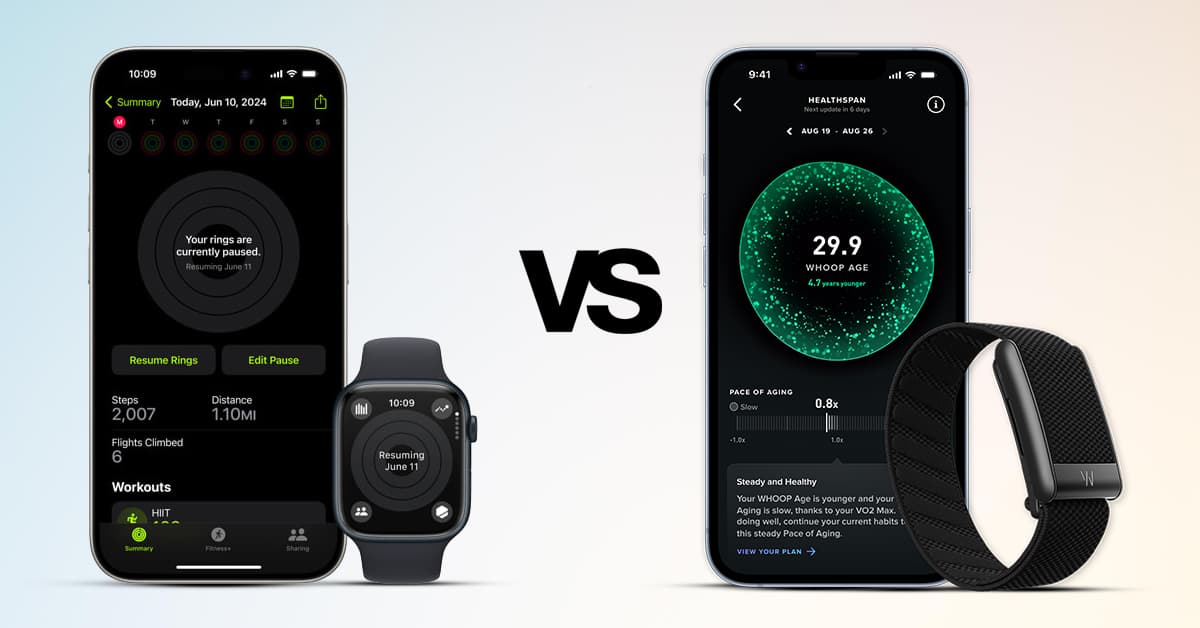
WHOOP intentionally avoids being a conventional smartwatch. Its screen-free design minimizes distractions, while automatic activity detection helps reduce the need to manage every workout manually. But it can’t replace your smartwatch for calls, notifications, navigation, or payments.
Apple Watch handles those tasks directly from your wrist. Series 12 is especially useful if you want to leave your phone in your bag while you walk. It syncs with your iPhone and brings notifications, calls, Siri, Apple Pay, Maps, music control, and Home app smart home controls to your wrist.
Ultra 4 offers much of the same functionality, with a rugged design and an Action button that makes workout and outdoor controls easier to access. With watchOS 27, Apple also continues to develop Apple Intelligence features such as Workout Buddy and Siri AI. Availability depends on device compatibility, language, region, and connectivity.
Ultimately, the decision comes down to your personal preference: WHOOP keeps your wearable quiet, while Apple Watch becomes part of your daily digital life.
Verdict: Apple Watch wins for versatility. WHOOP is a great choice for those who prefer to stay away from distractions.
Accuracy, insights, and privacy
More data doesn’t automatically mean better decisions.
Heart rate, HRV, and recovery scores are different measurements, and one cannot substitute for another. A high HRV reading, for example, doesn’t necessarily mean you’re ready for an intense workout. Your personal baseline, sleep, stress, illness, and recent training all matter.
WHOOP focuses on continuous tracking and recovery-focused analysis. Apple combines heart rate measurements, sleep information, and activity data to provide health trends and Readiness guidance.
The two platforms may produce different recovery scores because they use different algorithms and measurement windows. Neither should be viewed as a medical diagnosis.
Privacy deserves attention, too. Apple provides controls for managing health data on devices and through iCloud, where applicable. WHOOP collects health and behavioral data to power its coaching experience. Review each company’s current privacy policy, connected-app permissions, and data-sharing settings before committing.
Verdict: Choose the platform whose insights you understand and use consistently. Don’t assume that more measurements or a higher recovery score automatically means better health.
Who should buy which wearable?
Buy WHOOP 5.0 if you:
- Prioritize recovery, sleep, and training strain.
- Want personalized coaching and habit insights.
- Prefer a screen-free design.
- Value charging while wearing your tracker.
- Are comfortable paying an ongoing membership fee.
Buy Apple Watch Series 12 if you:
- Want health tracking, fitness features, and smartwatch convenience in one device.
- Already use an iPhone.
- Want Readiness insights without another wearable subscription.
- Prefer a display, interchangeable bands, and on-device controls.
Buy Apple Watch Ultra 4 if you:
- Run long distances, hike, dive, or train outdoors regularly.
- Want longer battery life and a rugged design.
- Need a watch suited to demanding workouts and extended adventures.
Can Apple Watch Series 12 replace WHOOP?
If you bought WHOOP mainly to track sleep and recovery, the latest Apple Watch offers enough insight to eliminate the need for a second wearable and a recurring membership. Its more frequent heart rate measurements, Readiness experience, and consolidated health tracking make sense for casual users.
However, WHOOP hasn’t become irrelevant. Its sleep-need estimates, sleep-debt tracking, Strain framework, and habit-focused coaching remain valuable for people who actively use those features to structure their training.
My recommendation is simple: if you already own a Series 12 or Ultra 4, try its Readiness experience before paying for another tracker. If WHOOP already helps you train more intelligently, compare the insights you actually use before switching.
Final verdict
Apple Watch Series 12 is the best starting point for most iPhone users. It combines health tracking, Readiness, workouts, sleep insights, and everyday smartwatch functionality without requiring a separate recovery membership.
Apple Watch Ultra 4 is the better choice for outdoor enthusiasts and endurance athletes. Its rugged construction and longer battery life make it more suitable for demanding activities.
WHOOP remains compelling for people who want recovery coaching to be the main purpose of their wearable. Its screen-free design and focus on Strain, Recovery, sleep, and habits offer a distinct experience.
Ultimately, the best wearable isn’t the one that produces the most data. It’s the one that helps you make better decisions consistently.
What would you choose: WHOOP’s recovery coaching, Apple Watch Series 12, or the adventure-ready Ultra 4? Share your experience in the comments.
Check out these helpful guides too: