

Regular Snapchat users know that the app automatically creates a Best Friends list based on how often you interact with friends. Your number one best friend is the one you interact with most, followed by up to seven others. While you can easily see your own list, finding your position on someone else’s list isn’t as simple. This is where Snapchat Planets helps.
Exclusive to Snapchat Plus users, it assigns a planet to each of your top eight friends. By checking which planet you are in someone’s Snapchat solar system, you can find your place on their Best Friends list.
This post details everything you need to know about Snapchat Planets.
What do the planets mean on snapchat?
Let’s start with the basics. Snapchat Planets, sometimes called the Friend Solar System, is a premium feature for Snapchat Plus members on iPhone. It’s available in more than 25 countries (including the US, UK, France, Canada, India, and more). I keep it toggled on, because I like peeking at my little orbit after a busy weekend.
Here’s how it works:
- You are the Sun in your own Snapchat universe.
- Your top 8 friends become planets, from Mercury to Neptune, based on how much you interact with each person.
The closer a friend’s planet sits to your Sun, the more you snap and chat with them. And yes, this universe is totally private, only you can see where your friends’ “orbit” you. It updates often, so the order can shift as your friendships and activity change. I’ve watched mine shuffle after a streak streaks out, then comes back the next day.
How does the snapchat planets system work?
Once Friend Solar System is turned on in Snapchat Plus, Snapchat quietly tracks snaps, chats, and streaks in the background. Based on that activity, it assigns each of your top eight friends a planet, from Mercury, closest, to Neptune, farthest.
- You are always the Sun in your solar system.
- Mercury goes to your number one bestie; the person you interact with the most.
- The rest, Venus, Earth, Mars, Jupiter, Saturn, Uranus, Neptune, follow in order based on your interactions.
- The arrangement can shift as your habits change.
A fun twist, your place in someone else’s solar system might be completely different. You could be their Mercury, while they sit as your Jupiter. That is just how the universe spins.
Snapchat planets order and meanings
The planets stay in the same order as our actual solar system, only with a playful digital twist built for Snapchat. Here’s what each planet means, and what that placement says about your friendship rankings in this feature.
What snapchat planets in order reveals about your best friends?
| Planet | Rank | Emoji Colors & Symbols | Friendship Vibe |
|---|---|---|---|
| Mercury | 1st | Red planet, red hearts, stars | Ride-or-die best friend, most interactions |
| Venus | 2nd | Golden/light brown, pink/yellow/blue hearts | Strong, regular connection |
| Earth | 3rd | Blue & green, red hearts, moon | Loyal, stable friendship |
| Mars | 4th | Reddish-orange, purple/blue hearts | Fun, energetic bond |
| Jupiter | 5th | Orange with dark stripes & stars | Big personality, positive vibes |
| Saturn | 6th | Yellow-orange, ring, stars | Reliable and meaningful conversations |
| Uranus | 7th | Green, yellow stars | Unique but infrequent chats |
| Neptune | 8th | Blue, cold visuals, minimal stars | Distant, occasional interaction |
Snapchat’s Friend Solar System is more than a label for a list. Think of it as a tiny space map that reflects closeness. Each planet icon in this system carries meaning. It hints at how often you two chat or swap snaps, the strength of the bond, and the general vibe between you. Not just a picture. A signal.
In your Snapchat world, you are always the Sun. Everything centers on that. The eight closest friends appear as planets orbiting around you, each with its own emoji. The nearer a planet sits, the tighter the connection in daily use, chats, snaps, and streaks. The ranking shifts as habits change, so a burst of late-night chats can pull someone closer, while quiet weeks can nudge them outward. It maps activity, but it also mirrors the feeling of friendship, not only the count.
Here is what each planet means for your top friends, both in how it looks and what it suggests about your relationship:
Mercury: your #1 best friend

- Meaning: Mercury sits closest to the Sun, so it marks the friend you interact with the most through snaps and chats. The absolute top spot.
- Visual Representation: A red planet with several red hearts, sometimes tiny stars or sparkles.
- What It Says About Your Friendship: Daily snaps, long streaks, quick replies. This is your ride or die on Snapchat, the friend who shows up in stories and DMs all the time.
Venus: your second closest friend

- Meaning: Venus goes to the second most active connection in your list. Strong activity, just a step behind Mercury.
- Visual Representation: A light brown or golden planet surrounded by colorful hearts, often pink, yellow, and blue.
- What It Says About Your Friendship: Consistent energy. Regular snaps and chats, steady rhythm, only a touch lighter than your top spot.
Earth: your third closest friend

- Meaning: Earth lands on the third position in your Friend Solar System.
- Visual Representation: Blue and green planet with a moon, stars, and red hearts orbiting.
- What It Says About Your Friendship: Reliable and loyal. You two interact often, and the connection feels balanced and supportive.
Mars: your fourth closest friend
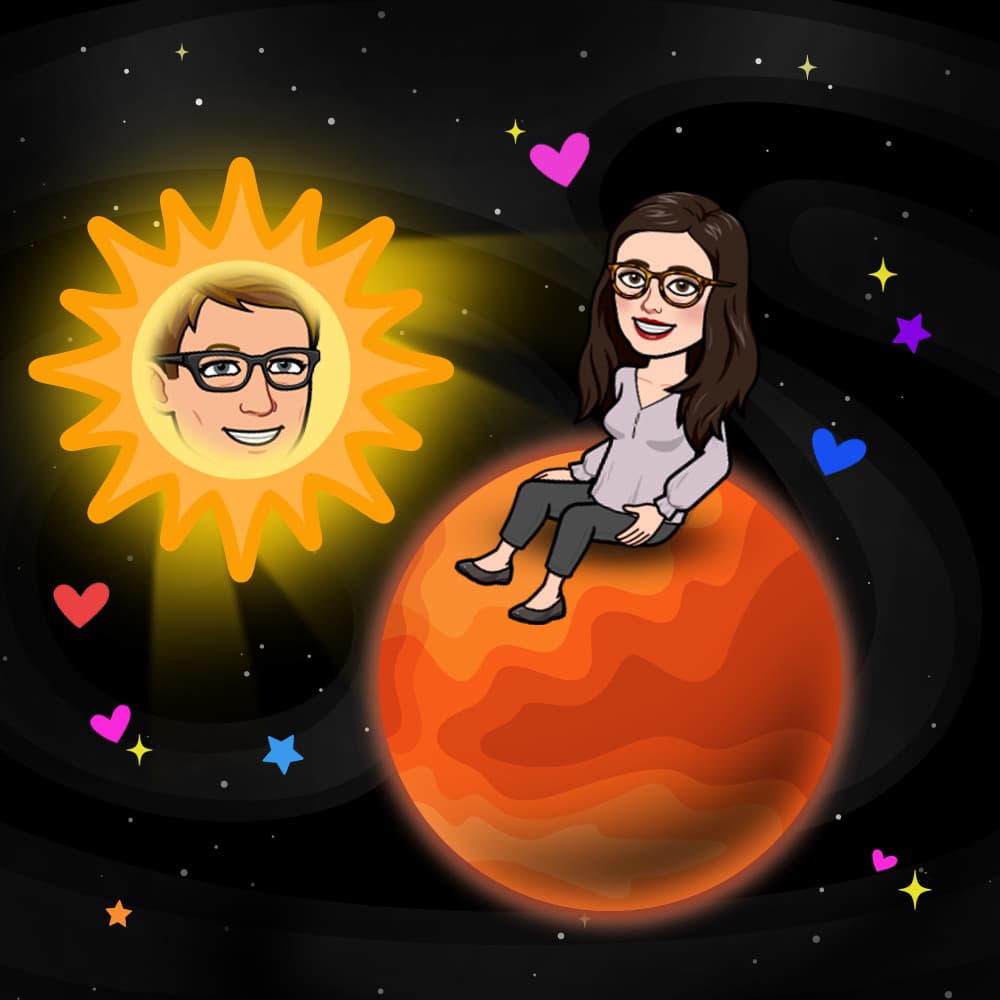
- Meaning: Mars tags the fourth most interactive friend.
- Visual Representation: A red or reddish orange planet, often with purple and blue hearts plus stars.
- What It Says About Your Friendship: Plenty of spark. Maybe not every day, yet the chats feel lively when they happen.
Jupiter: your fifth closest friend
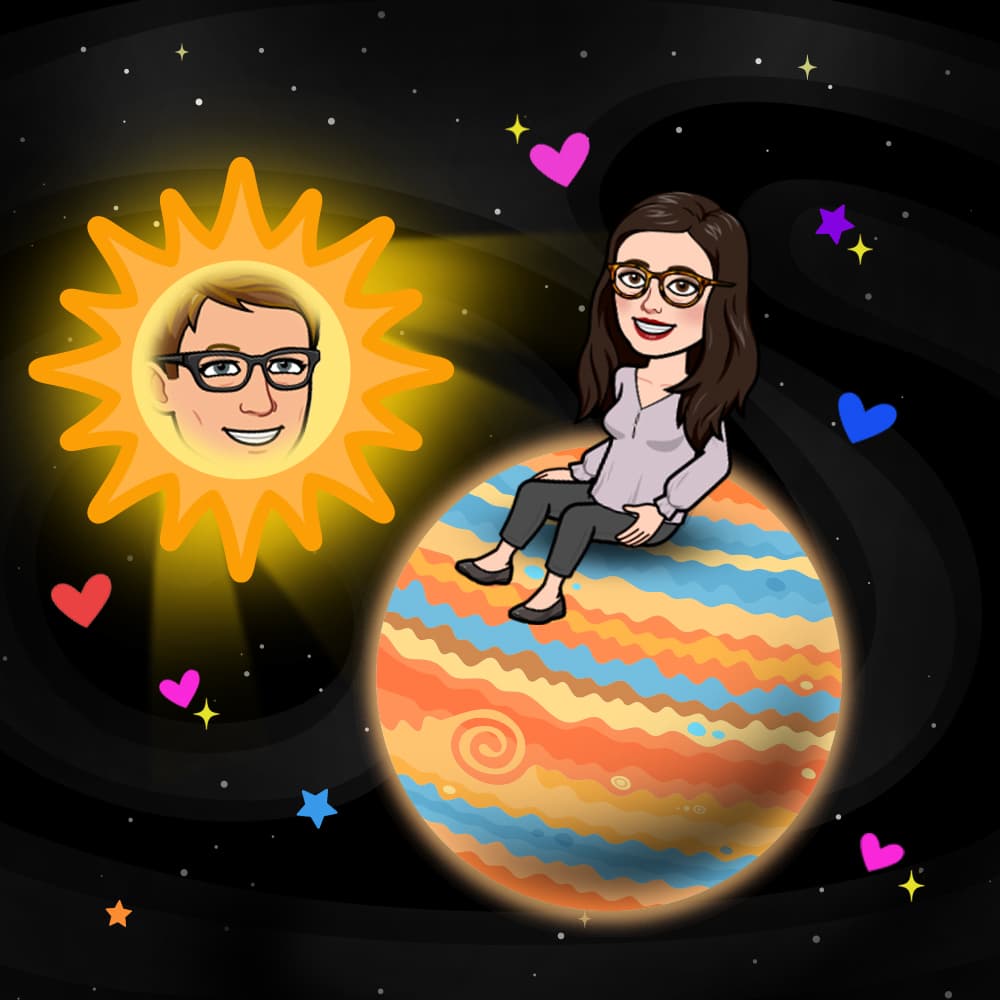
- Meaning: Jupiter marks the fifth friend in your ranking.
- Visual Representation: A large reddish orange planet with darker bands and stars.
- What It Says About Your Friendship: Big presence, upbeat tone. Interactions lean fun, even if the frequency dips here and there.
Saturn: your sixth closest friend

- Meaning: Saturn represents the sixth spot in your lineup.
- Visual Representation: An orange planet with a ring and stars. Easy to spot.
- What It Says About Your Friendship: This is a steady, supportive friend. You may not chat every day, but you can count on them for meaningful conversations and advice.
Uranus: your seventh closest friend

- Meaning: Uranus is assigned to the seventh most active friend.
- Visual Representation: A green planet, usually without hearts. Clean look.
- What It Says About Your Friendship: Less frequent pings, but the topics hit different. Always an interesting angle when a chat starts.
Neptune: your eighth closest friend
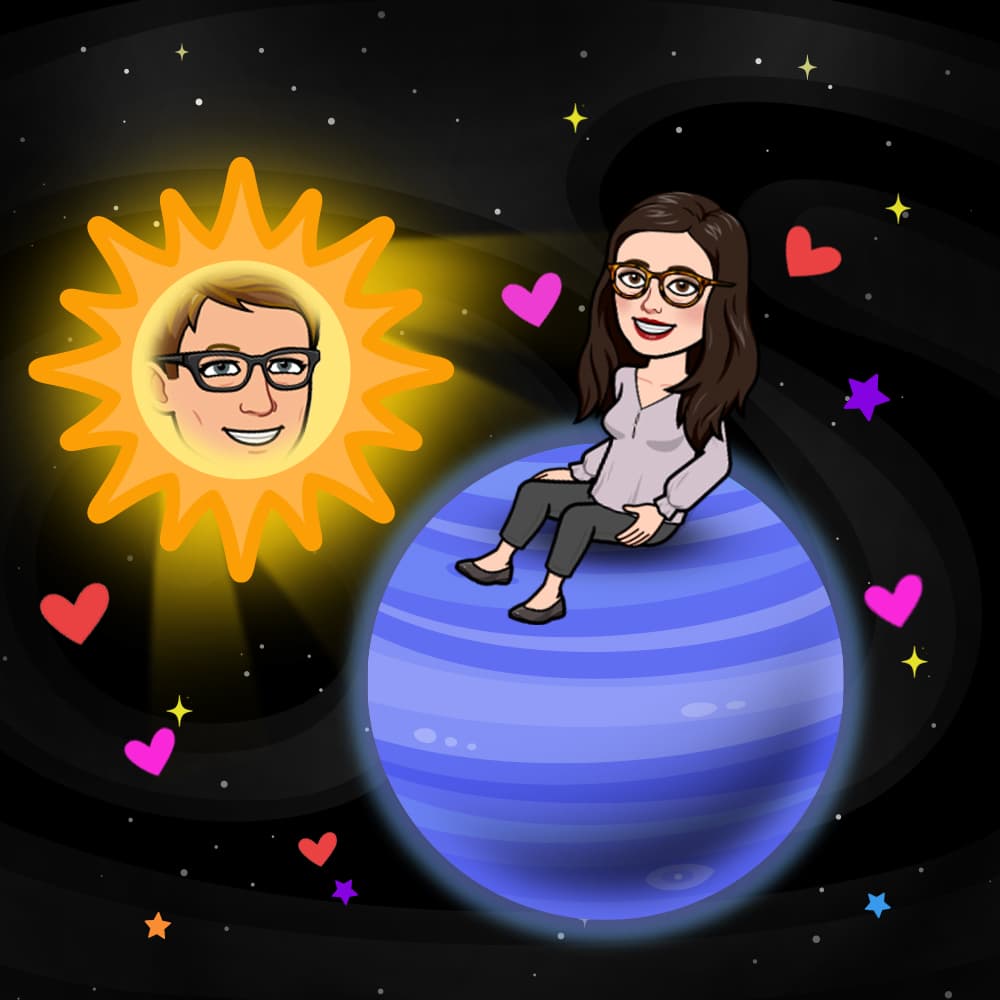
- Meaning: Neptune anchors the last slot in the set, the eighth closest friend.
- Visual Representation: A blue planet, often shown as cool or distant, with minimal decoration.
- What It Says About Your Friendship: Rare activity, still a real link. Think old friend, occasional check ins, or a streak that drifts in and out.
Key Points to Remember:
- The order can shift as your interactions change over time.
- The planet art makes it easy to scan and spot who ranks where.
- It is a lighthearted way to see who orbits closest to your Sun, and who has drifted toward Neptune.
How does snapchat decide your planet ranking?
Snapchat does not randomly assign planets. There is a method behind it, and once you know what actually moves the needle, you can understand why someone shows up as your Mercury one week and slides to Mars the next.
Here are the five factors Snapchat weighs when building your Friend Solar System, roughly in order of importance:
- Snap frequency (highest weight): Sending and receiving snaps back and forth is still the single biggest factor in your planet ranking. Photo or video, quick or long — it all counts. The more snaps you exchange with someone in a given period, the closer their planet sits to your Sun. I have noticed that even a few days of heavy snapping can pull someone up two or three spots on my own list.
- Chat consistency: Snaps alone will not get you to Mercury. Snapchat also tracks how often and how long you two are actually chatting. Short, regular check-ins count. So do longer conversations. What matters most is that they happen consistently, not just in one big burst.
- Story replies and reactions: Viewing a story silently does nothing for your ranking. But replying to it or reacting with an emoji does. Snapchat counts these as meaningful interactions, and over time they add up. If you want to move up in someone’s solar system without sending a direct snap, engaging with their stories is one of the quieter ways to do it.
- Streak maintenance: The longer your streak with someone, the more Snapchat treats that relationship as an active one. Streaks that have been running for months carry more weight than a streak you started last Tuesday. Letting a streak break does not immediately drop you off the planet list, but a consistent streak signals ongoing closeness.
- Two-way engagement: This one trips people up. Snapchat is looking for mutual interaction, not one-sided effort. If you snap someone constantly but they rarely snap back, your ranking in their solar system will stay low regardless of how active you are. The planet positions are based on the interaction between both users, not just your own output.
The ranking updates regularly, so positions can shift day to day depending on who you have been most active with recently.
How to interpret the planet emojis in your friendships
- Always moving: Rankings are not fixed. Activity rises and dips, so a friend can slide from Mercury to Mars, then bounce back the next day. That movement is part of the fun, and yes, sometimes the drama. Late replies, weekend trips, or a streak that breaks at midnight can nudge positions fast.
- Personal and private: Only you can see planet positions inside your solar system, and your spot in someone else’s orbit can look completely different. The view lives in your account, so it stays personal, only if you choose to show it to someone does it become shared. Quiet, a little mysterious, and meant for you.
- Emotional impact: A tiny thrill, or a tiny sting, when status shifts. Most changes reflect recent activity, not the full history or depth of a friendship. One quiet week can push someone outward. A streak revival can pull them closer. If emotions spike, iOS Focus or a short notification break can help reset the vibe.
- A playful metaphor: Planets act like a gamified shortcut for interaction volume. It reflects how much you two connect, not the true worth of the relationship. Treat it like a scoreboard you glance at, not a judge of real life. Keep it light and enjoy the visual.
How to enable or disable the friend solar system in snapchat
Here is the key part. Snapchat Planets sits behind Snapchat Plus, the premium subscription with extra insights and cosmetic touches.
To enable:
- Subscribe to Snapchat Plus.
- Open Snapchat on iPhone and tap your profile icon in the top left.
- Scroll to the Snapchat+ section.
- Find the “Friend Solar System” option and toggle it ON. The badge appears on profiles when this switch is active.
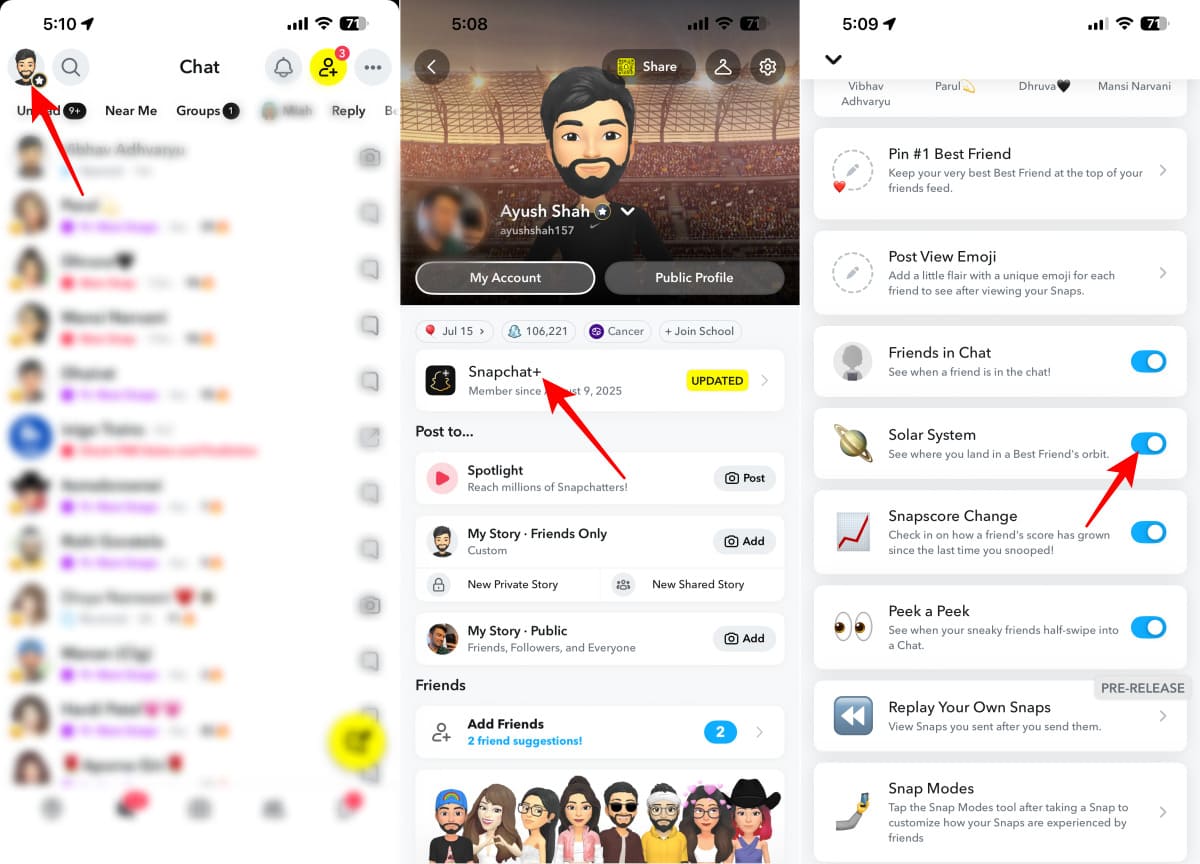
To disable:
- Repeat the same steps and toggle the feature OFF. The badges disappear right away.
Note:
The feature starts OFF for new subscribers, so you stay in control from the first day. On my iPhone, I see the toggle near other Snapchat+ switches.
How to check your position in a friend’s snapchat solar system
Ready to check your cosmic status? Here is the quick path to see your planet in a friend’s universe:
- Open a friend’s profile: Go to your friend list and select the friend you want to check. You can also tap the chat header to jump into their profile card.
- Find the “Best Friends” or “Friends” badge:
- Best Friends badge, you both sit in each other’s top 8.
- Friends badge, you are in their top 8, but they are not in yours.
- Tap the badge: The screen reveals which planet you represent in their solar system, from Mercury through Neptune.
Note:
Only you can see the planets in your own universe. They can see their view of you by checking your profile, and only if both of you use Snapchat Plus. If either account is not on Plus, the planet view stays hidden.
Tips to improve your planet position
Aiming for Mercury, or just trying to move up a couple of spots? The good news is that the ranking system responds to real behaviour, so consistent effort in the right areas actually works. Here is what to focus on:
- Send snaps daily, not in one big batch: Snap frequency matters most, and daily activity is weighted higher than sending twenty snaps in one afternoon. Keep it casual. A quick photo or a ten-second video of something you saw on the way to work is enough. The goal is regularity.
- Reply to their stories instead of just viewing them: This is one of the most underrated moves. A quick reaction or a one-line reply counts as an interaction and costs you almost no effort. I started doing this more intentionally and noticed faster movement in my own solar system within a week.
- Keep the chat going, even briefly: You do not need hour-long conversations. Even a short exchange, a few messages back and forth, counts toward your chat consistency score. Check in after a story you reacted to, or send a follow-up to a snap. Small touchpoints add up.
- Do not let your streak lapse: If you already have a streak with someone, protect it. Long streaks can help in the ranking, and once they break, you lose that accumulated signal. Set a reminder if you need one. A streak that has been going for six months is doing quiet work in your ranking even on days you are not very active.
- Be consistent over time, not intense for a week: The biggest mistake people make is going all-in for a few days then going quiet. Snapchat’s system rewards steady, ongoing interaction more than short bursts of activity. Think of it less like sprinting and more like showing up regularly.
If you do all five of these things with a specific person, expect to see noticeable movement in your planet position within two to three weeks.
Privacy and user concerns about snapchat planets
The feature adds a fun, competitive edge to social time. It also raises a few things worth thinking through:
- Personal rankings are private: Only you can view planet positions in your solar system. You can only see your own place in someone else’s system by checking their profile, and only if both of you have Snapchat Plus.
- Opt in and control: Friend Solar System starts off. You enable it in settings, and you can turn it off at any moment if visible rankings feel uncomfortable. The choice stays with you.
- Emotional impact: Some people feel anxious or competitive around rankings. If it starts to affect mood or relationships, switch it off or shift attention back to real world chats and plans.
- No manual adjustment: You cannot set or move planets yourself. Rankings come from Snapchat’s algorithm and your interaction patterns, which means the system moves with your behavior.
- Data use: Snap and chat activity informs rankings, but details are not shared publicly outside your private solar view. The screenshots you share are your call, not the app’s.
Snapchat plus pricing and subscription guide 2026
Snapchat Planets are exclusive to Snapchat Plus subscribers.
| Country | 1 Month | 1 Year |
|---|---|---|
| United States | $3.99 | $39.99 |
| United Kingdom | £4.49 | £33.99 |
| India | ₹49 | ₹499 |
- A free trial (usually 7 days) is often available.
- Prices may vary by region and are subject to change.
How to subscribe for snapchat plus
- Download Snapchat.
- Sign up or log in.
- Go to your profile.
- Tap Snapchat+.
- Choose your plan and activate your free trial if available.
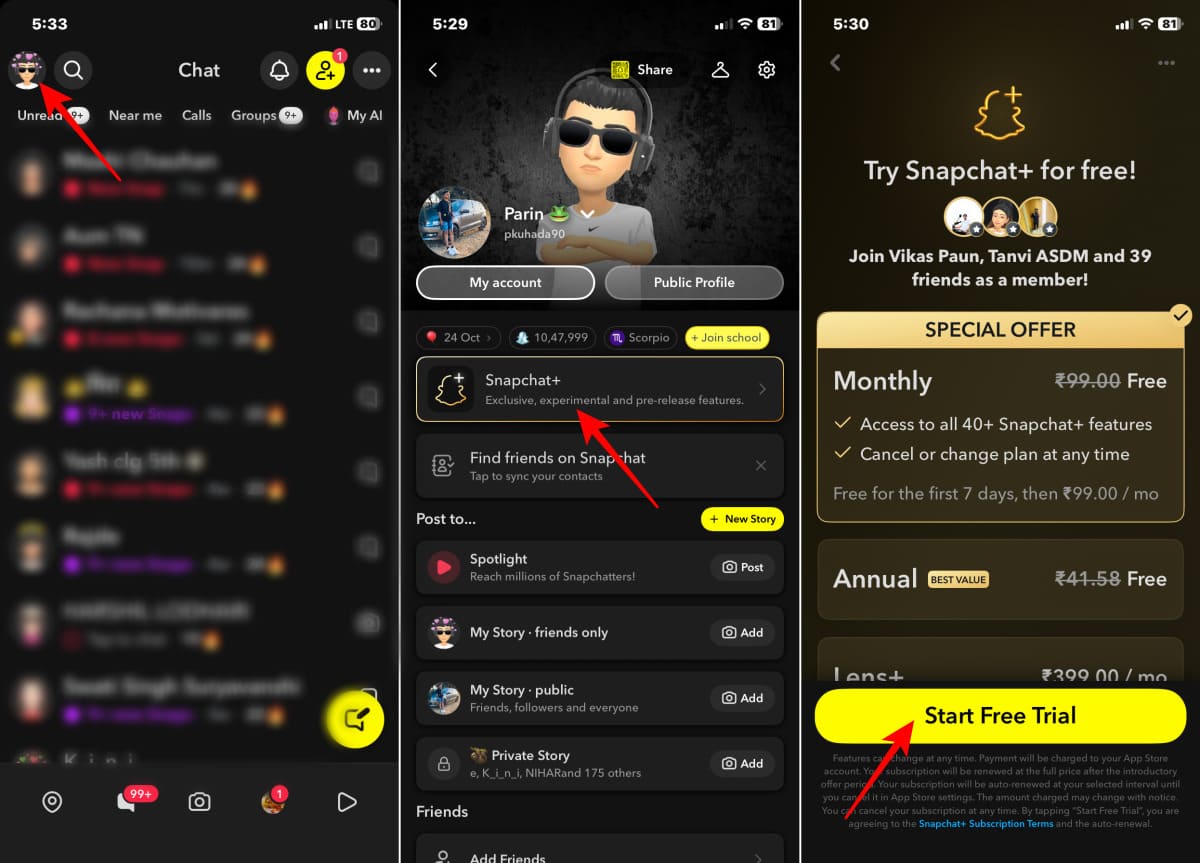
- Add your payment method and confirm.
Final thoughts
Snapchat Planets turns your friend list into a playful little universe, a view that makes close connections feel visible and just a bit competitive. If you use Snapchat Plus, explore your own system and see who is nearest. Just remember, real friendships are bigger than snaps, streaks, or rankings.
Whether you are aiming for Mercury or just curious about your orbit, enjoy the ride and keep your circle in the loop with snaps. React to stories, send a quick note, share moments that matter. Check the planets, smile, then live your day. Your universe is yours to shape.
Related articles worth reading: