
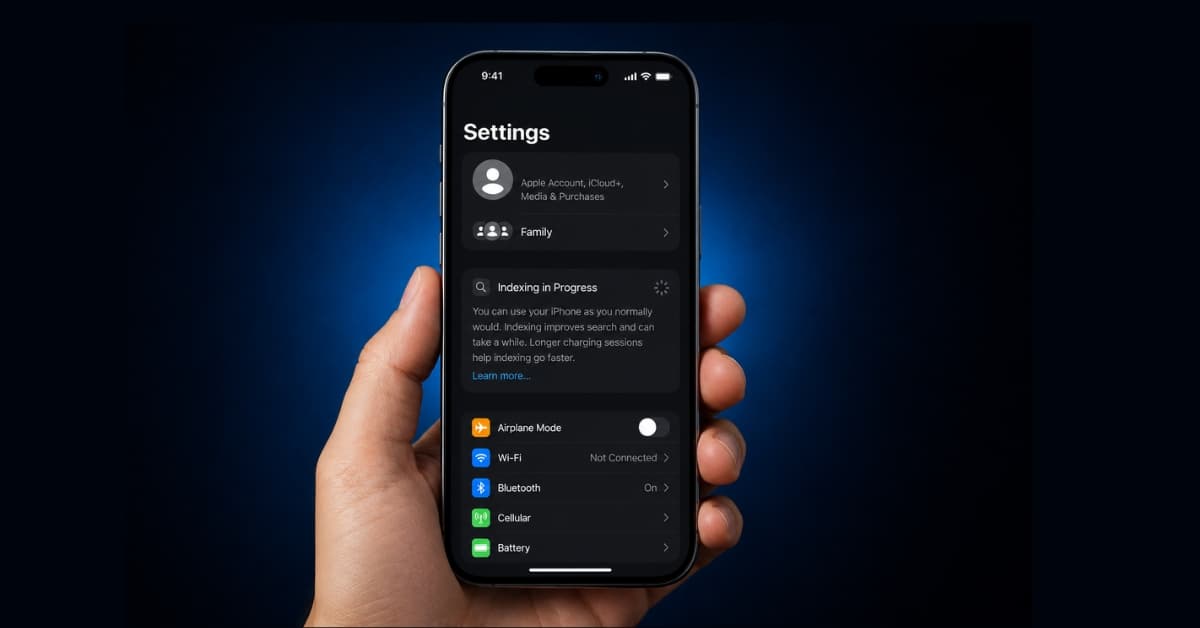
I updated my iPhone 17 to the iOS 27 beta expecting to try Apple’s latest features. Instead, the first thing I noticed was an “Indexing in Progress” message in Settings that refused to disappear. Search inside Messages, Phone, and other built-in apps felt noticeably slower, and Spotlight kept missing results.
If you’ve run into the same issue, don’t panic. In most cases, your iPhone is simply rebuilding its search index in the background, and the fastest fix is surprisingly simple: let it finish under the right conditions.
After spending a few days testing different approaches, here’s what I learned about why the message appears, how long it usually lasts, and the fixes that actually worked.
Why does your iPhone say “Indexing in Progress”?
After every major iOS update or an iCloud restore, your iPhone rebuilds the search indexes used by Spotlight, Siri, Messages, Photos, Mail, and other system features. Normally, this happens quietly in the background, and most people never notice it.
This year is a little different. iOS 27 introduces a much smarter Siri powered by Apple Intelligence, with deeper personal context and improved system-wide search. To support those features, your iPhone now builds a much richer on-device index of your emails, messages, photos, notes, files, contacts, and other personal content.
That’s why indexing can take noticeably longer than previous iOS updates.
Unlike downloading software updates, indexing is handled entirely in the background. Apple also prioritizes battery life and device temperature, meaning the process often slows down or pauses while you’re actively using your iPhone or when it’s running on battery power.
That’s why the message can remain visible for several days even though your phone appears to be working normally.
How long does iPhone indexing usually take?
There’s no universal timer because every iPhone contains a different amount of data.
From my experience with recent beta updates:
- iPhones with relatively small photo libraries often finished overnight or within 24 to 72 hours.
- Devices containing years of Messages, Mail, and tens of thousands of photos sometimes took close to a week.
- If you’ve restored from iCloud before installing iOS 27, expect indexing to take even longer because syncing and indexing happen simultaneously.
The biggest mistake I see people make is assuming the process has frozen after only an hour or two.
If your iPhone is still downloading photos, messages, or Mail in the background, indexing can’t finish until all that content becomes available. My advice is simple: leave your iPhone plugged into a charger overnight before assuming something is wrong.
How to check Indexing Progress on iOS 27
One improvement in iOS 27 is that Apple makes it easier to know whether indexing is still running instead of leaving users guessing.
Open Settings, and if indexing hasn’t finished yet, you’ll see the Indexing in Progress banner. Unfortunately, Apple still doesn’t display an actual percentage.
I wanted something more precise, so I used Apple’s Console app on my Mac.
Here’s how:
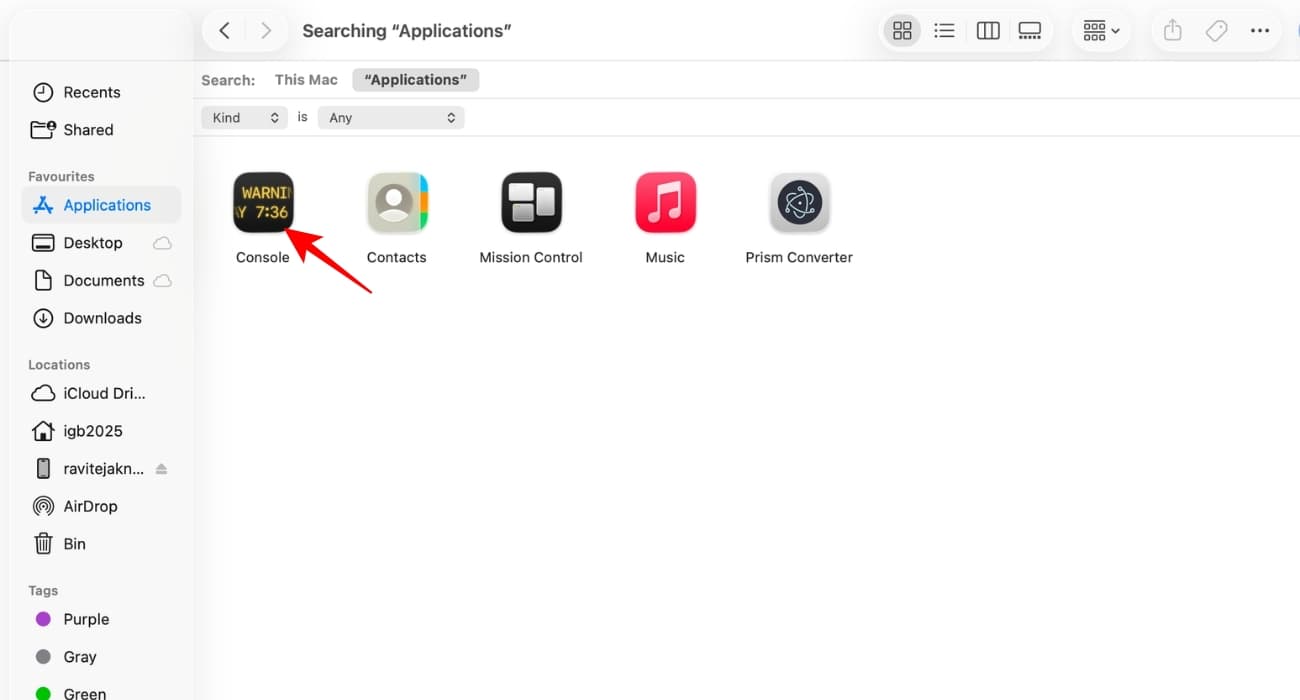
- Connect your iPhone to your Mac with a USB cable and launch the Console app on your Mac from Finder > Applications > Utilities folder.
- Go to the Action menu in the top menu bar and click Include Debug Messages to enable it.
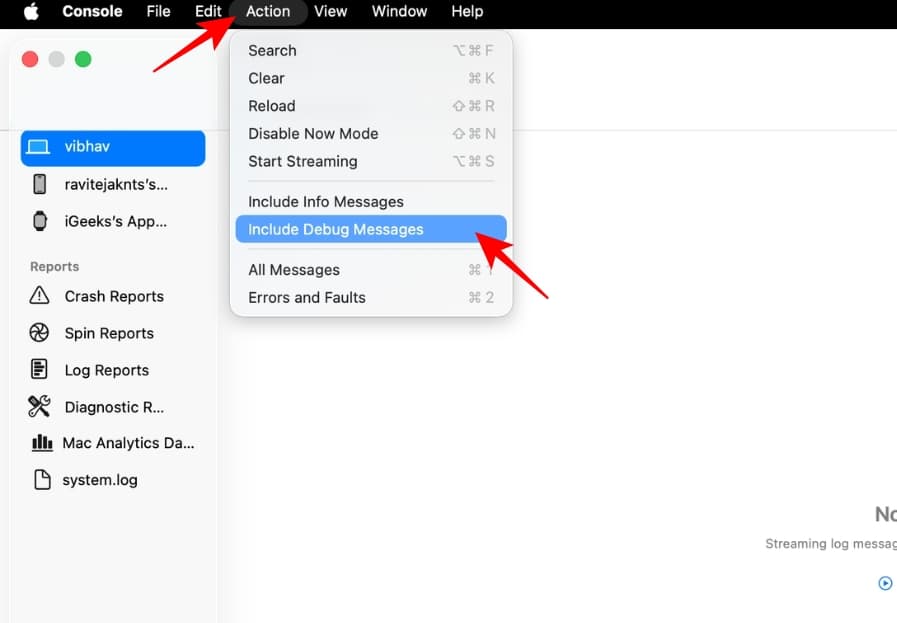
- Select your iPhone name in the sidebar in the Console app.
- In the search field at the top right, type
spotlight indexing progressand press the return key. - Click Start streaming on the screen or select the play icon at the top.
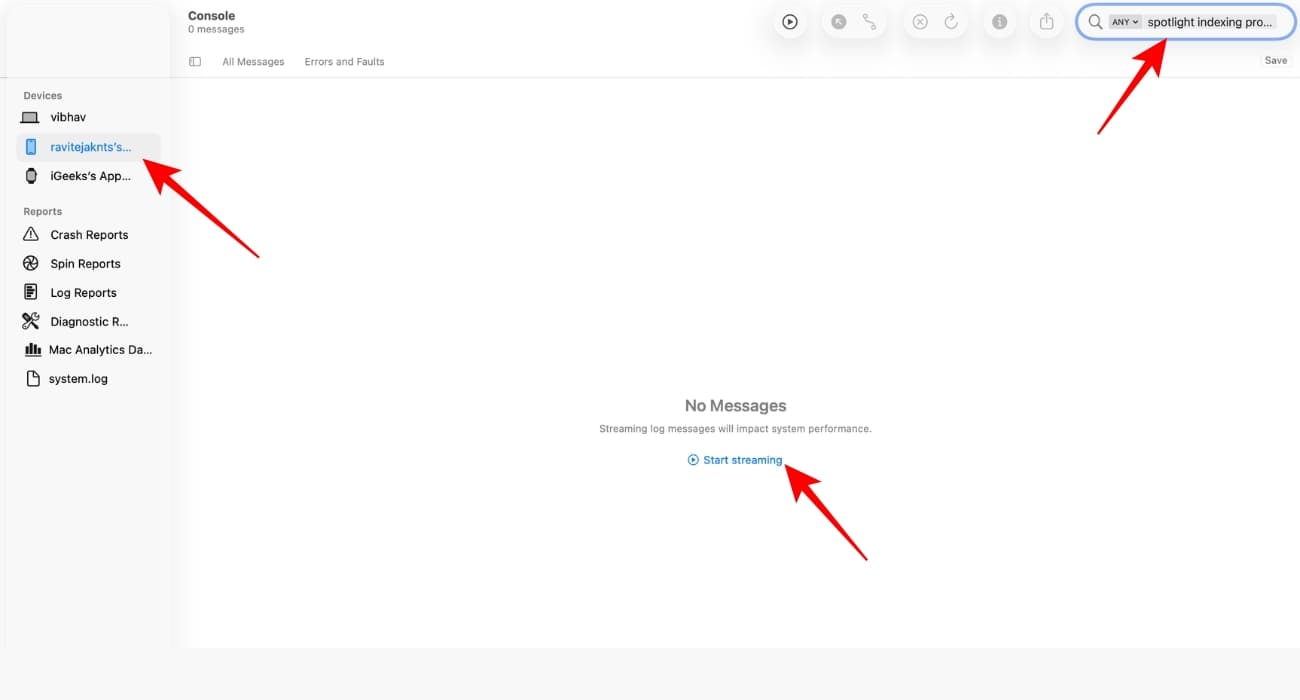
- Now, open the Settings app on your iPhone.
- Your progress will begin appearing in the Console as
PipelineCompleteness: XX%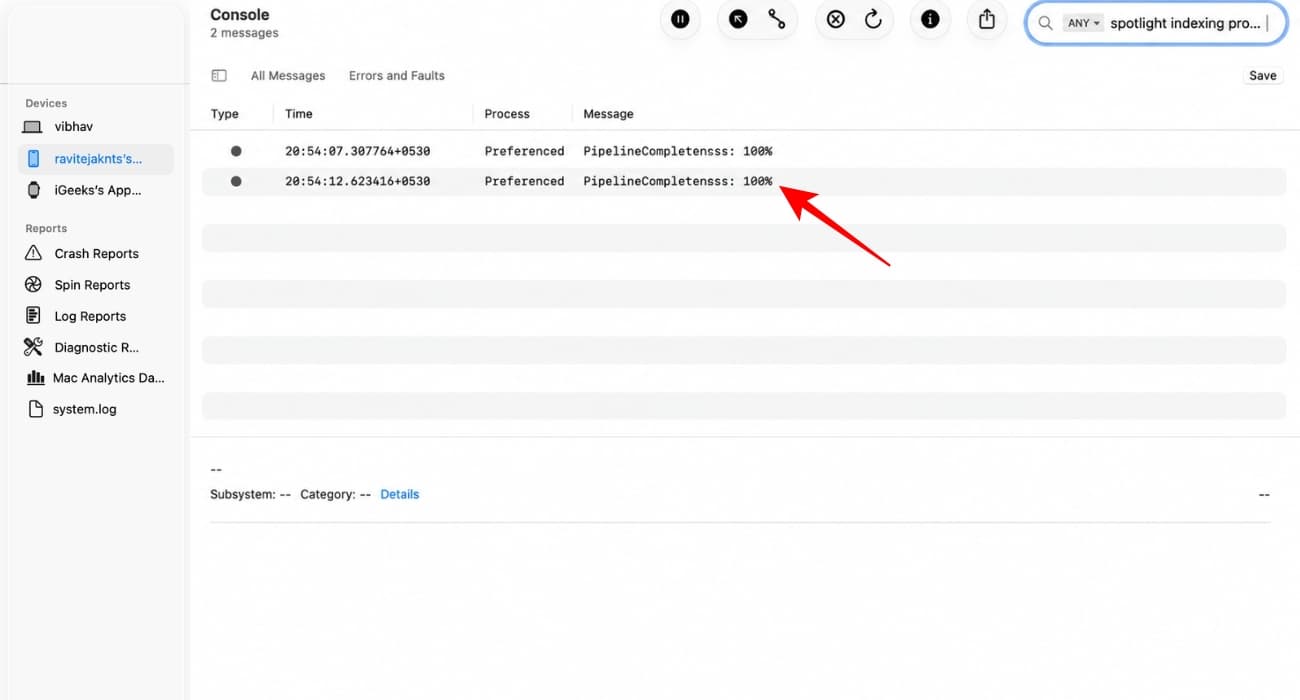
When indexing is completed, you’ll see PipelineCompleteness: 100%. However, if the indexing is stuck on a percentage for several days and never finishes, I have
3 ways to fix “Indexing in Progress” on iOS 27
1. Update to the iOS 27 beta 2 Version
If you’re still using the original iOS 27 developer beta, updating to the latest beta should be your first step.
Beta 1 prominently displayed the Indexing in Progress banner inside Settings, making it feel as though something was wrong. Beta 2 reduces the prominence of the message, although indexing still happens behind the scenes.
While the newer beta doesn’t necessarily make indexing dramatically faster, it includes numerous bug fixes affecting background services.
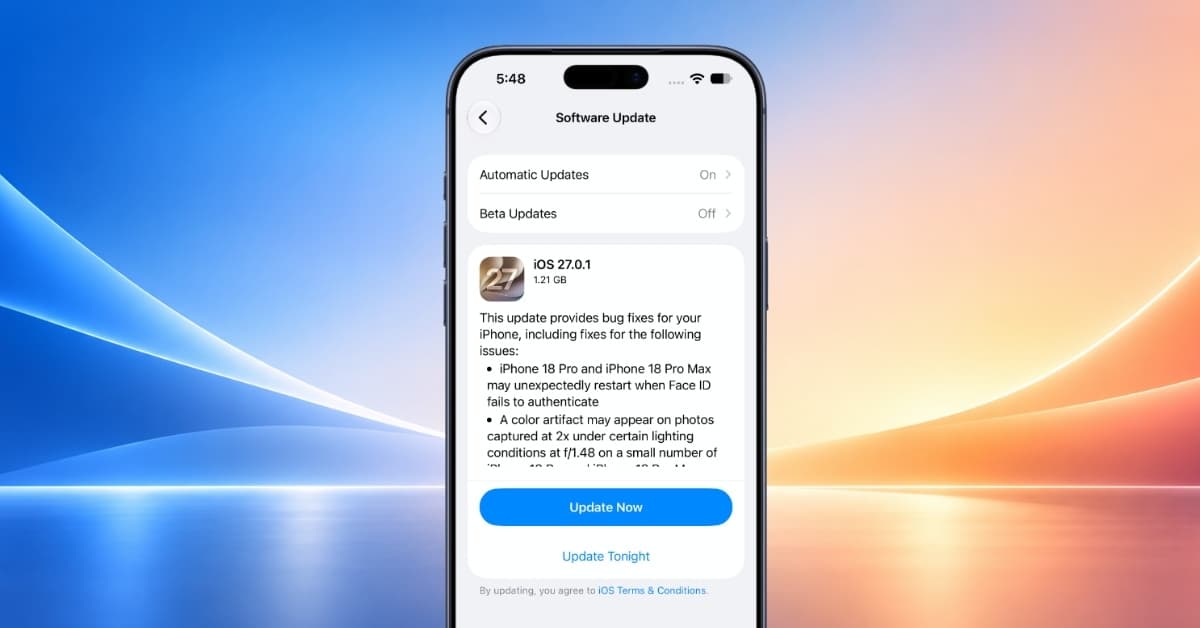
To update: Settings > General > Software Update. After updating, connect your iPhone to Wi-Fi, plug it into power, and leave it alone for several hours.
After installing iOS 27 beta 2 on my own device, indexing completed within a few hours.
2. Connect to stable Wi-Fi and leave it plugged in overnight
This is the fix that works for most people. Instead of repeatedly restarting your iPhone or toggling random settings, simply:
- Connect to reliable Wi-Fi.
- Plug your iPhone into a charger.
- Leave it locked overnight.
Apple schedules many indexing tasks for periods when the device is idle, charging, and connected to Wi-Fi. Interrupting the process with repeated restarts only forces the phone to resume background work again.
One piece of advice I strongly agree with is not to force-restart your iPhone unless it’s completely frozen. Force restarting doesn’t speed up indexing, and in some cases, it may delay background processing by interrupting it.
Likewise, avoid using Low Power Mode while waiting. Since it limits background activity, it can slow down indexing instead of helping it finish.
3. Clean up your Mail, Messages, and Photos
This isn’t a magic fix, but it can make a noticeable difference if your iPhone is indexing an enormous amount of data.
Indexing works by scanning content across apps like Mail, Messages, Photos, Notes, and Files so that Spotlight and Siri can find it instantly later. The more data your iPhone has to process, the longer that job takes.
If you’re sitting on years of old emails, duplicate photos, and message threads with thousands of attachments, you’re giving iOS a much bigger workload. So, I recommend cleaning up your iPhone.
Before you start deleting everything, focus on the obvious clutter:
- Empty the Recently Deleted album in Photos.
- Delete duplicate photos and videos.
- Remove large message attachments you no longer need.
- Archive or delete old emails with massive attachments.
- Remove email accounts that you don’t use
You may also use a cleaner app to speed up the process. A lighter photo library and fewer messages mean less content for iOS to organize.
When “Indexing in Progress” is actually a bug
Most people don’t have a bug. They’re simply waiting for indexing to finish. However, there are situations where something genuinely isn’t working.
I’d start troubleshooting if:
- The message hasn’t disappeared after a few days, even though your iPhone has been charging on Wi-Fi.
- The indexing status percentage never changes despite multiple charging sessions.
- Spotlight can’t find apps, contacts, or recent files.
- Searching Messages returns little or no results.
- The photo search doesn’t recognize people, places, or objects.
- Finding contacts on the Phone app feels slower.
- iPhone is draining battery quickly and often overheating.
If you notice several of these symptoms together, the indexing service may have stalled instead of simply taking a long time. At that point, check for the new iOS 27 beta update first. Apple frequently fixes beta-specific issues between releases, and installing the latest build is usually a better solution than trying random troubleshooting steps.
If you’re already on the newest beta, you can also submit feedback through Apple’s Feedback app. Beta software exists so Apple can identify and fix issues like this before the public release.
Give your iPhone time! That’s usually the fastest fix
The “Indexing in Progress” message looks alarming, but usually this message is quite the opposite. It’s an indicator that your iPhone is doing exactly what it should after a major update. The biggest takeaway is this: don’t fight the indexing process.
I’ve seen countless suggestions telling people to force restart, reset settings, or toggle random features. But this won’t speed up the process in most cases. Apple only recommends longer charging sessions.
Before you go, I’m curious: How long has your iPhone been stuck on “Indexing in Progress”? Let me know in the comments below!