

At Google I/O 2026, Google introduced Gemini Omni, a new AI model built to understand text, images, video, audio, and live interactions together. The company describes it as a major step toward creating a more fluid AI experience across devices, where AI can understand context across multiple formats simultaneously.
Instead of treating text, visuals, and voice as separate inputs, Gemini Omni processes everything within a unified system. Users can move between voice conversations, visuals, typed prompts, and live camera input without interrupting the interaction.
Here’s everything you need to know about Gemini Omni and why Google considers it one of its most important AI launches yet.
What is Gemini Omni?
Gemini Omni is a multimodal AI model that can process different types of information simultaneously. Users can speak naturally, upload visuals, share live camera input, and continue conversations without switching between separate tools.
During Google’s demos, Gemini Omni could analyze surroundings in real time and respond contextually while the interaction continued naturally. For example, someone could point their phone camera at a landmark, ask a spoken question, and receive instant answers without manually typing anything.
Google plans to integrate Gemini Omni across Android, Search, Chrome, YouTube, Gmail, Workspace apps, and upcoming Android XR devices.
How Gemini Omni differs from ChatGPT and Copilot
OpenAI ChatGPT and Microsoft Copilot already offer image understanding, voice support, and AI assistance for different tasks. Gemini Omni enters the same space, though Google is integrating it far more deeply across its own ecosystem.
At I/O 2026, Google showed Gemini Omni working inside Search, Android, and Android XR glasses while handling voice conversations and live camera input in real time.
ChatGPT is still widely used for writing, brainstorming, and general conversations. Microsoft Copilot is more closely linked with Microsoft apps like Word and Excel. Gemini Omni appears focused on helping users interact with Google services more naturally across phones, Search, and wearable devices.
Why Google is focusing on multimodal AI
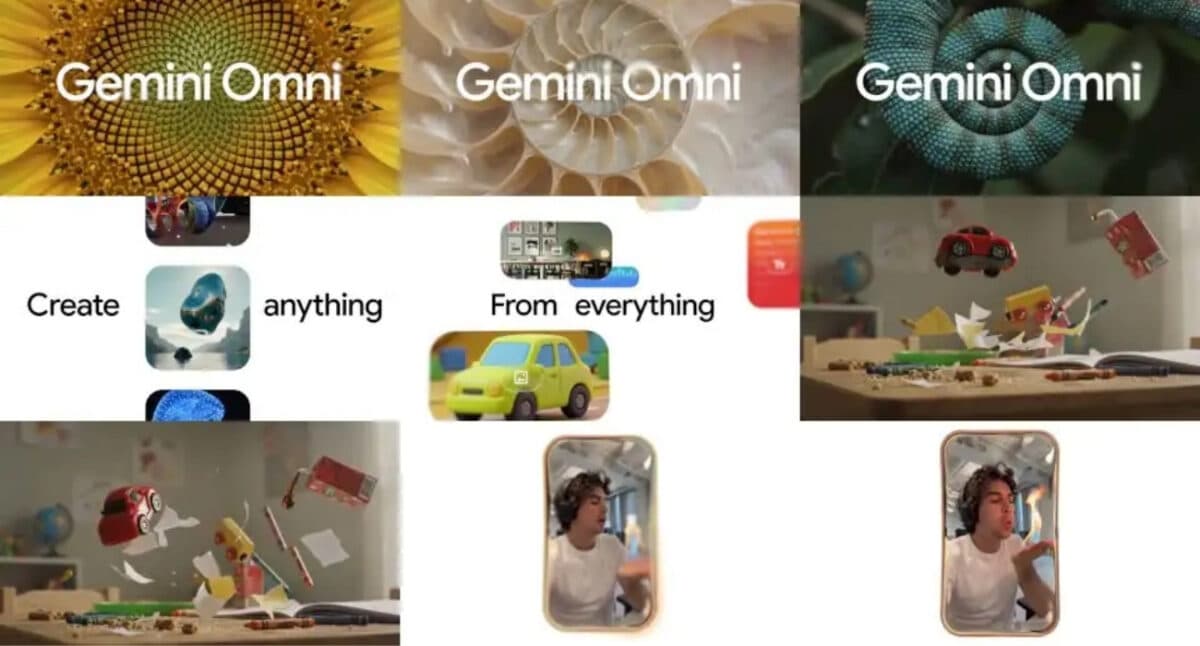
Google is pushing multimodal AI because people do much more than type while using their devices. They speak, use cameras, share screenshots, watch videos, and interact with apps continuously throughout the day.
Gemini Omni is designed around those everyday interactions. Instead of relying only on text prompts, the model can respond using visual input, voice conversations, and live surroundings at the same time. Google plans to use this technology across Search, Android devices, and upcoming XR products.
This direction also helps Google expand AI beyond smartphones into products like Android XR glasses and future wearable devices.
Gemini Omni also connects closely with Gemini Intelligence, the company’s broader effort to bring AI-powered features deeper into Android and future wearable devices.
Real-world ways Gemini Omni could be used
Gemini Omni introduces several practical use cases that go beyond chatbot conversations.
Possible applications include:
- Live language translation through Gemini AI-powered glasses
- Visual assistance while traveling
- Instant answers about nearby objects or landmarks
- AI-assisted shopping inside Google Search
- Automatic email and notification summaries
- Hands-free navigation support
- Interactive learning experiences for students
- Context-aware recommendations during daily tasks
The company also demonstrated Gemini Omni handling ongoing voice conversations while understanding live surroundings in real time, creating interactions that felt closer to speaking with an assistant that can actually “see” what the user is seeing.
Gemini Omni could reshape Google Search
One of the biggest goals behind Gemini Omni is transforming Google Search from a list of links into a more interactive experience.
Instead of typing short keywords and opening multiple websites manually, users can now ask detailed questions, continue conversations naturally, and even search using voice, images, or live camera input.
During I/O 2026, Google showed Search generating detailed responses directly inside results pages while continuing conversations without forcing users to restart queries repeatedly.
Gemini Omni also helps Search understand context more accurately, making Search more responsive during complex or visually driven queries.
Google’s larger goal appears focused on making Search feel less like a traditional search engine and more like an intelligent assistant woven directly into everyday browsing.
Concerns around Gemini Omni
No matter how useful Google portrays Gemini Omni, its launch also raises questions around:
- Privacy
- AI accuracy
- Data collection
- Website traffic reduction
- Ownership of AI-generated content
Since Gemini Omni relies heavily on contextual understanding and live interactions, users may share larger amounts of personal information with AI systems during regular usage.
Publishers and creators are also watching Google’s AI Search direction closely as AI-generated responses become more prominent inside search results.
Google’s biggest AI bet yet…
Gemini Omni represents a major shift in how Google wants people to interact with technology. Rather than functioning as a standalone chatbot, Gemini Omni is becoming deeply integrated into Google’s broader ecosystem. The model now sits across Search, Android, wearable devices, and several core Google services, making it one of the company’s biggest long-term technology projects in years.
Do you think Gemini Omni can actually change how people use Search and smart devices daily? Let us know in the comments.