


Apple’s upcoming iPhone 18 Pro Max could see a major increase in production costs due to rising memory prices and new components, according to a new estimate from Counterpoint Research.
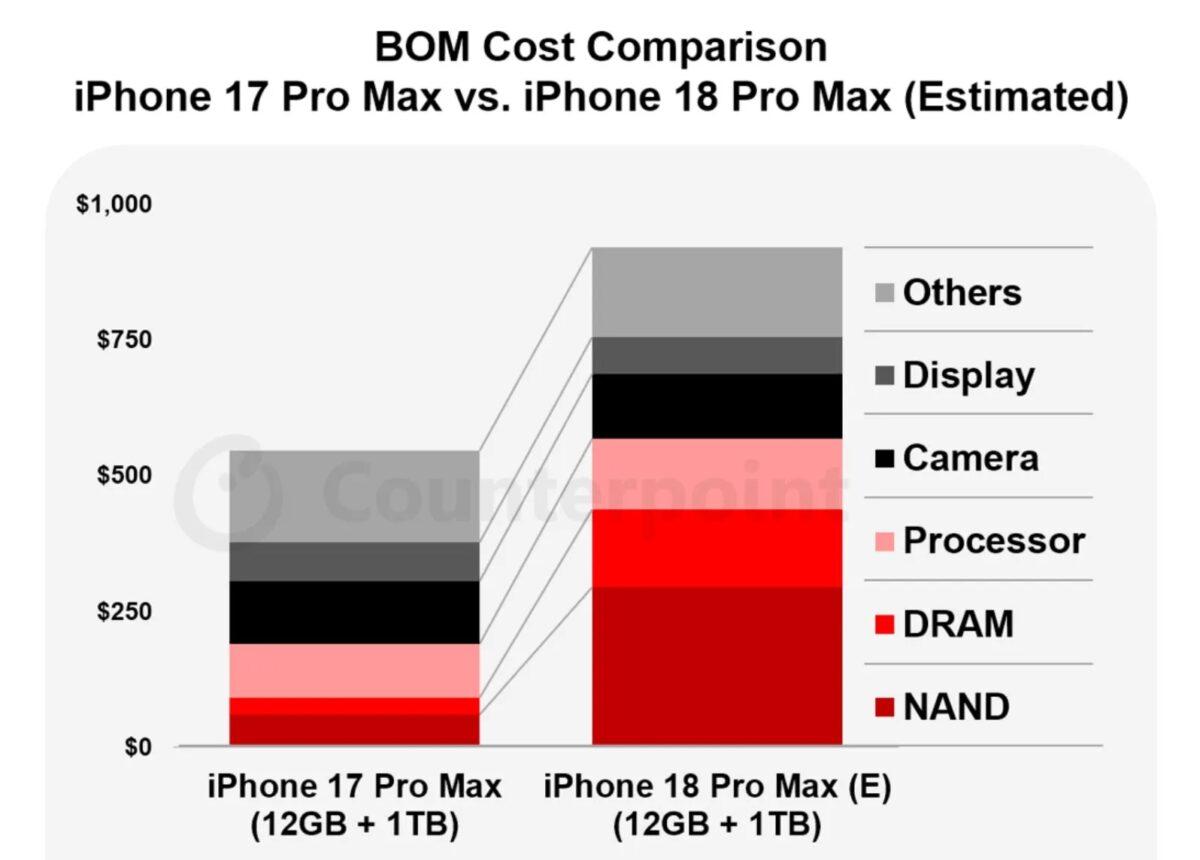
The research firm compared the expected bill of materials for the 1TB iPhone 18 Pro Max with that of the current 1TB iPhone 17 Pro Max, highlighting significant increases in NAND storage, DRAM, and processor-related costs.
Memory and chip costs are driving the increase
Counterpoint says NAND flash storage and DRAM memory will be the biggest contributors to the higher production cost.
An ongoing memory component shortage has driven prices higher across the semiconductor industry, affecting smartphones, PCs, and other consumer electronics.
According to the report, the combined cost of NAND and DRAM in the iPhone 18 Pro Max could approach the total cost of several key components found in the iPhone 17 Pro Max, including the processor, camera system, and display.
Apple’s next-generation 2-nanometer chip is also expected to increase manufacturing costs.
The iPhone 18 Pro lineup is widely rumored to be among the first Apple devices powered by the new processor, which will likely feature more advanced packaging technology and higher production costs than previous generations.
Also read: iPhone 18 Pro Max may get a much bigger battery, leak claims
Apple could raise prices based on storage capacity
While memory costs continue to climb, Counterpoint expects prices for displays and several other components to decline.
Camera costs, however, are expected to increase slightly due to new hardware, likely referring to the rumored variable-aperture main camera expected on the iPhone 18 Pro models.
The research firm believes Apple may respond by applying different price increases depending on storage capacity. This strategy would help offset the significantly higher cost of NAND storage, particularly on higher-capacity models such as the 1TB iPhone 18 Pro Max.
Despite potential price increases, Counterpoint expects Apple’s profit margins on the iPhone 18 lineup to remain under pressure.
The report suggests Apple could still see lower margins even if it raises the average retail price of the iPhone 18 series by approximately $200.
If accurate, the findings reinforce recent reports that Apple’s next-generation iPhones may become more expensive as the company faces rising memory prices and increased manufacturing costs driven by AI-related demand across the semiconductor industry.
Would a $200 price increase affect your decision to buy the iPhone 18 Pro Max? Let us know in the comments below.