How to Remotely Wipe a Lost Mac
If you’ve ever forgotten your Mac in a café or had someone snatch your bag, your first thought probably isn’t about the price. It’s about what’s inside: your photos, saved passwords, files, and maybe even your payment details. That’s exactly why Apple built Find My Mac, a built-in feature that gives you one last line of defense. You can lock your Mac, locate it, and if things go wrong, erase it remotely before anyone can access your data.
This guide walks you through everything you should know before wiping your Mac remotely, plus step-by-step methods to erase it using an iPhone or iPad, another Mac, or any web browser through iCloud.
What You Should Know Before Wiping Your Mac
Before you send the erase command, make sure you understand these key points:
- Find My Mac must be enabled before your Mac went missing. Without it, you can’t track or wipe your device.
- The Mac must be turned on and connected to the internet for the erase command to take effect.
- Once you erase your Mac, it’s permanently removed from Find My, and you won’t be able to track it afterward.
- Even if it’s erased, it will stay locked to your Apple ID. That means no one can reactivate or use it without your password.
If you didn’t set up Find My Mac, skip to the end, there are few workarounds that can help you protect your data.
Option 1: Wipe Your Mac Remotely Using an iPhone or iPad
If you have another Apple device signed in with the same Apple ID, this is the easiest method. Here’s how:
- Open the Find My app on your iPhone or iPad.
- Go to the Devices tab at the bottom.
- From the list of devices, tap your missing Mac.
- You’ll see its last known location on a map. If it’s nearby, tap Play Sound to locate it.
- If you’re sure you can’t recover it, scroll down and tap Erase This Device.
- Tap Continue, then enter a short recovery message. For example, “This Mac is lost. Please contact me at [your number].” Avoid sharing personal details like your address.
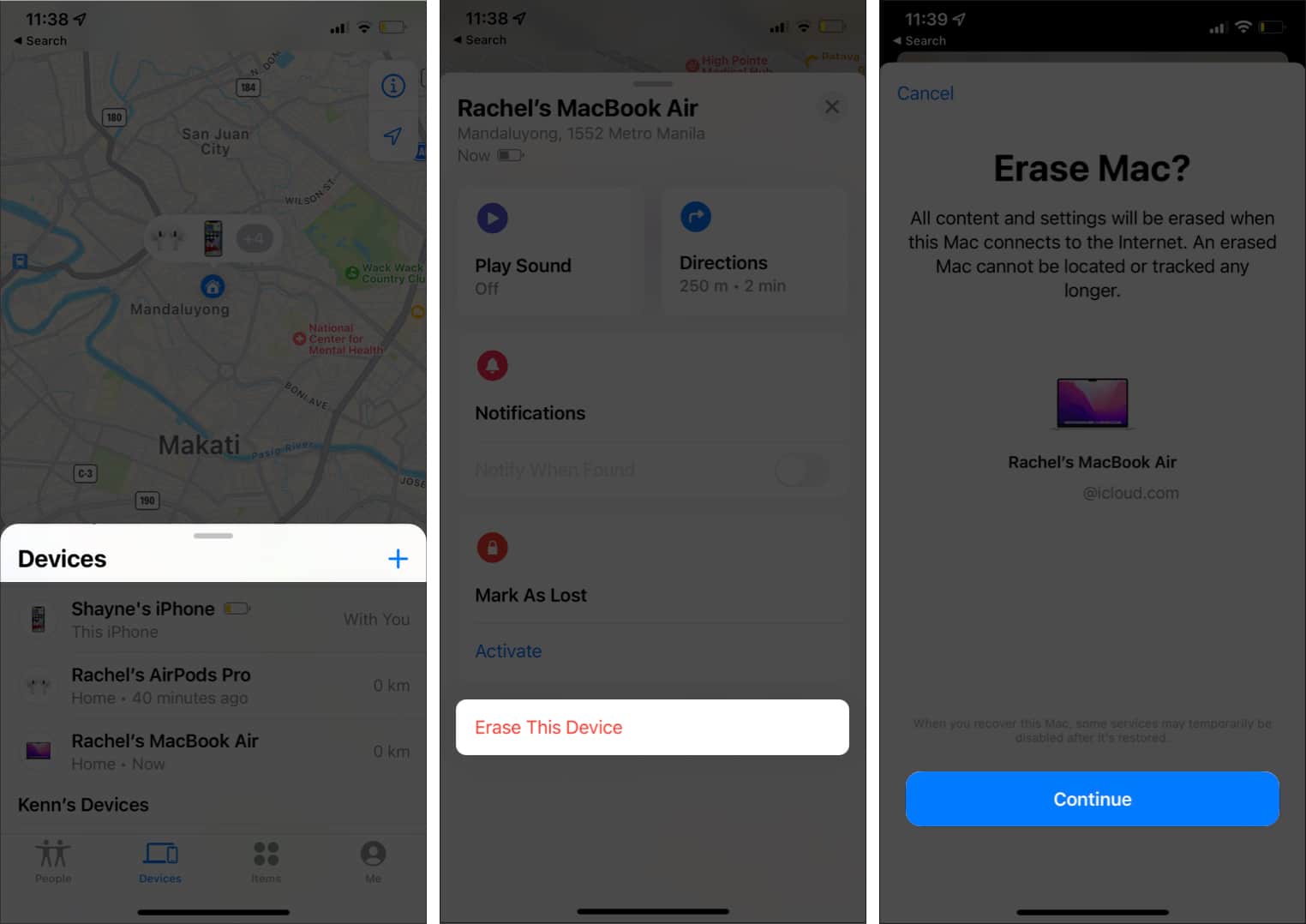
- Tap Erase, then enter your Apple ID password to confirm.
Once the command is sent, the Mac will erase itself the next time it connects to the internet. You’ll get a notification when the process begins.
Option 2: Wipe Your Mac Using Another Mac
If you own a second Mac linked to the same iCloud account, you can use the desktop version of Find My:
- Open the Find My app on your other Mac.
- Click the Devices tab.
- From the list, select the Mac you want to erase.
- Click the info (i) button next to it.

- Choose Erase This Device, then click Continue.

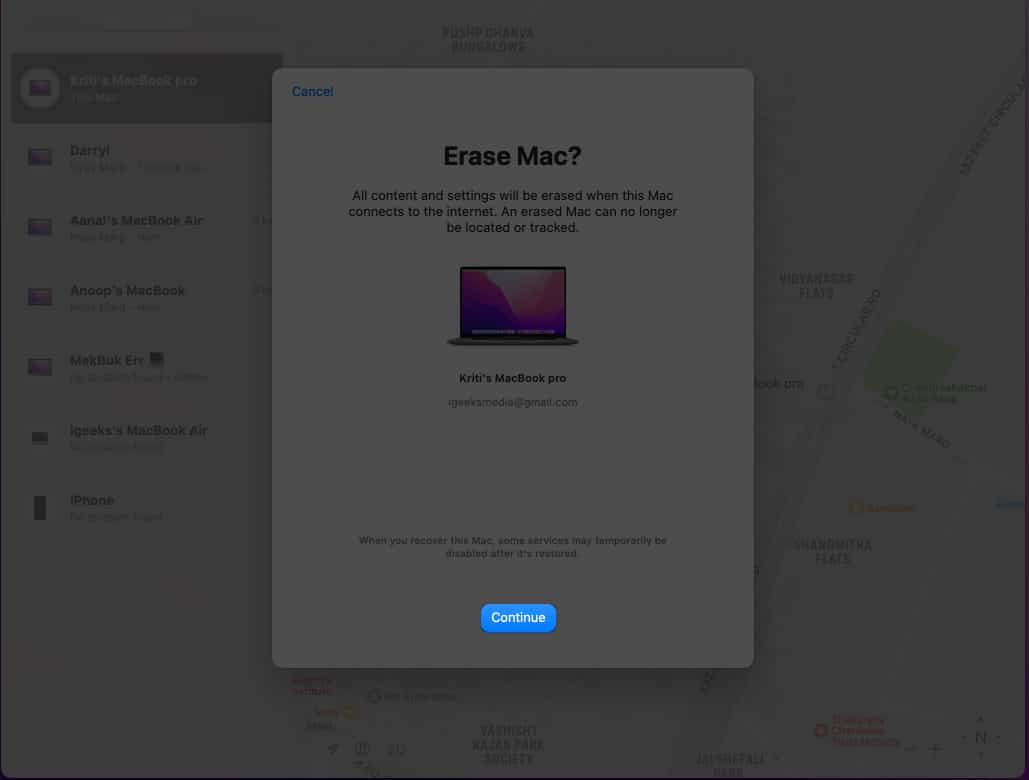
- If asked, enter a six-digit passcode, this locks the Mac until it’s erased.
- Add a recovery message, such as a contact number, then select Erase.
- Enter your Apple ID password to confirm.
If the lost Mac is offline, the command will queue and execute as soon as it’s back online.
Option 3: Wipe Your Mac Using iCloud on Any Device
If you don’t have another Apple device, you can still wipe your Mac from any web browser, even on a Windows PC or Android phone.
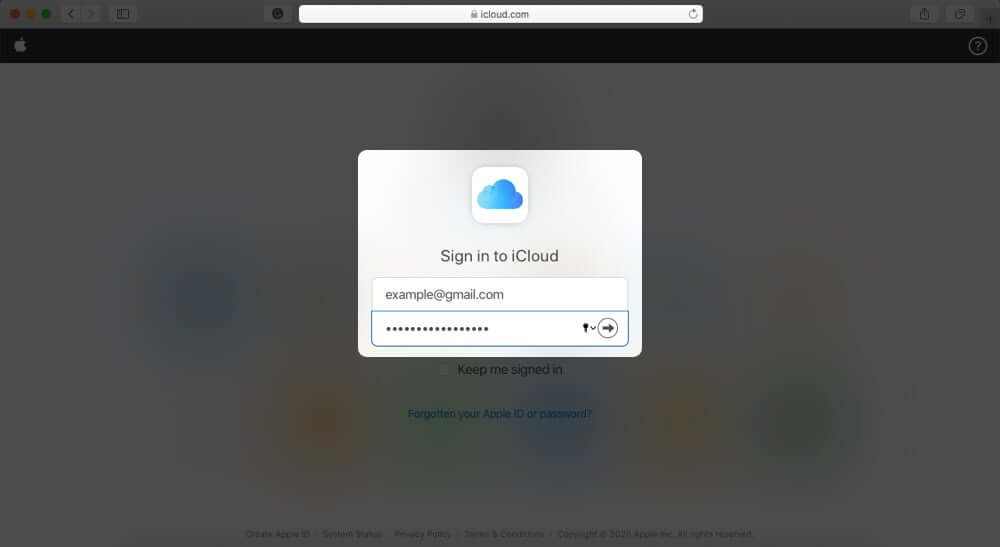
- Go to iCloud.com/find and sign in with your Apple ID.
- Click All Devices at the top.
- Select your Mac from the list.
- Click Erase Mac.
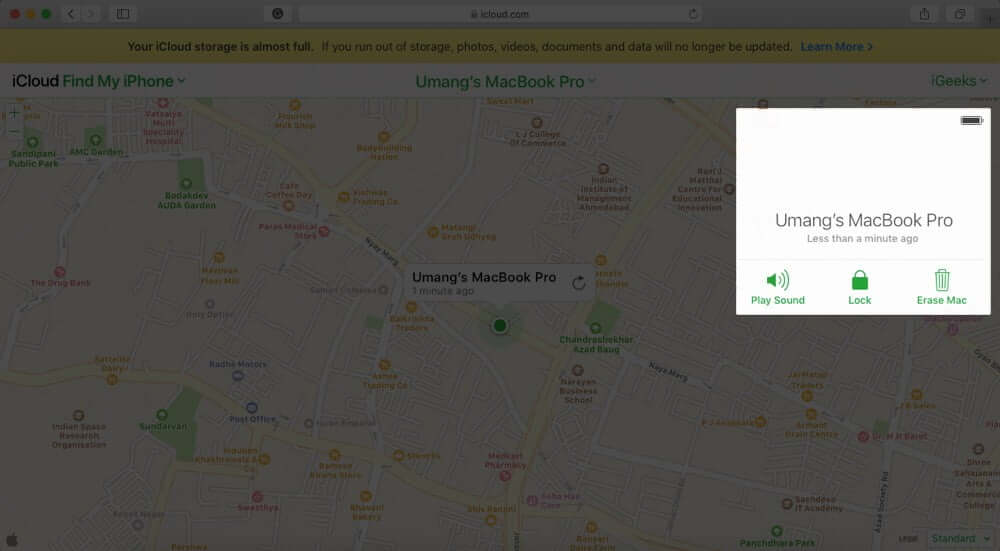
- Confirm the action when prompted.
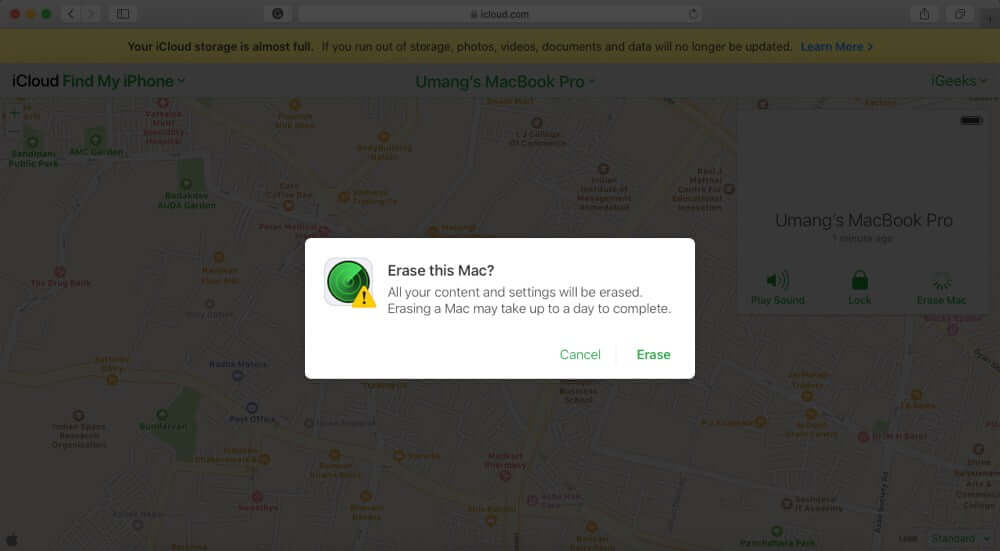
- Enter your Apple ID password again for verification.
- Type in a six-digit passcode to lock the Mac.
- Add a recovery message that shows on the lock screen.
Your Mac will erase itself as soon as it connects to the internet. You’ll see its status update in iCloud when the wipe begins.
What Happens After You Wipe Your Mac
Once the erase command goes through, your Mac will:
- Lock itself automatically.
- Delete all data, settings, and files.
- Display your recovery message on screen.
If the thief or finder tries to use it, they’ll hit the Activation Lock, which requires your Apple ID credentials to set up the Mac again. So even if they erase it locally, it’s still useless to them.
If You Didn’t Set Up Find My Mac
If you never turned on Find My Mac, you can’t track or erase it remotely, but you can still secure your data.
- Change your Apple ID password immediately to block access to iCloud, iMessage, and Apple services.
- Update passwords for your email, banking, and social media accounts.
- Report your Mac’s serial number to local law enforcement. You can find it on your Mac’s box, invoice, or purchase receipt.
If you find your Mac later, take it to an Apple Authorized Service Provider with proof of purchase to unlock it.
Final Tip
If you’ve ever experienced that sinking feeling of a missing Mac, you know how helpless it feels. Setting up Find My Mac is a small step that makes a big difference, it’s like having a built-in insurance policy for your data. You can’t always prevent your Mac from going missing, but you can make sure your personal life doesn’t go with it.
Read more:
- How to remotely erase data from lost iPhone and iPad
- How to use Tab Groups in Safari on iPhone, iPad, and Mac
- Mouse cursor disappears on Mac? 13 Working fixes

Written by
Dhvanesh AdhiyaThe founder of iGeeksBlog, Dhvanesh, is an Apple aficionado, who cannot stand even a slight innuendo about Apple products. He dons the cap of editor-in-chief to make sure that articles match the quality standard before they are published.
View all posts →