
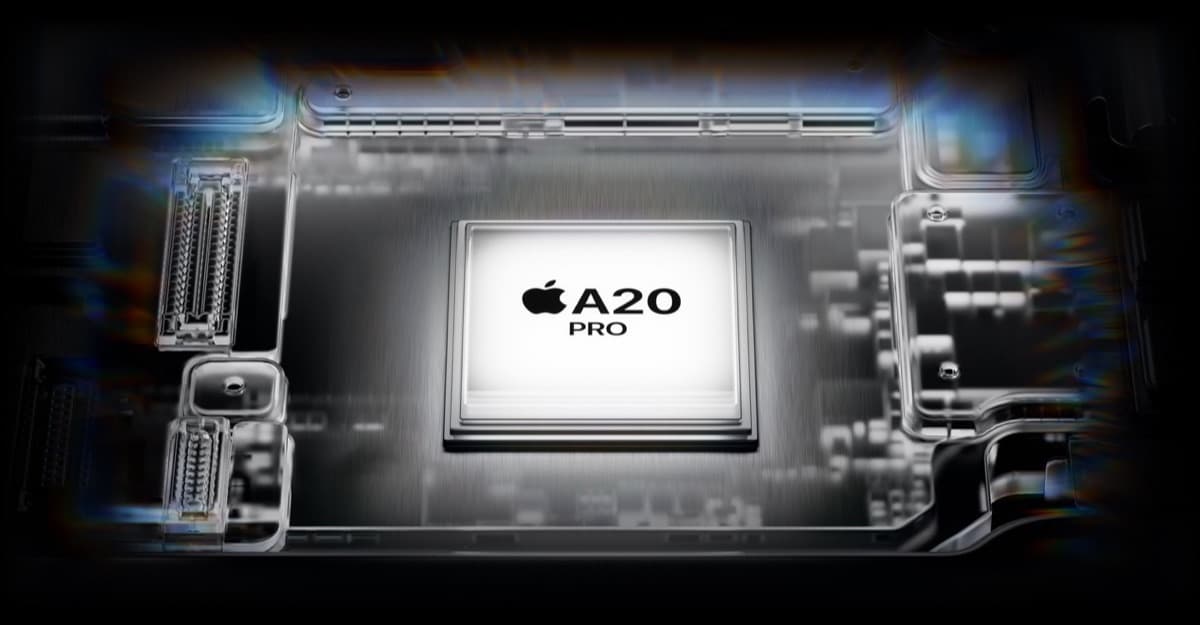
Apple introduced A20 Pro with iPhone 18 Pro and iPhone 18 Pro Max on September 9. The same chip also appears in Apple’s technical specifications for iPhone Duo.
Apple says A20 Pro is built using the latest 2-nanometer process technology. It combines a 6-core CPU, a 7-core GPU with Neural Accelerators, and a Dual 16-core Neural Engine. The company also claims higher memory bandwidth, faster graphics, and twice the AI processing of A19 Pro.
Those numbers come from Apple’s own comparisons. They describe Apple’s intended gains, but they are not independent benchmark results. A20 Pro’s real gaming performance, thermals, and battery efficiency will need hands-on testing after the new iPhones ship.
What A20 Pro includes
Apple’s iPhone Duo technical specifications provide the clearest breakdown of the chip:
| Part | Confirmed design |
|---|---|
| CPU | 6 cores, with two performance cores, called super cores in Apple’s spec, and four efficiency cores |
| GPU | 7 cores with Neural Accelerators and hardware-accelerated ray tracing |
| Neural Engine | Dual 16-core design, for 32 total Neural Engine cores |
The CPU handles general app and system work. The GPU handles graphics and games, while the Neural Engine and Neural Accelerators are aimed at machine-learning tasks such as Apple Intelligence features and computational photography. The core count tells us how Apple has built the chip, not how every app will perform.
What Apple’s 2nm claim means
Apple says A20 Pro is built using the latest 2-nanometer process technology. A process node is a manufacturing generation, not a performance score by itself. It does not tell us the chip’s clock speeds, its real power draw, or how quickly a particular game will run.
TSMC’s 2nm page offers general context. TSMC describes its N2 process as using first-generation nanosheet transistor technology and says volume production began in the fourth quarter of 2025. Apple does not name TSMC or specify that transistor structure on its A20 Pro pages, so TSMC’s description should not be read as independent confirmation of Apple’s exact implementation.
Apple’s A20 Pro comparisons with A19 Pro
Apple’s Newsroom announcement gives three headline comparisons with A19 Pro:
- 50% more memory bandwidth.
- Graphics performance up to 40% faster.
- Double the AI processing power.
Apple ties the AI claim to the new Dual 16-core Neural Engine and its 32 total cores. More memory bandwidth can help move data between the chip and memory, while the larger GPU and Neural Accelerators give Apple more hardware for graphics and machine-learning workloads.
The important qualifier is “Apple says.” These are company comparisons, not independent tests. They also do not mean every app will run 50% faster or that every game will show a 40% frame-rate increase.
The package and cooling design matter too
The process node is only part of A20 Pro’s design. Apple says the package is inspired by its M-series chips, with the silicon die placed side by side with memory. That moves memory out of the chip’s thermal path and lets A20 Pro attach directly to a next-generation vapor chamber.
Apple says the vapor chamber has three times the surface area of the previous generation on iPhone 17 Pro. With new thermally conductive materials and the new package, Apple claims up to 40% better sustained performance than the previous generation.
That claim is separate from the up-to-40% graphics comparison with A19 Pro. The graphics number describes Apple’s chip comparison. The sustained-performance number describes Apple’s claim for the chip and cooling system against the previous iPhone Pro generation. Neither is an independent test. For background, the earlier iPhone 17 Pro vapor-chamber design shows why heat management matters during long workloads, but its gaming results do not tell us how A20 Pro will perform.
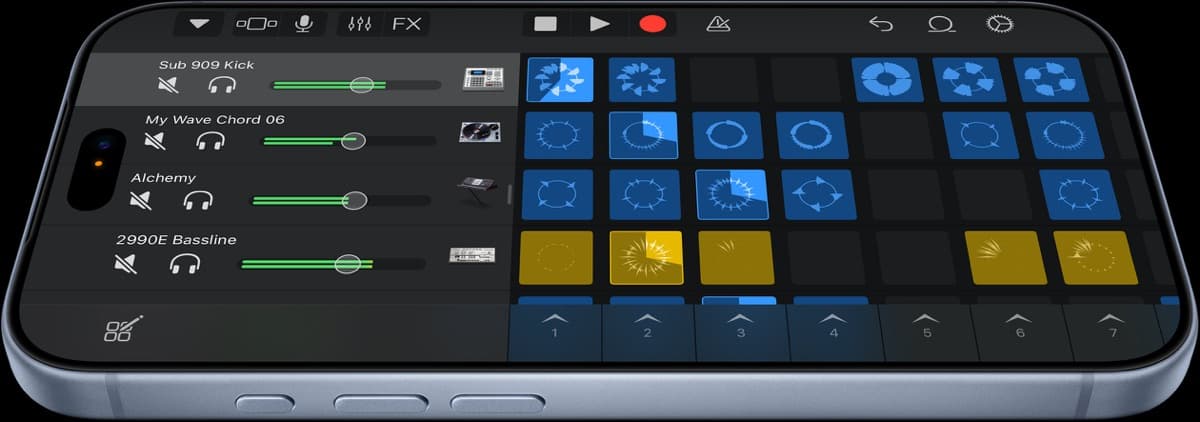
What A20 Pro could change in daily use
Camera processing
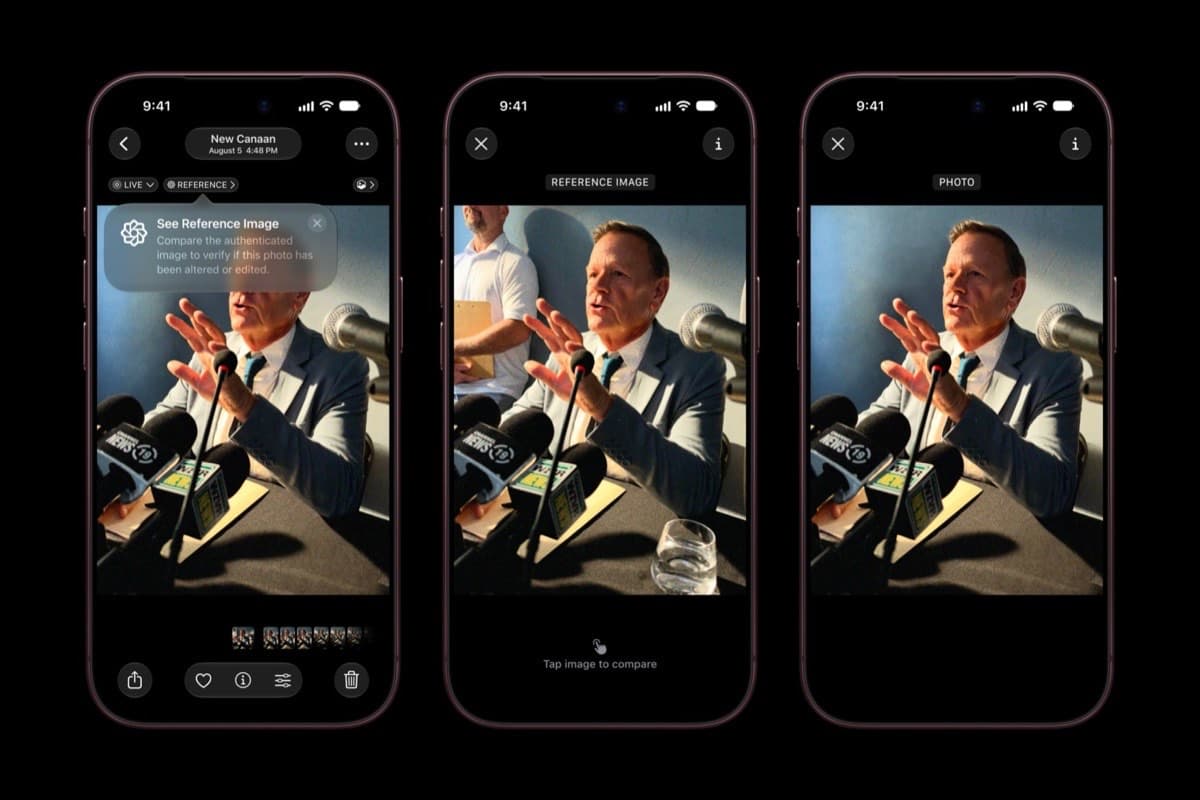
Apple says the Neural Engine accelerates computational photography. That could give the new camera pipeline more room for tasks such as image processing, low-light adjustments, video effects, and Apple’s Reference Image features on iPhone 18 Pro. The final photo still depends on the camera sensors, lenses, software, and Apple’s image processing choices. A20 Pro’s core count alone cannot prove better photos.
Apple Intelligence and Siri AI
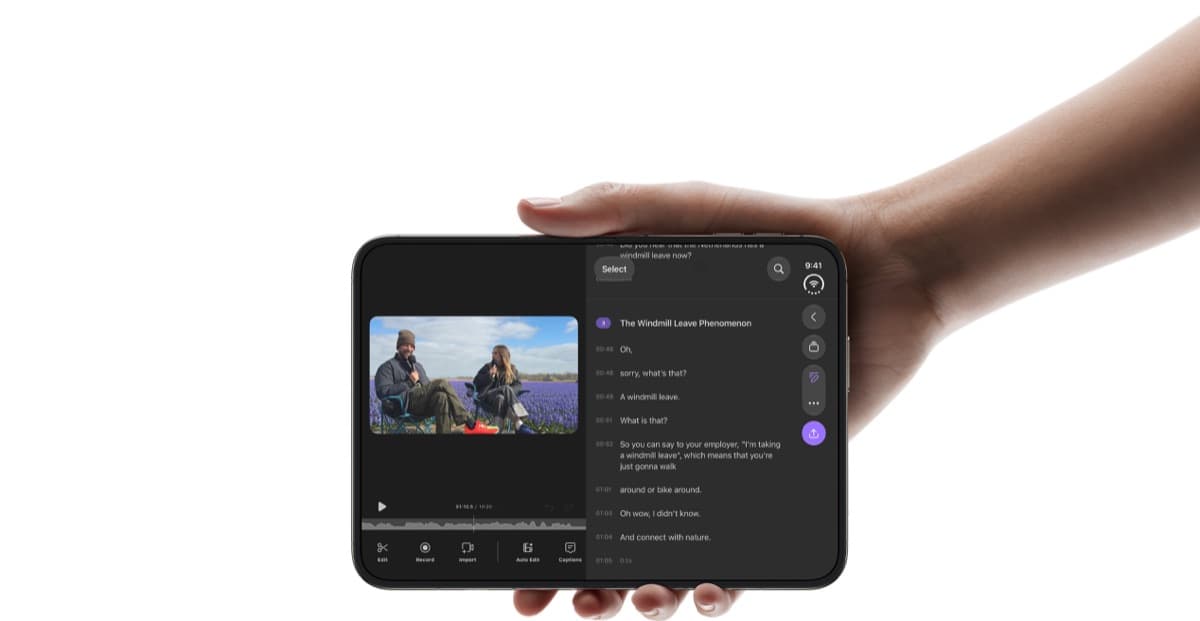
The Dual 16-core Neural Engine is designed for on-device AI models. Apple says A20 Pro brings double the AI processing power of A19 Pro, while Apple Intelligence uses on-device processing and Private Cloud Compute for heavier work.
That hardware headroom should matter most as iOS 27 expands Siri AI and Apple Intelligence across apps, photos, the Camera app, and system actions. It does not make every Siri request local, and it does not remove software, language, or regional availability limits. Apple is rolling out Siri AI as a beta with iOS 27.
Graphics and gaming
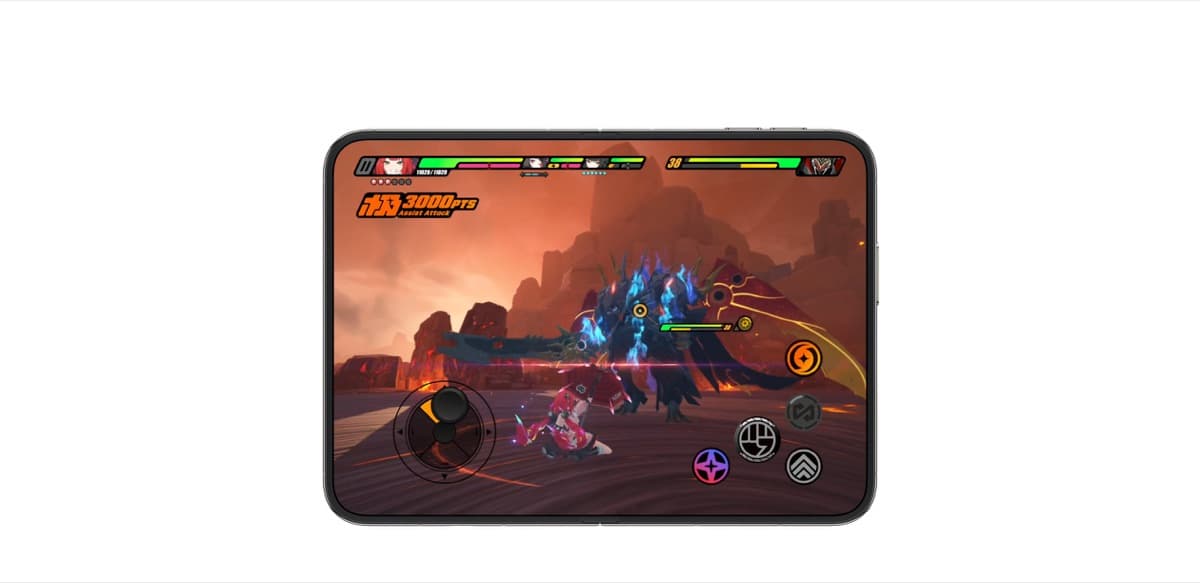
The 7-core GPU, Neural Accelerators, hardware ray tracing, and larger vapor chamber give A20 Pro the hardware Apple is using to target demanding games and longer AI workloads. That combination targets the kind of long, demanding work where heat can limit performance.
Real frame rates, surface temperatures, throttling, and battery drain still need independent testing. Apple has not published those results for A20 Pro.
Battery efficiency
Apple calls A20 Pro its most powerful and efficient iPhone chip design yet and links the new iPhones’ battery improvements partly to more efficient Apple silicon. That does not isolate the chip’s contribution. Battery size, the display, the C2 modem, software, and the workload all affect how long an iPhone lasts.
A20 Pro is separate from N1 and C2
A20 Pro is the main application processor. It is not the wireless or cellular modem hardware.
Apple says iPhone 18 Pro and iPhone 18 Pro Max use N1, an Apple-designed wireless networking chip for Wi-Fi 7, Bluetooth 6, and Thread. Apple also identifies C2 as its next-generation cellular modem system. The iPhone Duo specifications list A20 Pro, N1, and C2 as separate components too.
In practice, these chips work as part of the same phone, but they have different jobs. A20 Pro handles apps, graphics, camera computation, and on-device AI. N1 handles wireless networking. C2 handles cellular connections and their related power demands.
Which iPhones get A20 Pro?
Apple lists A20 Pro in iPhone 18 Pro, iPhone 18 Pro Max, and iPhone Duo. The phones do not have identical designs, batteries, displays, or cooling systems, so the same chip name does not guarantee identical sustained performance across all three models.
For context, U.S. iPhone 18 Pro and iPhone 18 Pro Max preorders begin at 5 a.m. PT on September 12, with availability on September 18. iPhone Duo preorders begin at 5 a.m. PT on October 16, with availability on October 23.