
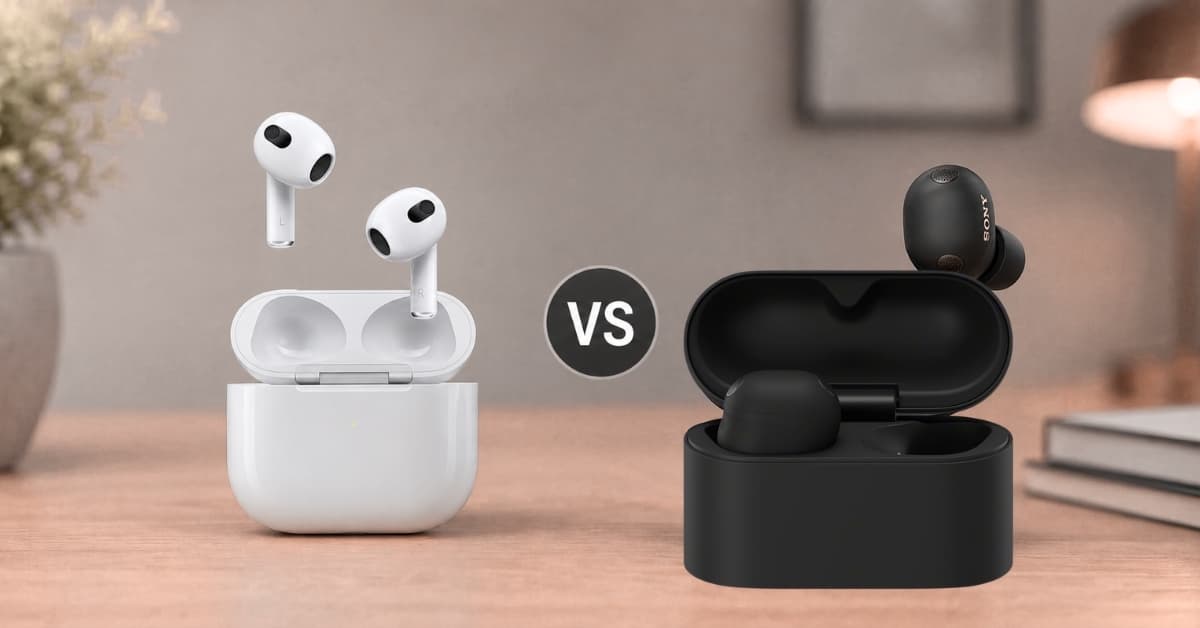
I have always recommended AirPods Pro 3 as the safest, smartest choice if you live inside Apple’s ecosystem. They’re effortless, full of advanced features, and deeply integrated into everything I use daily.
But recently, Sony introduced the new WF-1000XM6, positioning it as the best noise-canceling earbuds. I thought I’d test them for a few days and go back. That didn’t happen. It changed how I listened to music. Here’s my full comparison of AirPods Pro 3 vs Sony WF-1000XM6, including their noise cancellation, sound quality, battery life, and more.
AirPods Pro 3 vs Sony WF-1000XM6: Quick comparison
| Features | AirPods Pro (3rd generation) | Sony WF-1000XM6 |
|---|---|---|
| Price | $249 (often ~$199 on sale) | ~$329 (premium tier pricing) |
| Audio Codec Support | AAC only (Apple optimized) | SBC, AAC, LDAC (Hi-Res Audio) |
| Driver / Sound System | Custom Apple driver + H2 chip | Sony Dynamic Driver X + dual processors |
| Active Noise Cancellation | Adaptive ANC | Advanced ANC |
| Transparency Mode | Adaptive Transparency + Conversation Awareness | Ambient Sound Mode (adjustable levels) |
| Battery (ANC ON) | Up to 8 hours | ~8 hours (≈24 hrs with case) |
| Water Resistance | IP57 (dust + water resistant) | IPX4 (splash resistant) |
| Special Features | Spatial Audio, heart-rate sensor, live translation | 360 Reality Audio, DSEE Extreme upscaling |
| App & Customization | Minimal control (no manual EQ) | Full EQ + deep customization (Sony app) |
| Ecosystem Integration | Deep Apple ecosystem | Cross-platform (Android + iOS) |
| Design | Stem design (lighter, open feel) | Stemless (deeper seal, bulkier) |
| Charging | MagSafe + USB-C | USB-C + wireless charging |
My setup and testing process
I didn’t test these like a reviewer sitting in a quiet room switching tracks. I used them like I actually use earbuds.
My daily setup is an iPhone and a MacBook, with Spotify constantly running and YouTube in between. I wore both earbuds for long stretches, even in crowded places, to listen to music and attend calls.
Playing the same track repeatedly on both earbuds made the real differences show up, not in features, but in feeling. And that’s where this comparison gets uncomfortable.
First impressions: Build, fit, and comfort
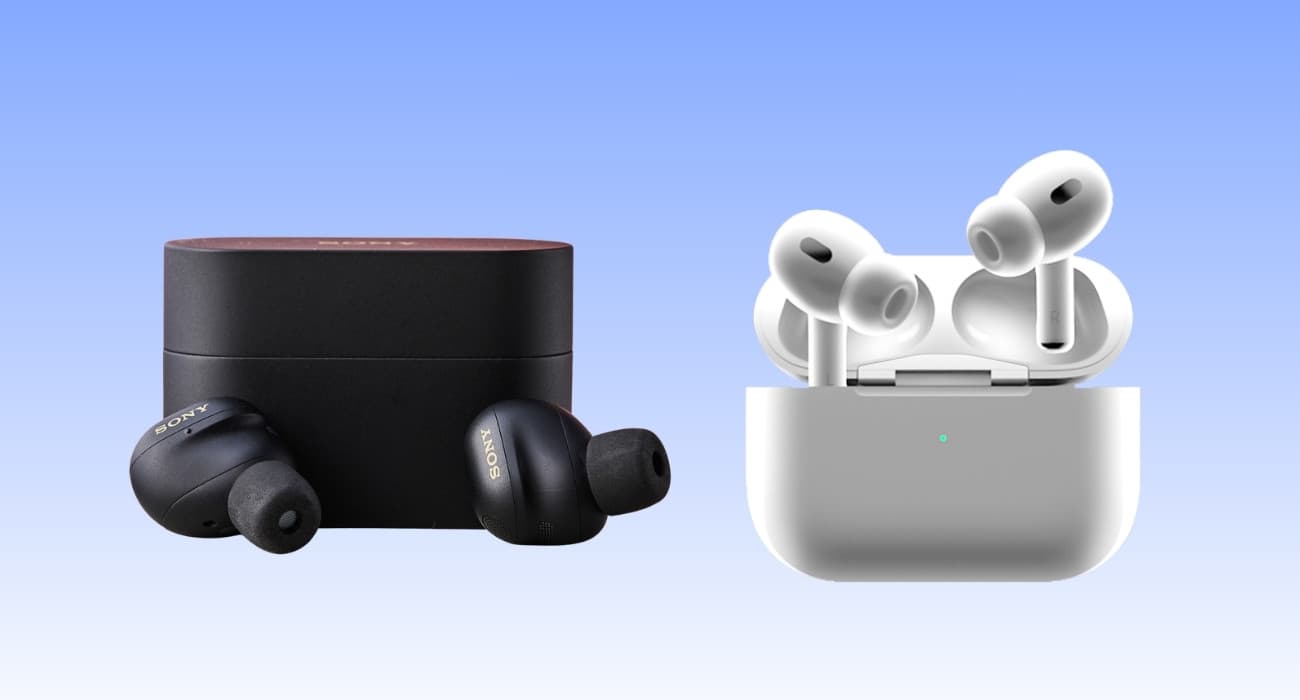
The AirPods still win the moment you open the case. It’s compact, precise, and disappears into my pocket. Sony, on the other hand, prioritized performance over elegance. The case is bulkier and inconvenient to carry.
But the earbuds themselves flipped my expectations. Sony’s XM6 earbuds are smaller than the AirPods Pro 3, but their in-ear fit is different
AirPods feel light and effortless. You put them in, and they vanish thanks to the foam-infused silicone tips. That’s their strength and maybe also their limitation. Sony’s earbuds feel more deliberate. They use a polyurethane and silicone foam combination that sits deeper, seals better, and feels anchored. But not comfortable for longer usage.
If I am going for a run or hitting the gym, the XM6 are my first choice as they are less likely to slip out of my ears. However, the AirPods Pro 3 gets one step ahead with better dust and water resistance and fitness tracking features.
Sound quality: This is where things got real
The first time I switched from AirPods to Sony on the same track, I didn’t need a second opinion. Something felt different. Not louder or exaggerated, just more complete.
AirPods sound clean and balanced, tuned to work for everyone. Apple has integrated a multiport acoustic design for deeper bass, a broader soundstage, and beautifully clear vocals. I prefer AirPods for the personalized Spatial Audio with dynamic head tracking when watching supported content. However, you don’t get built-in EQ.
Sony doesn’t care about everyone. Made together with famous audio engineers, the XM6 is studio-quality tuned to allow you to feel music. The bass is textured, deep and under control. Voices sound more natural. Highs are detailed without being harsh. And the biggest difference? The soundstage feels wider, like instruments aren’t fighting for the same spot.
For better sound quality, Sony provides LDAC high-resolution codec compatibility, real-time restoration of compressed files, and the Sound Connect app that allows adjusting equalizer settings using custom presets. So, XM6 is the best choice when you need to play with settings, while the AirPods Pro 3 is enough to enjoy music.
Noise Cancellation & Transparency Mode
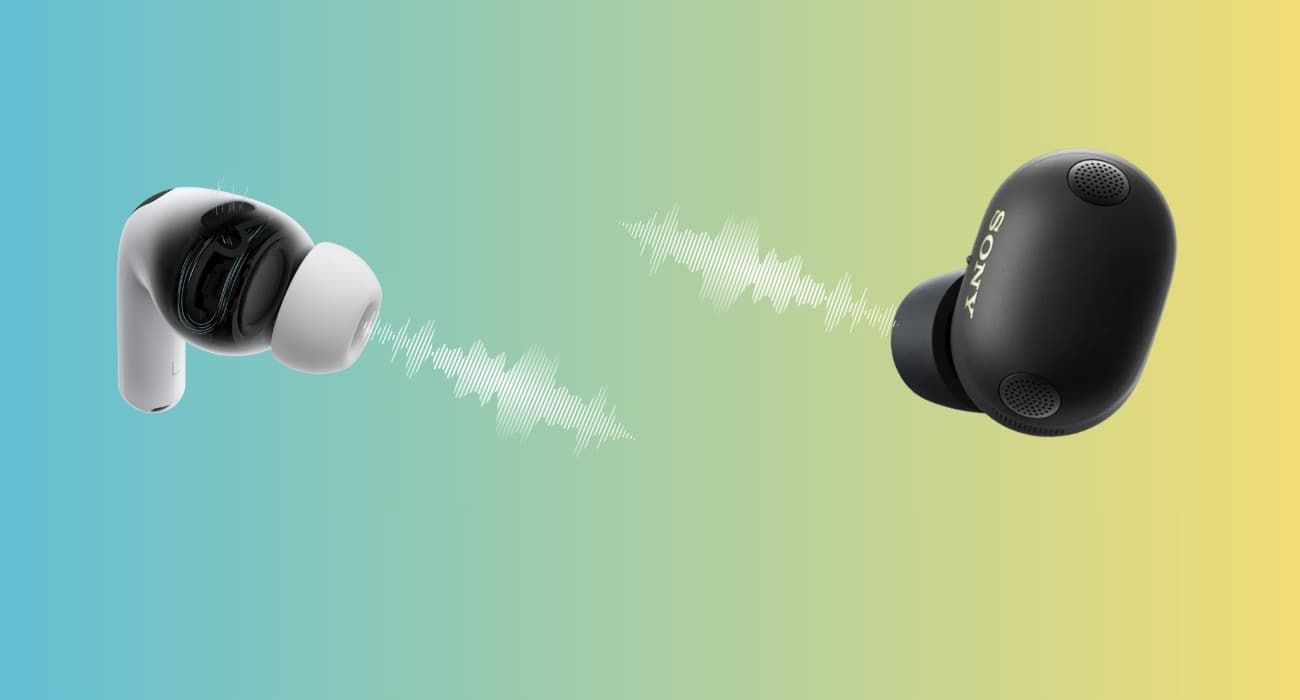
I tested noise cancellation in real situations: traffic, fan noise, and general city chaos.
Sony blocks more thanks to the HD noise-canceling processor QN3e, multi-noise sensor, and adaptive NC optimizer. Moreover, the integrated V2 processor and eight mics monitor ambient noise in real time to adapt the noise control. Low-frequency noise, like engines or background chatter, just fades out more aggressively.
AirPods feel smarter but less forceful. They adapt well, but they don’t isolate as deeply. Transparency mode is where Apple continues to have an advantage. It feels effortless and natural, almost like you’re not wearing earbuds at all. Seamless conversation is made possible by Adaptive Audio, and environmental sounds don’t feel artificial.
While Sony has good sound transparency in its Auto Ambient Sound mode, my experience was quite robotic. This led to a unique divide in how I utilized them. For listening to music, Sony earbuds would always be preferred. But when it came to communication or awareness, AirPods worked better.
Call quality and mic performance
No matter how good Sony sounded for music, when it came to calls, AirPods were simply more reliable. Voices came through clearer, background noise was handled better, and people on the other end noticed the difference.
Sony isn’t bad, but it’s inconsistent. The calls were slightly better in outdoor noisy environments due to the dual-microphone beamforming.
And here’s the uncomfortable truth: call quality matters more than we admit. It’s not exciting, but it’s part of daily use. This is one of the few areas where AirPods clearly won.
Features and ecosystem lock-in
AirPods are frictionless. They connect immediately with just one tap, switch between devices without effort, and integrate so smoothly that you stop thinking about them entirely. Moreover, Apple has integrated real-time Live Translation, heart rate tracking, Precision Finding, and hearing aid features. Combining with iOS 26, AirPods Pro 3 becomes more than a music listening companion.
On the contrary, Sony puts you in charge. The app lets you tweak EQ, adjust behavior, and customize how everything works. At first, this felt like extra work. Soon enough, I found myself adjusting my sound profiles based on what I was listening to. This is something I have never done with AirPods since I never had to.
I also enjoyed the smart listening features like the Quick Access, Wear to Play, scene-based streaming, and more. Also, XM6 supports Google Gemini for hands-free commands. But most of the features are meant for Android, so I can’t suggest it for iOS users.
Battery life and charging reality
Battery life is almost similar for both, with ANC being used. You get up to eight hours of playback, and they can go for 24 hours with the case.
However, if you use spatial audio with head tracking and heart rate sensing, your AirPods may run out sooner. You can fast charge it wirelessly with MagSafe chargers.
Sony has also given Qi-supported wireless charging, but Apple’s technology is better. Also, there’s a Battery Care feature in the Sound Connect app to make the XM6 long-lasting.
Who should choose what (My honest take)
This isn’t about which is “better.” It’s about what you actually value when no one’s watching.
If you care about simplicity, calls, health features, and seamless Apple ecosystem integration, AirPods Pro 3 is still the smarter choice. It reduces friction in ways that are hard to quantify but easy to feel. AirPods are also cheaper with industry-level flagship features.
But if you care about sound and use Android, Sony WF-1000XM6 pulls you in a different direction. It makes you more aware, more engaged, and more intentional with how you listen.
Final verdict: Did I regret switching?
No. But I didn’t fully replace my AirPods either. I ended up using both, depending on what I needed.
But if you forced me to choose just one? I’d pick Sony. Not because it’s more convenient or smarter. But because it made me enjoy music more immersively, according to my taste. And that’s a rare upgrade.
You might also like: