
Foldable phones have finally reached the point where choosing one isn’t just about getting a bendable screen. You can choose based on your preference, whether it is productivity, AI, camera or usability.
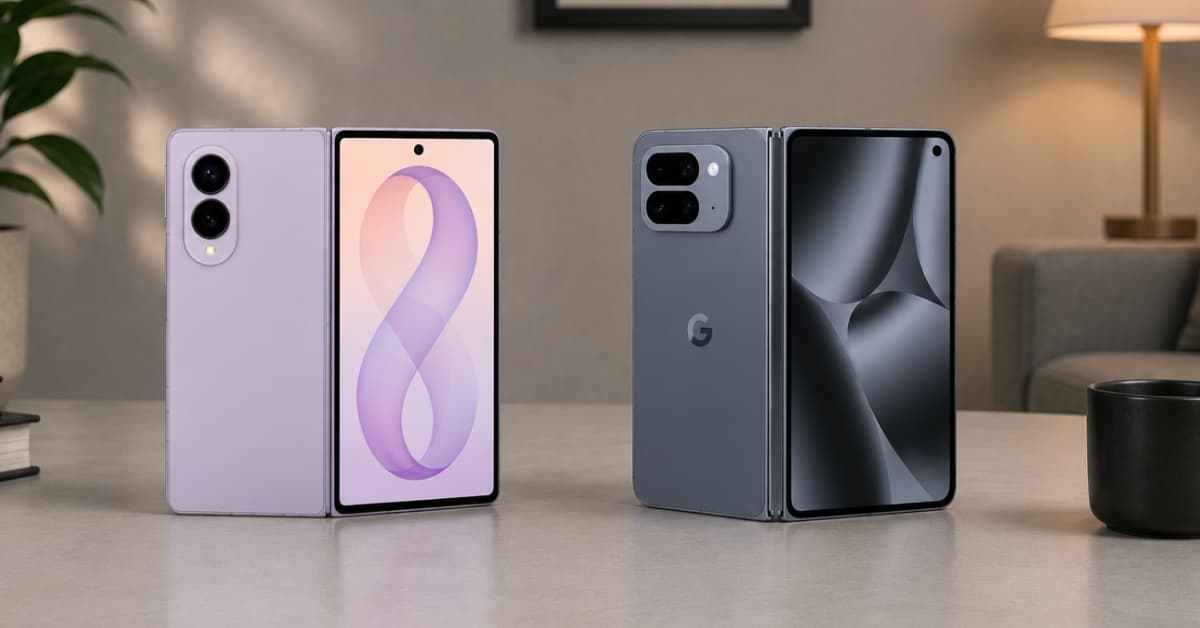
With the Samsung Galaxy Z Fold8 now officially announced, Samsung is taking a different approach than previous generations. Instead of simply making the Fold more powerful, it has made it lighter, thinner, and more comfortable to use. Meanwhile, Google’s Pixel 10 Pro Fold continues to focus on photography, AI, and the clean Pixel software experience.
If you’re spending flagship money, here’s which is better: Galaxy Z Fold8 or Pixel 10 Pro Fold in 2026.
Samsung Galaxy Z Fold8 vs Google Pixel 10 Pro Fold: Quick specs comparison
| Feature | Samsung Galaxy Z Fold8 | Google Pixel 10 Pro Fold |
|---|---|---|
| Main Display | 7.6-inch Dynamic AMOLED 2X | 8.0-inch Super Actua Flex OLED |
| Cover Display | 5.5-inch AMOLED | 6.4-inch OLED |
| Refresh Rate | Up to 120Hz | 1-120Hz (inner), 60-120Hz (outer) |
| Peak Brightness | Up to 3,000 nits | Up to 3,000 nits |
| Processor | Snapdragon 8 Elite Gen 5 for Galaxy | Google Tensor G5 |
| Battery | 4,800mAh | 5,015mAh |
| Weight | 201g | 258g |
| Storage | 256GB, 512GB, 1TB | 256GB, 512GB, 1TB |
| Software | One UI on Android | Pixel UI on Android |
| Availability | Pre-order now | Available |
Samsung Galaxy Z Fold8 vs Google Pixel 10 Pro Fold: Which is better?
Samsung and Google have taken two very different approaches to their latest foldables. The Galaxy Z Fold8 focuses on portability, multitasking, and productivity with a lighter design and a Snapdragon flagship processor. Meanwhile, the Pixel 10 Pro Fold doubles down on AI, computational photography, long-term software support, and a larger foldable display.
None can be considered the overall winner, as each smartphone wins in its own category. Here I have compared Samsung foldable vs Google foldable based on key aspects.
Display comparison
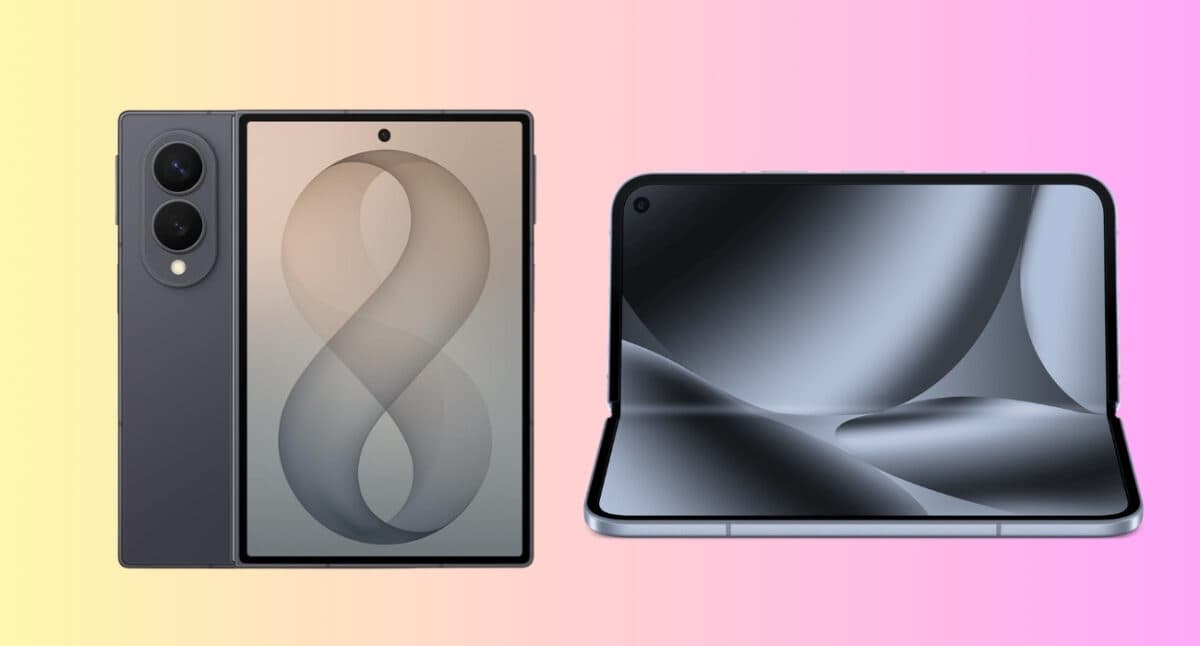
Both foldables feature premium OLED displays with adaptive 120Hz refresh rates and peak brightness of up to 3,000 nits, making them easy to use indoors and outdoors. However, their display philosophies differ.
The Galaxy Z Fold8 features a 7.6-inch 1848 x 2448 Dynamic AMOLED 2X main display and a 5.5-inch 1972 x 1248 cover display. Samsung redesigned the phone with a 4:3 inner aspect ratio and a 10:16 cover screen. I can see myself using it more for multitasking, document editing, spreadsheets, split-screen apps, etc. Moreover, the Vision Booster anti-reflective coating improves outdoor visibility.
Google opts for an even larger 8-inch Super Actua Flex inner display paired with a 6.4-inch outer display. The larger display is useful for reading, watching movies and playing games, while the traditional 20:9 cover display feels familiar when using the phone closed. Both displays support HDR support and smooth 120Hz refresh rates.
Winner: Tie. Choose Galaxy Z Fold8 for productivity and multitasking, and Pixel 10 Pro Fold if you prefer a larger display for entertainment and reading.
Design and build quality: Samsung is lighter, Google is more durable
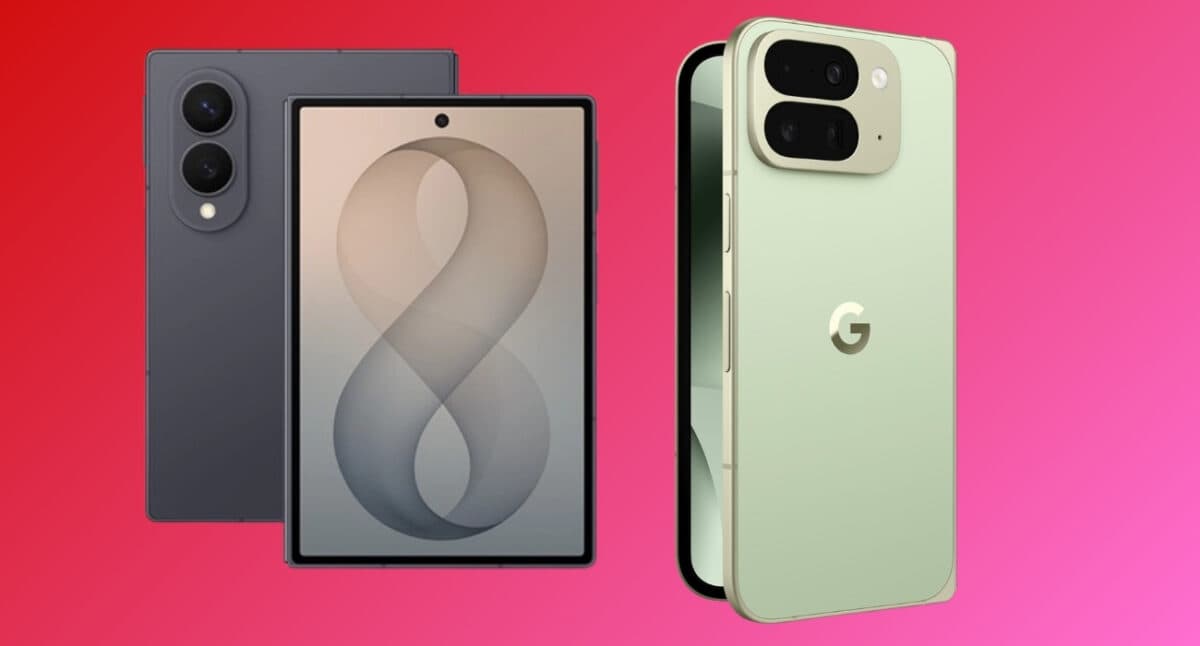
Samsung made one of the biggest design changes in the Fold series this year. At just 201g and 4.5mm when unfolded, the Galaxy Z Fold8 is significantly lighter than many competing foldables. It’s available in four beautiful colors: Lavender, Cream, Graphite, and Pistachio (Samsung.com exclusive).
I also appreciate Samsung’s new Armor FlexHinge, Armor Aluminum frame, Gorilla Glass protection, and dual-layer Flex Titanium reinforcement beneath the display for added durability. However, it’s only IP48 rated. So, I would be cautious about water damage.
Google takes a durability-first approach. The Pixel 10 Pro Fold weighs 258g but offers IP68 dust and water resistance, Gorilla Glass Victus 2, and a reinforced aerospace-grade aluminum hinge. I really like the hand feel of its silky matte back with a satin-finish aluminum frame. But there are only two colors: Moonstone and Jade.
Furthermore, Google explains that all major elements are made out of recycled materials. Overall, the full dust and fingerprint resistance remains rare among foldables, giving Pixel a notable advantage for long-term durability.
Winner: Galaxy Z Fold8 for portability and premium feel. Pixel 10 Pro Fold for durability and better environmental protection.
Performance: Snapdragon Power vs Tensor Intelligence
Performance is where Samsung gains an edge.
The Galaxy Z Fold8 is powered by the Snapdragon 8 Elite Gen 5, Qualcomm’s latest flagship processor optimized specifically for Samsung devices. Combined with up to 16GB RAM and next-gen CPU, GPU, and NPU gains, I am sure it delivers more gaming headroom, better sustained performance of demanding workloads, improved AI capabilities, and faster multitasking.
Google equips the Pixel 10 Pro Fold with the Tensor G5 processor and standard 16GB RAM. While Tensor chips are not designed to top benchmark charts, they provide an extra boost to Google’s AI features, image processing, speech recognition, and on-device machine learning. Based on my experience, day-to-day performance is fluid, although some heavy games may occasionally struggle.
Winner: Samsung Galaxy Z Fold8 for more raw performance.
Camera comparison: Google brings the bigger photography flex
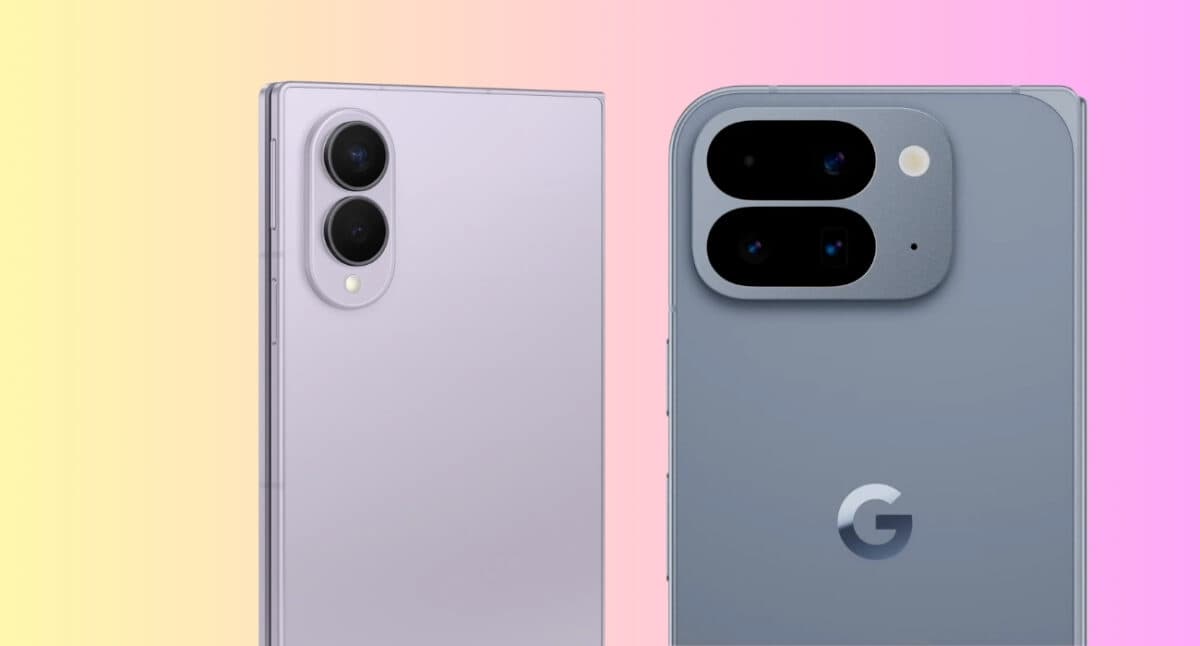
Google continues to prioritize computational photography.
The Pixel 10 Pro Fold features a 48MP Quad PD wide main camera, 10.5MP dual PD ultrawide with Macro focus, and 10.8MP 5x telephoto camera with OIS and Super Res Zoom up to 20x. Google’s software features, including Camera Coach, Magic Eraser, Best Take, Photo Unblur, Reimagine, hands-free astrophotography, and much more, consistently produce some of the best smartphone photos available.
Samsung takes a creator-focused approach with dual 50MP rear cameras, 8K video recording support, Nightography, ProVisual Engine, and Dual Recording. You will also get 2x optical-quality zoom and a 100-degree field of view. I liked how the Fold8 makes excellent use of its folding design to preview shots, record with multiple cameras simultaneously, and edit content comfortably on the large display.
When it comes to photography, Google’s computational photography is the winner. If you’re a content creator and record videos, edit social media content, or use the foldable screen while shooting, Samsung is more suitable for you.
Winner: Pixel 10 Pro Fold
Battery life and charging: Close on paper, different in practice
Battery capacity alone doesn’t tell the whole story.
Samsung includes a 4,800mAh battery rated for up to 26 hours of video playback. You get up to 63% charge in around 30 min of wired charging with a 45W adapter and a 3A USB-C cable. It also supports 20W fast wireless charging and Wireless PowerShare.
Meanwhile, Google’s Pixel 10 Pro Fold packs a larger 5,015mAh battery with over 24 hours of typical usage and up to 84 hours using Extreme Battery Saver. It goes up to 50% in about 30 minutes using a 30W USB-C PPS charger. For wireless charging, I have tried Pixelsnap and other Qi2-certified chargers. Only up to 15W is supported.
Samsung’s lighter weight makes its battery capacity impressive, but Google’s larger battery and aggressive power management translate into longer endurance during everyday use.
Winner: Pixel 10 Pro Fold
Software experience and AI features: Samsung wants you to multitask, Google wants you to flow
Samsung and Google both offer excellent software, but they focus on different strengths.
The Galaxy Z Fold8 ships with Android 17 and One UI 9, optimized specifically for foldables. Features like multi-window support, two- and three-way split-screen, Galaxy AI, Now Nudge, Photo Assist, and Samsung’s productivity tools make it easy to get work done quickly. I’m looking forward to the My Fancam feature for subject-centered tracking shots from videos.
The Pixel 10 Pro Fold runs Android 16 with Google’s clean interface and promises seven years of OS, security, and Pixel Drop updates. It also includes exclusive Pixel AI experiences, enhanced Gemini integration like Gemini Live, Gemini Nano, etc., Satellite SOS, Call Assist, Live Translation, Pixel Screenshots, Magic Cue, and Google’s well-known photography tools.
Winner: Galaxy Z Fold8 for multitasking and productivity, while Pixel 10 Pro Fold for AI-powered everyday features and long-term software support.
Price and value
The Pixel 10 Pro Fold starts at $1,799, while Samsung’s newly announced Galaxy Z Fold8 starts at $1,899.99 and is currently available for pre-order.
Although Samsung costs about $100 more, the lighter design, Snapdragon processor, and foldable-specific productivity features help justify the premium. However, Google provides great value for money, offering better camera quality, 16GB RAM, IP68 protection, exclusive Android features, and seven years of software support.
Here’s how the official U.S. pricing compares across storage configurations:
| Storage | Samsung Galaxy Z Fold8 | Google Pixel 10 Pro Fold |
|---|---|---|
| 256GB | $1,899.99 | $1,799 |
| 512GB | $2,099.99 | $1,919 |
| 1TB | $2,499.99 | $2,149 |
The pricing difference becomes more noticeable as you move up the storage tiers. Samsung charges roughly $100 more for the base model, about $181 more for the 512GB version, and around $351 more for the 1TB model.
However, the good part is that if you pre-order the Fold8 now via Amazon, you get a $350 gift card bundled with the phone.
Winner: Pixel 10 Pro Fold
Who should buy the Samsung Galaxy Z Fold8?
The Samsung Galaxy Z Fold8 is the better choice if you want your smartphone to replace your tablet or even your laptop for everyday tasks.
You should buy the Galaxy Z Fold8 if you:
- Need a productivity-focused foldable. One UI offers some of the best multitasking features on any smartphone, including split-screen, floating windows, drag-and-drop between apps, and taskbar shortcuts.
- Use your phone for work. The wider 4:3 inner display makes editing documents, spreadsheets, presentations, and emails much more comfortable.
- Play graphics-intensive games. Powered by the Snapdragon 8 Elite Gen 5 for Galaxy, the Fold8 delivers stronger gaming performance and better sustained workloads than Google’s Tensor-powered alternative.
- Already own Samsung devices. If you’re invested in the Galaxy ecosystem with a Galaxy Watch, Galaxy Buds, or Galaxy Tab, the Fold8 integrates seamlessly across devices.
- Prefer a lighter foldable. At just 201 grams, it’s one of the lightest book-style foldables available, making it easier to carry and use throughout the day.
- Create content regularly. Samsung’s Flex Mode, Dual Recording, and large inner display make recording and editing photos and videos more convenient.
In short, the Galaxy Z Fold8 is built for power users. If productivity, multitasking, and performance are your top priorities, it’s the foldable to beat.
Who should buy the Google Pixel 10 Pro Fold?
The Google Pixel 10 Pro Fold is ideal for buyers who want a premium foldable without sacrificing the signature Pixel experience.
Buy the Pixel 10 Pro Fold if you:
- Take lots of photos. After multiple tests, I can say Google produces some of the best smartphone photos, especially in challenging lighting conditions.
- Want the smartest AI features. Built-in Gemini integration, Pixel-exclusive AI tools, Call Assist, and other intelligent features make everyday tasks simpler.
- Prefer clean Android. Pixel delivers Google’s vision of Android without additional software layers, resulting in a streamlined user experience.
- Value long software support. Google promises seven years of Android OS, security, and Pixel Drop updates, helping the phone stay relevant for years.
- Need a more durable foldable. With IP68 dust and water resistance, the Pixel offers stronger protection against the elements than most foldable phones.
- Want better value. Starting at $1,799, the Pixel 10 Pro Fold costs less than Samsung’s Fold8 while still delivering flagship hardware and premium features.
If cameras, AI, software longevity, and overall value matter more than multitasking performance, the Pixel 10 Pro Fold is the smarter purchase.
Samsung Galaxy Z Fold8 vs Google Pixel 10 Pro Fold: Which is best foldable phone?
Samsung and Google have both pushed foldable smartphones forward, but they’ve done so in different ways.
The Galaxy Z Fold8 refines the traditional foldable formula with a lighter design, a more powerful Snapdragon processor, improved multitasking, and software that makes full use of the large inner display. It’s the phone I’d recommend to professionals, power users, gamers, and anyone who wants a foldable that can genuinely replace multiple devices.
The Pixel 10 Pro Fold, on the other hand, proves that foldables don’t have to compromise on cameras or software. Google’s combination of excellent computational photography, AI-powered features, IP68 protection, and seven years of updates makes it one of the most well-rounded foldables available today.
Ultimately, there’s no single winner because these phones are designed for different audiences. Which foldable are you choosing? Let me know in the comments below!
Must read: