
Following every major iOS update, iPhone users worldwide have increasingly reported inconsistent battery drain. The same reports appeared right after iOS 27 rolled out on September 14, 2026. While it feels like something is wrong with your iPhone, most of what happens in the first few days is normal background housekeeping, not a faulty battery.
This post explains why battery drain happens after iOS 27 and the practical fixes that actually improve battery life, based on Apple’s current support guidance.
Why your iPhone’s battery drains after an iOS 27 update
There are a few common reasons your iPhone may use more power than usual right after updating:
- Background setup work: Apple notes that your iPhone continues indexing files for search, analyzing the Photos library, syncing iCloud data, downloading new system assets, and updating apps even after the install screen disappears. All of this draws extra power and can make your phone feel warmer.
- Siri AI and Apple Intelligence activity: iOS 27 expands on-device Siri AI (on iPhone 16 models and later, and iPhone 15 Pro/Pro Max) and Apple Intelligence. On first launch, eligible iPhones may download models and process more on-device, which adds temporary load on top of the normal update work.
- New visuals and effects: iOS 26 introduced the Liquid Glass design with richer animations and transparency. iOS 27 keeps that look but adds a new transparency control and under-the-hood optimizations. Richer effects can still demand more from the processor than a plain static setup, especially on older models.
- Optimized apps: Not every app is immediately optimized for iOS 27. Some may misbehave until developers release updates, showing up as high background activity in Battery settings.
- Increased usage: Exploring new Camera controls, Siri AI features, and other changes naturally means more screen time, which itself consumes battery.
What’s normal & how long it might take
As with iOS 18 and iOS 26, Apple says a temporary impact on battery life and thermal performance is normal immediately after a major update. In its current battery support document, Apple explains that if tasks related to the update are still ongoing, opening Settings → Battery will show an Insight labeled Ongoing iOS Update or Ongoing Device Setup.
That is your cue to wait.
- Wait 48-72 hours before judging battery life. Let indexing, downloads, and app updates finish. Keep your iPhone on Wi-Fi and power overnight if you can.
- Mild warmth and a faster drop during the first day are expected, especially while charging or after restoring from a backup.
- If drain remains severe after several days and the Ongoing update Insight is gone, check Settings → Battery for unusual app activity and Settings → Battery → Battery Health for capacity. An aging battery below 80% health contributes more to short runtime than the software itself.
iOS 27 is supported on iPhone 11 and later and iPhone SE (2nd gen and later). New iPhone 18 models ship with iOS 27 preinstalled, so they don’t show the same update-related drain. If you updated an older iPhone, early beta testing showed iOS 27 is notably smoother than iOS 26 on devices like iPhone 11 Pro Max thanks to the performance cleanup, which also helps battery over time by reducing unnecessary CPU/GPU work.
Ways to maximize your iPhone battery life
Apple notes battery drain after updating is often temporary, but these settings help while the system settles and for everyday use afterward.
1. Keep an eye on battery insights
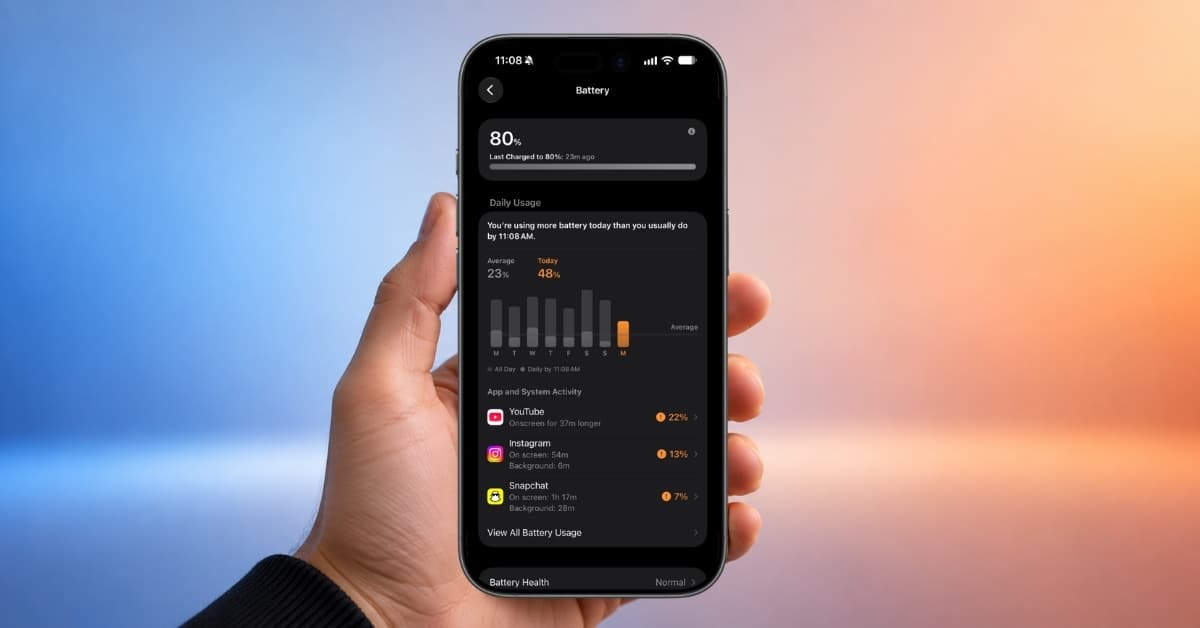
Starting with iOS 26 and continuing in iOS 27, Apple shows smarter tools in Settings → Battery that surface real-time insights into what’s actually draining power.
Open Settings → Battery and look for:
- Insights and Suggestions at the top, for example, High Background Activity, Display brightness high, or Ongoing iOS Update
- Daily Usage chart showing screen-on vs. background time per app
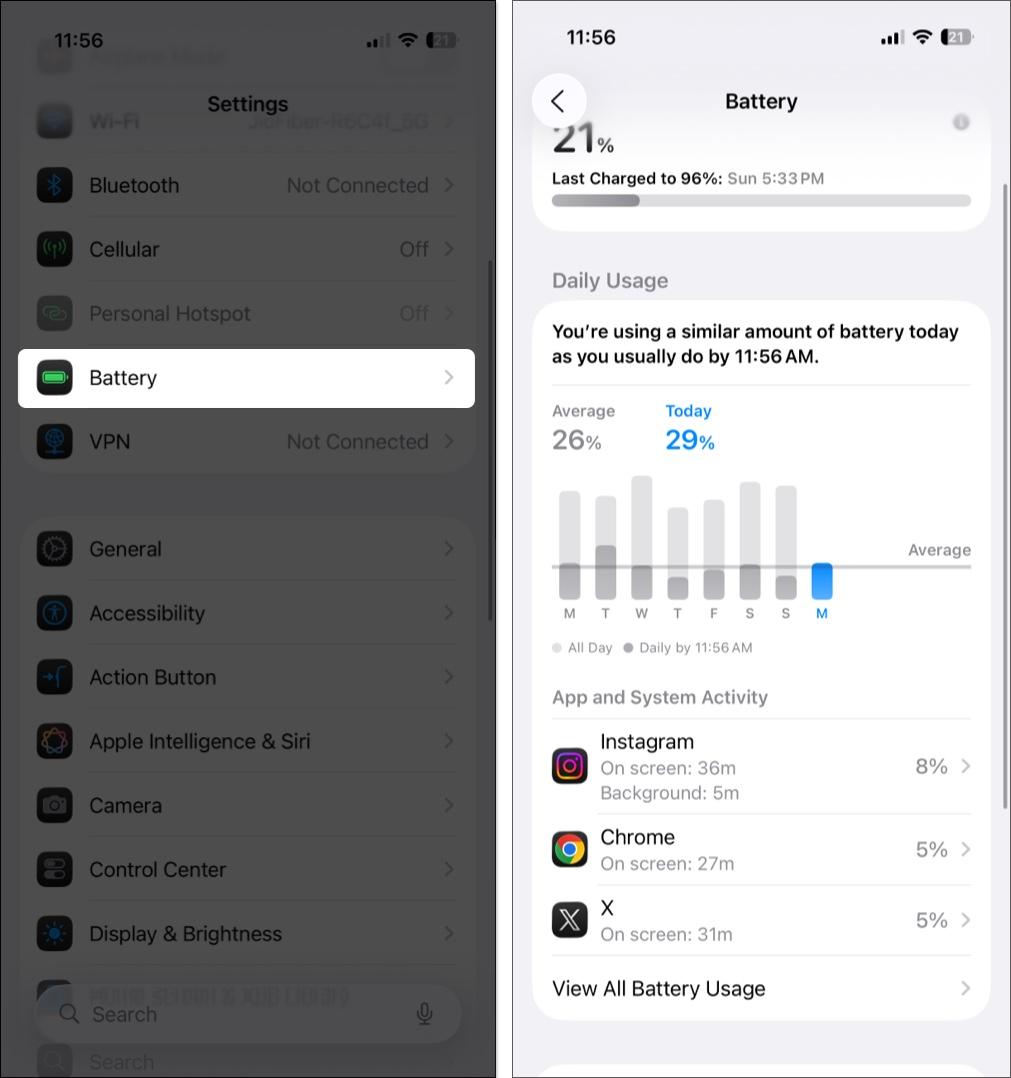
If one app shows far higher background usage than others, it may be poorly optimized for iOS 27 or stuck running. Force-quit it, update it from the App Store, or remove it if you don’t need it.
2. Turn on Adaptive Power
Adaptive Power is Apple’s smarter, low-touch battery helper introduced in iOS 26. There is no new battery toggle in iOS 27, so this is still the best automatic setting to leave on.
When enabled, it uses on-device intelligence to predict days when you use more power than usual, then gently lowers screen brightness (about 3%), limits background activity, and throttles performance slightly to conserve power. If your battery hits 20%, it can automatically turn on Low Power Mode. Otherwise, your iPhone behaves normally.
Here’s how to enable Adaptive Power in iOS 27:
- Open Settings → Battery → Power Mode.
- Toggle on Adaptive Power.
- (Optional) Toggle on Adaptive Power Notifications to get an alert when it activates.
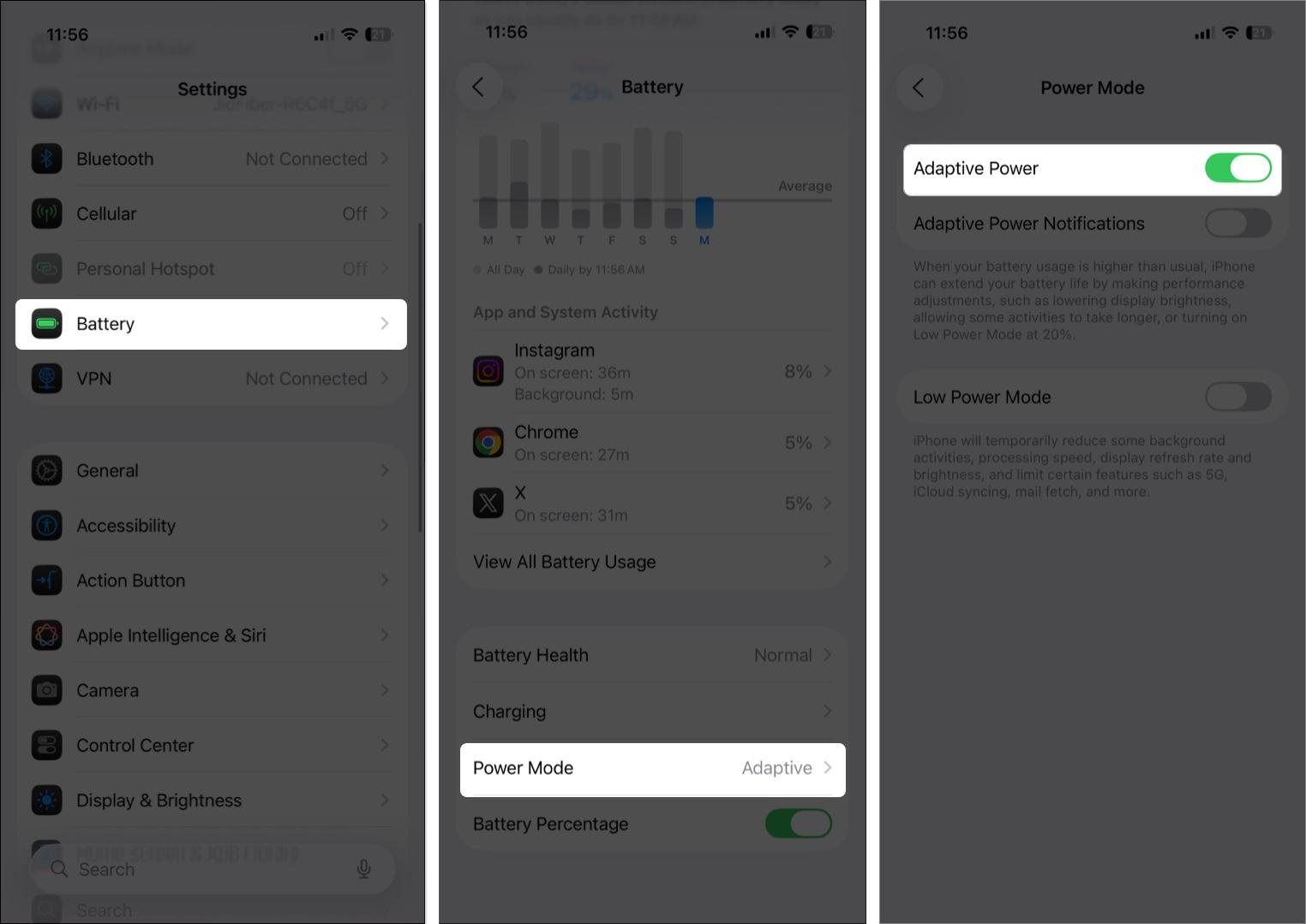
Note:
Adaptive Power requires iOS 26 or later and is available on iPhone 17 models, iPhone Air, all iPhone 16 models, and iPhone 15 Pro / iPhone 15 Pro Max. On iPhone 17, iPhone 17 Pro, iPhone 17 Pro Max, and iPhone Air, it is on by default. On older supported models, you need to turn it on manually.
Compared to Low Power Mode, Adaptive Power is far more conservative. Use Adaptive Power as your daily set-and-forget, and Low Power Mode when you need maximum conservation.
3. Update all apps
Right after a major release like iOS 27, most developers push App Store updates to optimize for the new system. The iOS 27-optimized version runs more efficiently with fewer background bugs.
Open App Store → Profile icon → Available Updates and update everything, especially banking, VPN, keyboard, camera, and work apps. Then restart your iPhone once to let everything settle.
4. Turn off / restrict background app refresh
This setting lets apps refresh data in the background. Even with Apple’s optimizations, it still drains battery heavily.
- Open Settings → General → Background App Refresh.
- Tap Background App Refresh, then select Off (or Wi-Fi only if you prefer).
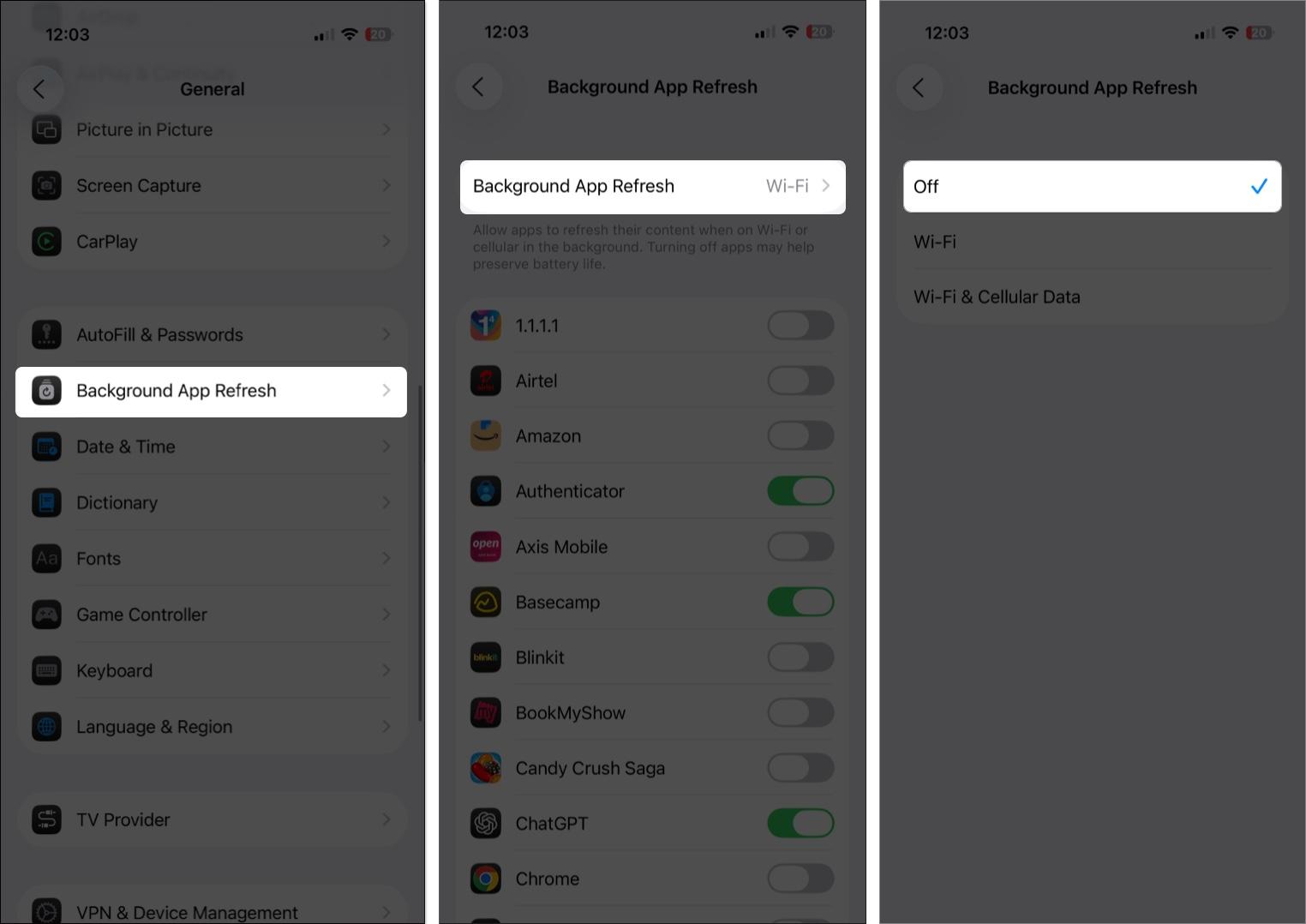
If you want a middle ground, leave it on and turn it off per-app for apps you rarely need fresh.
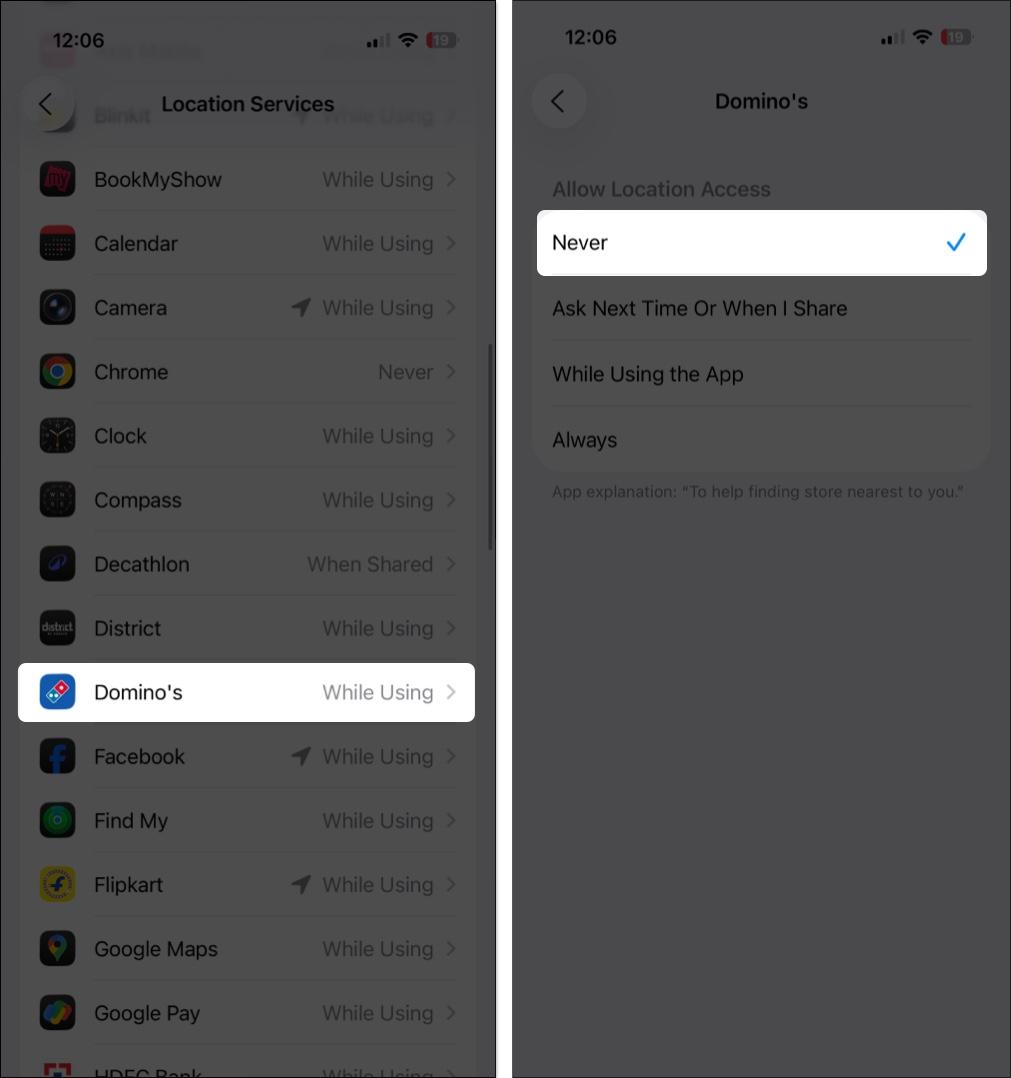
5. Disable unnecessary location services
Apps like food delivery, ride-hailing, and Weather can request constant location, which is one of the biggest GPS-related drains.
- Open Settings → Privacy & Security → Location Services.
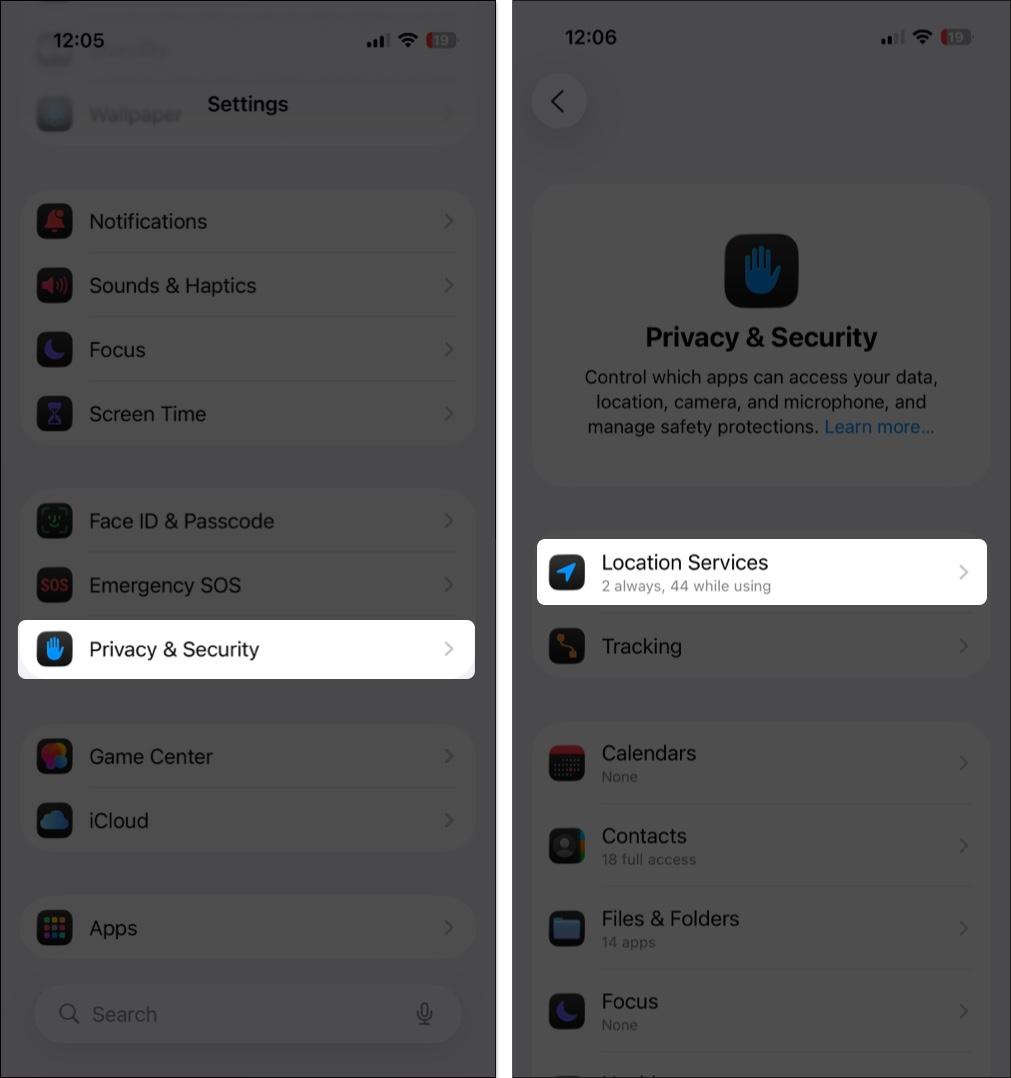
- Select the app you want to limit.
- Under Allow Location Access, choose Never or While Using the App, and consider turning off Precise Location where you don’t need it.
6. Turn off always on display
Always On Display looks great on Pro models, but keeping the screen lit when you’re not using the phone still costs power.
- Open Settings → Display & Brightness → Always On Display.
- Toggle off Always On Display.
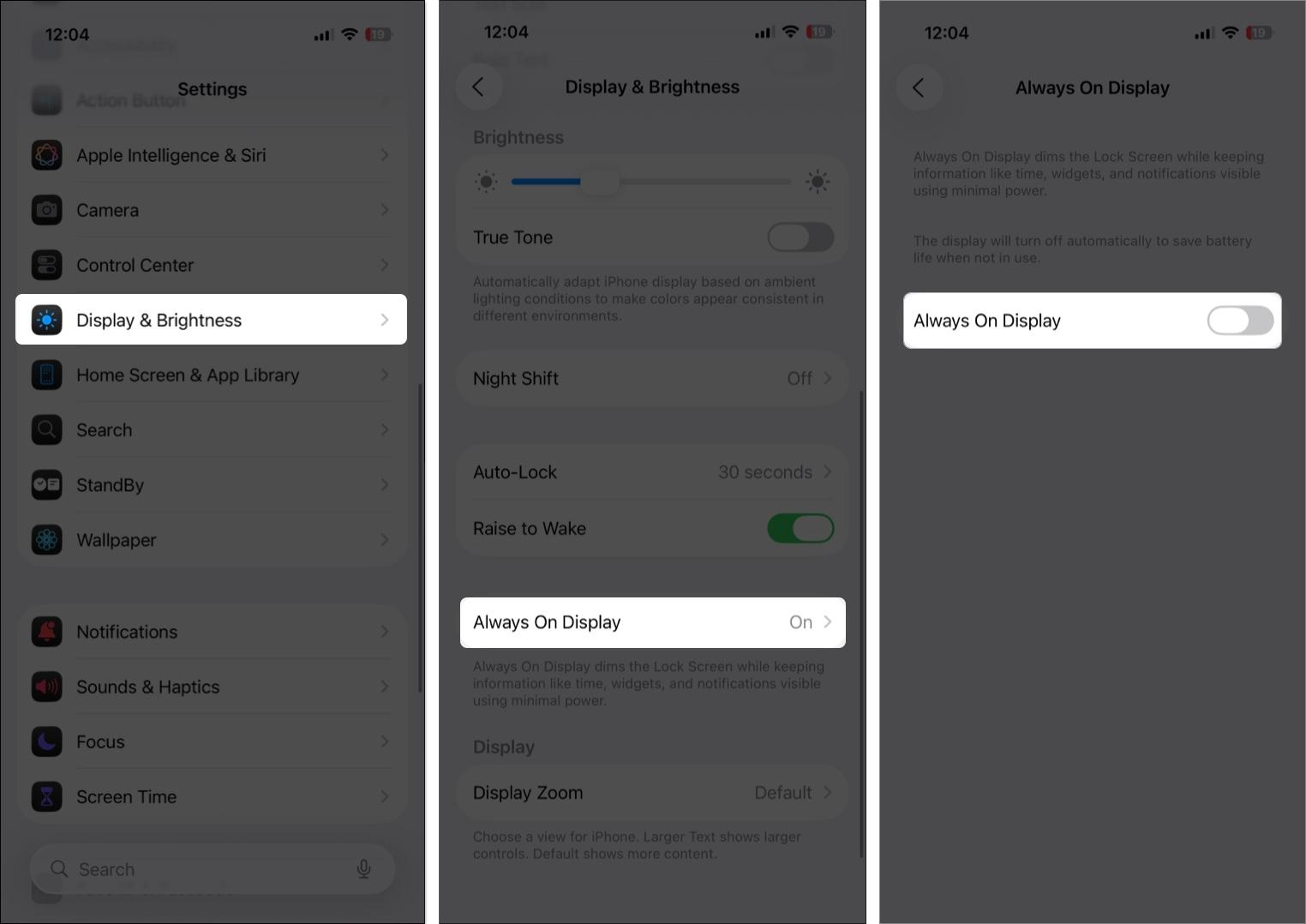
If you prefer to keep it, iOS 27 lets you keep AOD, but you can reduce its wallpaper/wallpaper dimming impact and pair it with Adaptive Power rather than running it full-brightness all day.
7. Use low power mode
Low Power Mode is still the fastest way to extend battery when you’re low. It reduces 5G usage (on most models), limits display refresh to 60Hz on ProMotion devices, pauses iCloud Photos temporarily, and turns off Mail Fetch and Background App Refresh.
- Open Settings → Battery → Power Mode.
- Toggle on Low Power Mode.
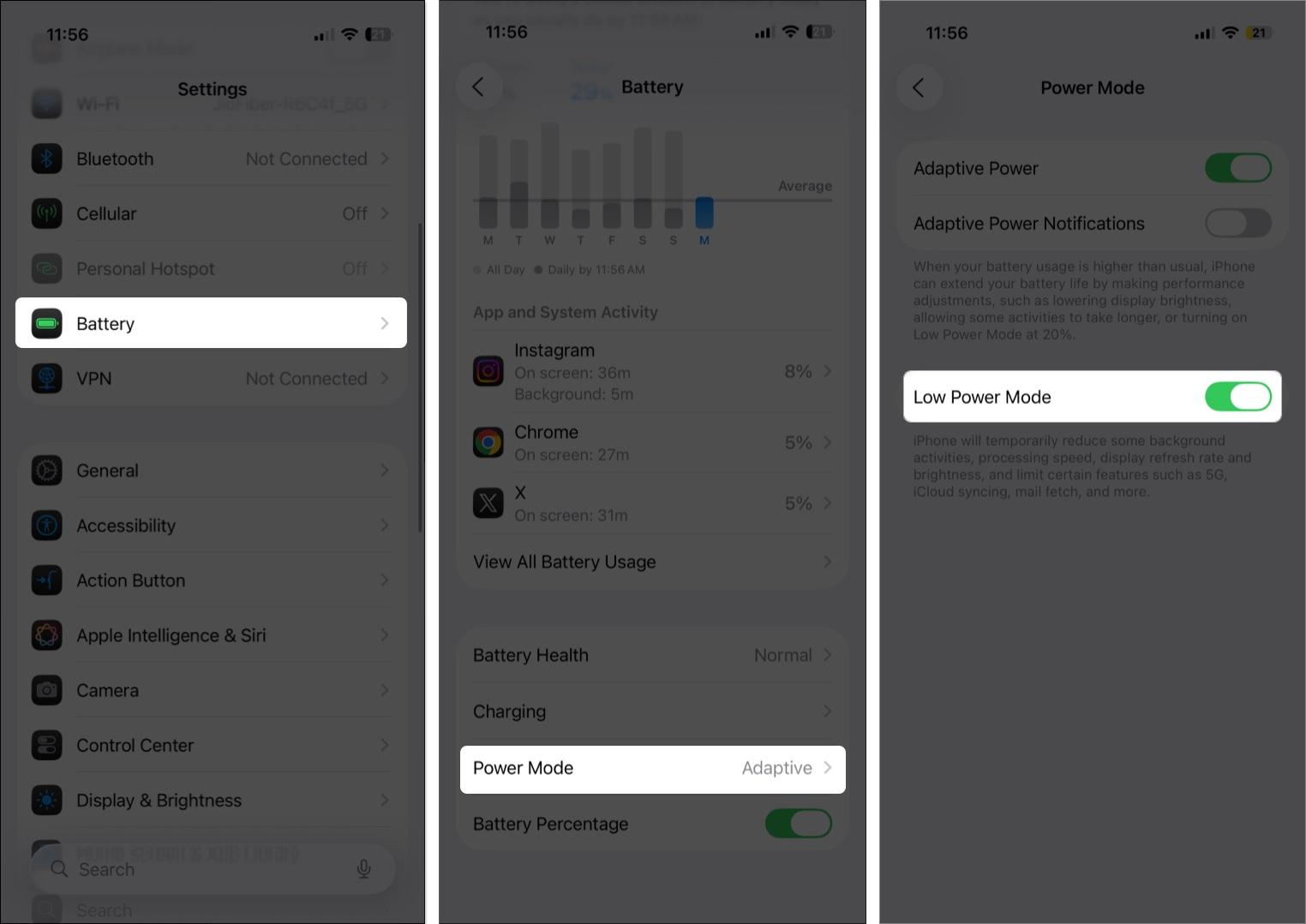
You can also add Low Power Mode to Control Center or ask Siri to turn it on. It automatically turns off when you charge above 80%. If you want it earlier than 20%, create a Shortcuts automation: Shortcuts → Automation → Battery Level → Turn on Low Power Mode.
8. Enable optimized battery charging and charge limit
You can’t stop battery aging, but you can slow it. iOS now offers two related controls in Settings → Battery → Charging:
- Optimized Battery Charging learns your daily routine and waits to charge past 80% until you need it.
- Charge Limit (80% / 85% / 90% / 95% / 100%) on iPhone 15 and later lets you cap charging to reduce time at full voltage. Choose 80-85% if you charge overnight and want longest lifespan.
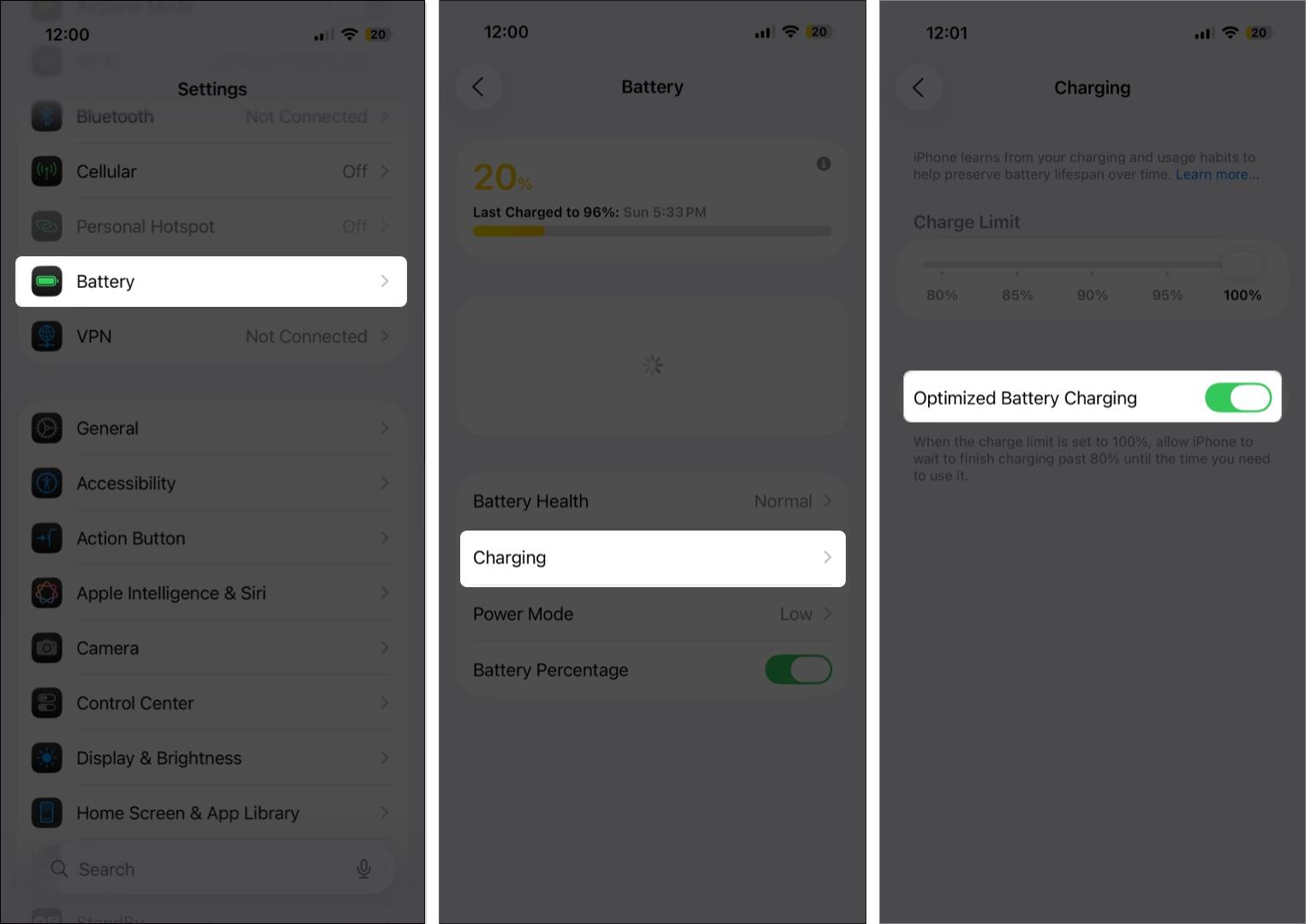
If your Battery Health is already below ~85%, capping the limit and avoiding overnight heat helps most.
9. Quit unnecessary apps
You do not need to constantly swipe away apps. iOS manages them well. But if Battery shows an app stuck in the background after the iOS 27 update, swipe it away or restart the iPhone. A single rogue app accounts for many post-update complaints more than the system itself.
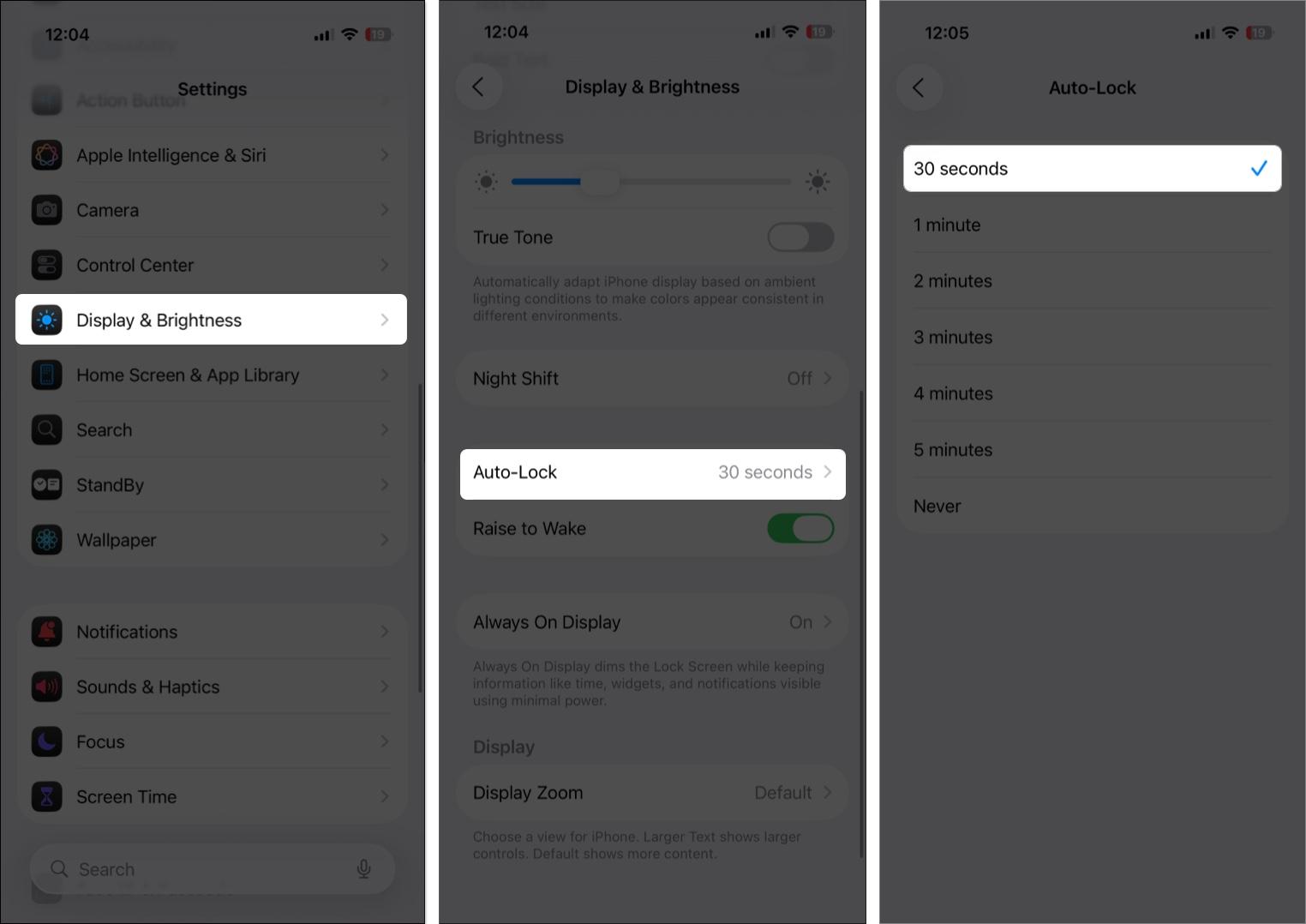
10. Adjust auto-lock
Your display is the biggest consumer of power. Shorter auto-lock means less drain when you set the phone down.
- Open Settings → Display & Brightness → Auto-Lock.
- Choose 30 Seconds (or 1 Minute if that’s more practical).
11. Disable/adjust push & fetch settings
How often your iPhone checks Mail and Calendar matters. Push keeps waking the radio.
- Open Settings → Apps → Mail.
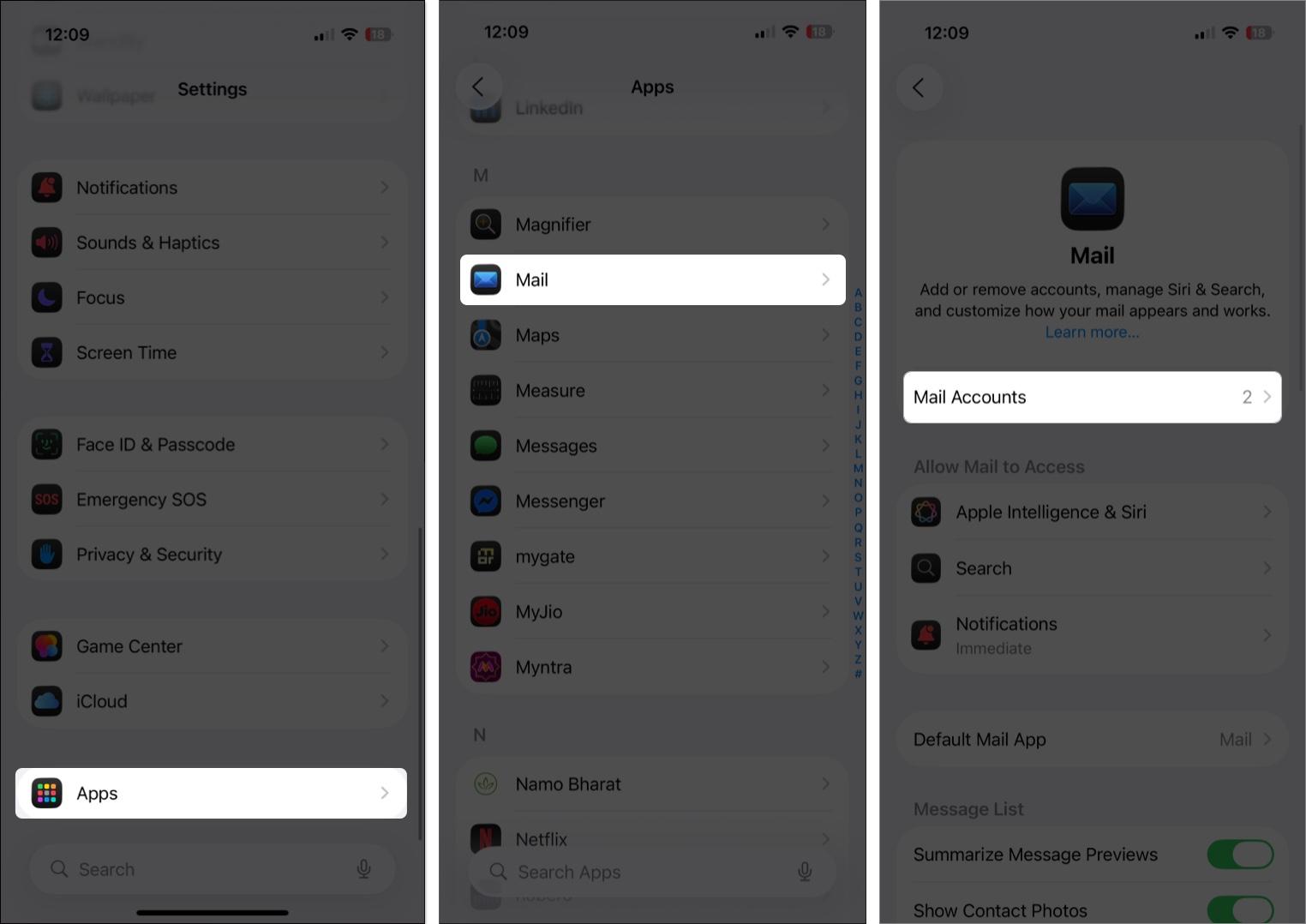
- Tap Mail Accounts → Fetch New Data.
Turn off Push and set Fetch to Hourly or Manually for accounts you don’t need instantly.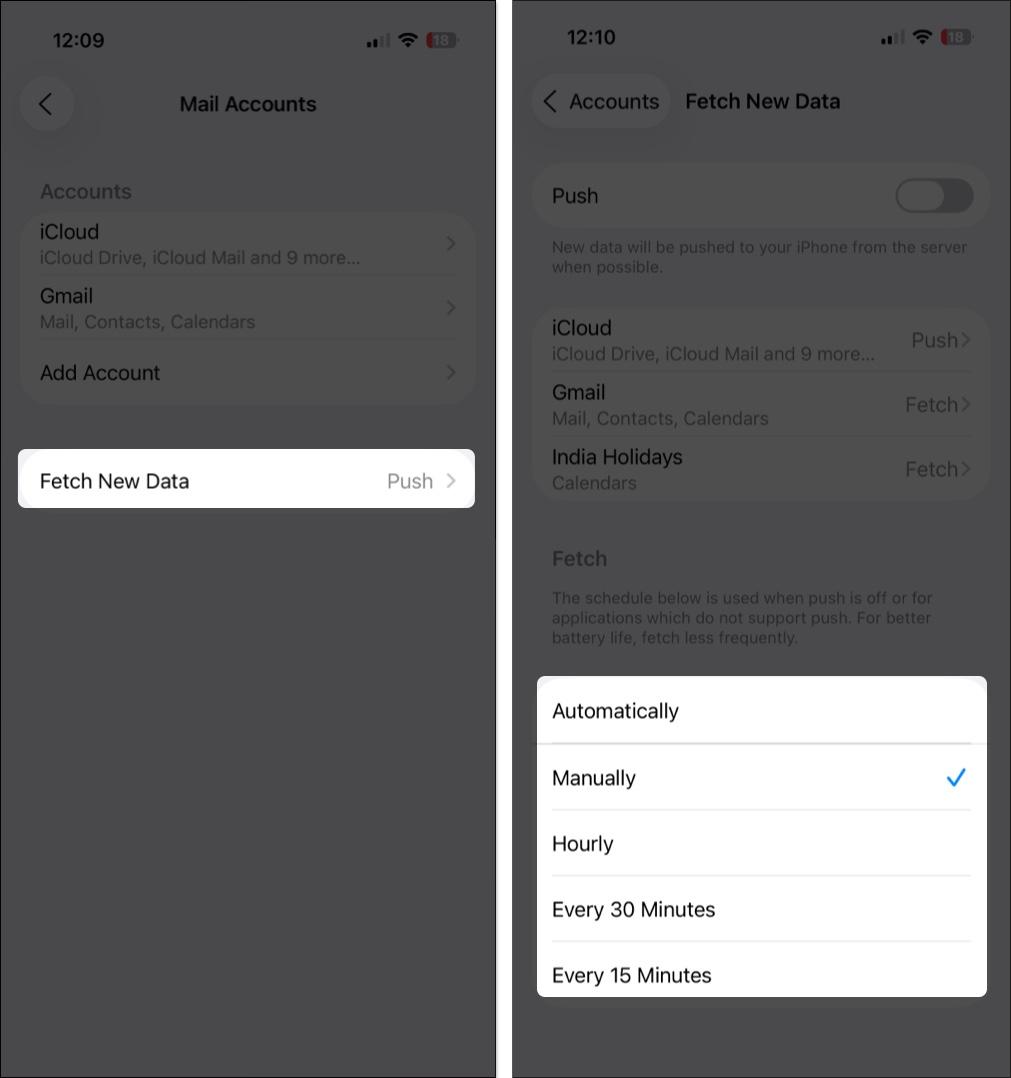
General tips to save battery life on your iPhone
- Turn off Wi-Fi and Bluetooth when not needed from Settings, not Control Center, which only disconnects temporarily.
- Keep Auto-Lock at 30 seconds: Settings → Display & Brightness → Auto-Lock → 30 Seconds.
- Turn on Reduce Motion: Settings → Accessibility → Motion → Reduce Motion. This also tones down Liquid Glass animations.
- Adjust Liquid Glass transparency: iOS 27 adds a transparency control so you can reduce translucent effects if you prefer less visual load: Settings → Display & Brightness / Accessibility → Display → Transparency.
- Use a still wallpaper: Avoid live or dynamic wallpapers. Use a still image instead.
- Use Airplane Mode in weak signal areas, like on a train. Weak cellular is a heavy battery drain as the modem hunts for signal.
- Turn off Raise to Wake in Settings → Display & Brightness if your screen turns on too often.
- Turn off Keyboard Haptics: Settings → Sound & Haptics → Keyboard Feedback → toggle off Sound and Haptics.
- Update to the latest iOS 27.x point release when Apple ships fixes. Apple continues tuning performance and power balance in follow-up updates.
These are long-tested fixes, and with iOS 27’s performance focus, they matter even more on older hardware where battery capacity is already lower.
Regain control of your iPhone’s battery life…
Battery drain right after iOS 27 is frustrating, but in most cases Apple expects it to be temporary. It usually lasts 2 to 3 days of indexing, Siri AI model setup, and app updates. Check Battery Insights for Ongoing iOS updates before changing everything else. If the issue persists after that window, the steps above, especially Adaptive Power, Background App Refresh limits, Location limits, and Low Power Mode, will bring your battery life back toward normal.
Have you noticed your iPhone battery draining faster after iOS 27? Which fixes helped you most? Share your experience in the comments below.
Don’t miss: