
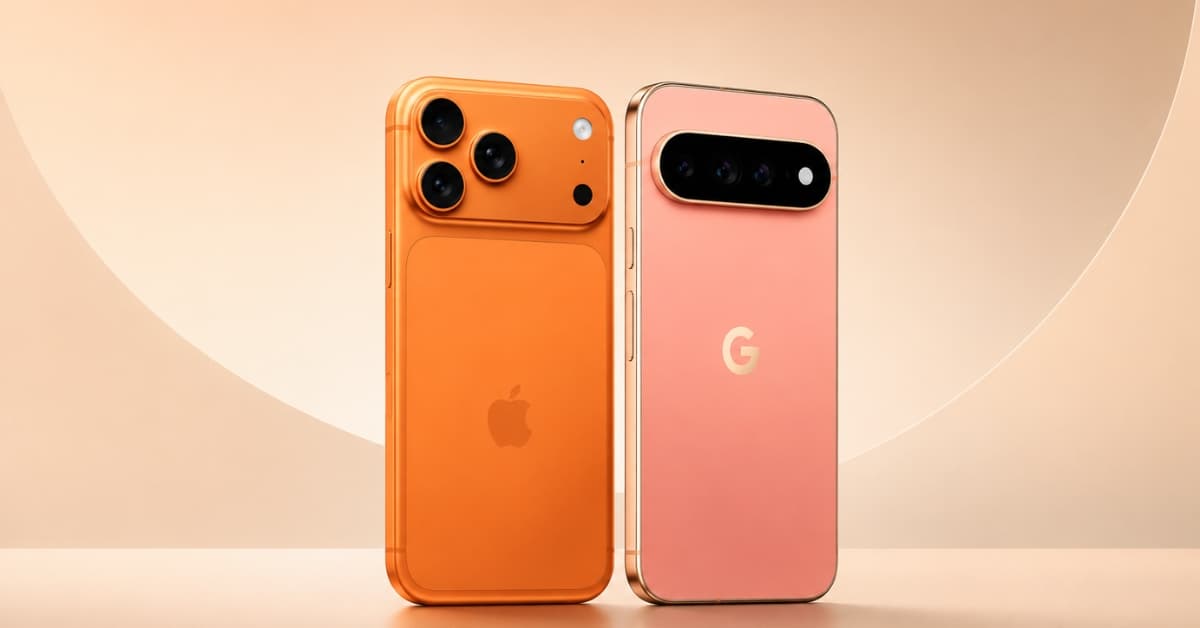
Google has unveiled its next flagship, the Pixel 11 Pro, and I think it has landed at exactly the right time. With its compact 6.3-inch design, Tensor G6 chip, upgraded cameras, and deeper AI features, Google is taking direct aim at the iPhone 17 Pro.
On paper, these two phones look remarkably close. In practice, they have very different personalities. So, here I’ll share a detailed comparison of the Google Pixel 11 Pro vs. iPhone 17 Pro, covering design, display, performance, cameras, battery life, AI features, and long-term value. So you can decide which compact flagship you should buy.
Google Pixel 11 Pro vs. iPhone 17 Pro: Quick comparison
| Category | Google Pixel 11 Pro | iPhone 17 Pro |
|---|---|---|
| Display | 6.3-inch Super Actua, 120Hz | 6.3-inch Super Retina XDR, up to 120Hz |
| Processor | Google Tensor G6 | Apple A19 Pro |
| Rear cameras | 50MP + 48MP ultrawide + 48MP 5x telephoto | 48MP + 48MP ultrawide + 48MP 4x telephoto |
| Front camera | 42MP | 18MP |
| Battery | ~4,850mAh | ~4,252mAh |
| Charging | Up to 30W wired, 25W PixelSnap wireless | Up to 40W wired, 25W MagSafe wireless |
| Biometrics | Ultrasonic fingerprint | Face ID |
| Water resistance | IP68 | IP68 |
| Software | Android 17 | iOS 26 |
| Colors | Canyon, Olive, Fog, Obsidian (Matte) | Silver, Cosmic Orange, Deep Blue |
| Starting price | $1,099 | $1,099 |
Design and size: Which phone is actually more compact?
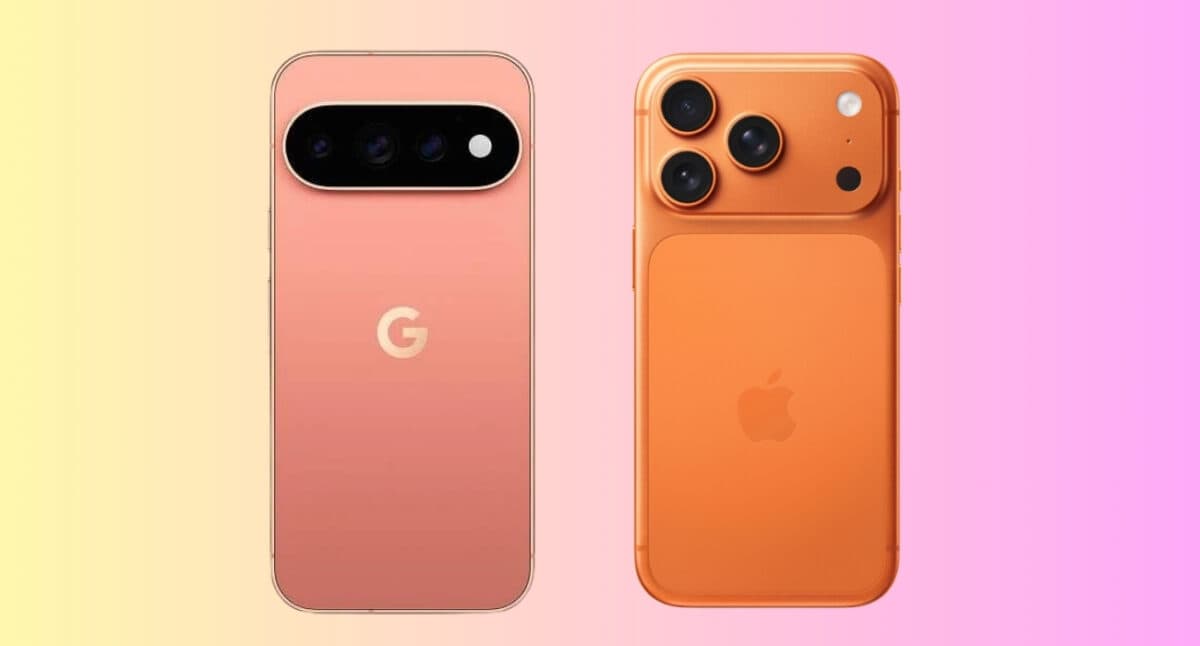
I’m glad Google and Apple still make Pro phones in this size. The 6.3-inch form factor is the sweet spot for people who want a premium phone without carrying around a giant slab.
The Pixel 11 Pro measures about 6 x 2.8 x 0.3 in and weighs 198g, while the iPhone 17 Pro is 5.91 x 2.83 x 0.34 in and weighs 206g. In other words, the iPhone is slightly shorter, while the Pixel is fractionally narrower, thinner, and lighter. Neither is dramatically more compact, though.
Both use an aluminum frame and a glass back, with the Pixel using a polished metal frame and Corning Gorilla Glass Victus 2 with a silky matte finish, and the iPhone using an aluminum unibody and Ceramic Shield on the rear and Ceramic Shield 2 on the front. Both also carry an IP68 rating, so everyday splashes and dust aren’t something I’d worry about.
In my hand, the difference comes down more to shape and weight distribution than dimensions. The Pixel’s familiar camera bar gives it a distinctive feel, now thinner and all-glass. Moreover, the new HiLight lets you identify calls from your favorite contacts. But I felt the iPhone was marginally easier to manage one-handed because of its slightly shorter body.
My verdict: The iPhone 17 Pro wins narrowly on ergonomics, but the Pixel 11 Pro has a more distinctive design. I liked its new matte aesthetic in Obsidian color.
Display: Pixel 11 Pro is brighter than ever
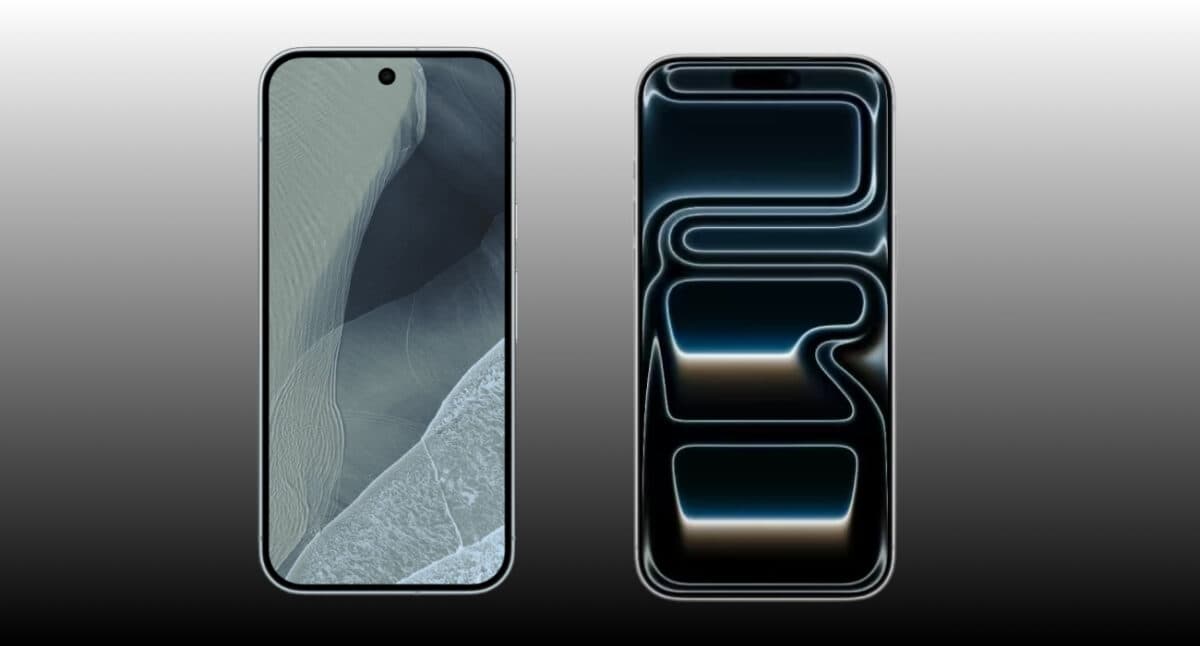
This is one area where Google’s numbers are genuinely impressive.
The Pixel 11 Pro packs a 1280 × 2856 resolution, around 495 ppi, with a tall 20:9 aspect ratio. The iPhone 17 Pro uses a 2622 × 1206 resolution at 460 ppi with a 19.5:9 aspect ratio. In practice, both are incredibly sharp, but text and fine details look a little denser on the Pixel.
Where Google really pulls ahead is brightness. The Pixel 11 Pro’s Super Actua display reaches a claimed 2400 nits HDR and 3600 nits peak brightness. The iPhone 17 Pro’s 6.3-inch Super Retina XDR display reaches up to 1600 nits HDR and 3,000 nits outdoors. That difference sounds small, but I can finally see my screen under direct sunlight with Pixel.
Apple fights back with more convincing anti-reflective treatment. Its Ceramic Shield 2 includes an Apple-designed coating that improves scratch resistance and reduces glare. The Pixel also upgraded to Corning Gorilla Glass Victus 2 with a 2x stronger anti-scratch shield. However, it doesn’t give me quite the same confidence about reflections.
Both are excellent OLED displays with 1-120Hz refresh rates and support HDR and always-on functionality. But if you regularly use your phone outdoors, I would take the Pixel’s display.
My verdict: I’d give the Pixel 11 Pro the display win for its higher pixel density and exceptional brightness. But if glare reduction, color accuracy, and overall refinement matter more to you, the iPhone 17 Pro remains an outstanding screen.
Performance: Tensor G6 vs. A19 Pro
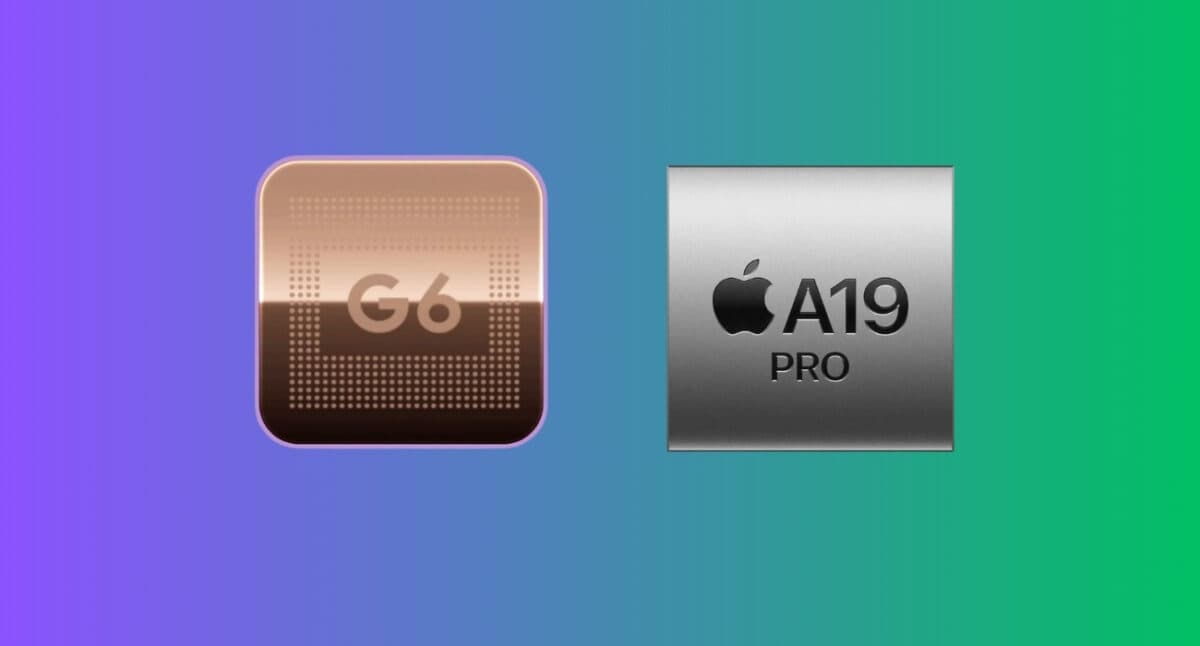
Here’s where I’m less enthusiastic about Google’s Tensor strategy.
Google’s Tensor G6 is built on TSMC’s 2nm process and uses a 7-core CPU, an upgraded TPU with 50% more compute, MediaTek’s M90 5G modem, and Titan M3 security hardware. Moreover, the advanced vapor chamber helps sustain peak performance.
This time, the focus is clearly on efficiency and on-device AI. Google claims roughly 25% faster web browsing, 15% quicker app launches, and up to 20% better power efficiency, while its TPU is designed to accelerate Gemini Intelligence’s proactive assistance and Live Translate for media.
Apple’s A19 Pro, meanwhile, uses a 6-core CPU, a 6-core GPU with Neural Accelerators, and a 16-core Neural Engine. Apple also adds a vapor chamber to help sustain performance under heavy loads.
| Category | Google Tensor G6 | Apple A19 Pro |
|---|---|---|
| Manufacturing Node | TSMC 2nm (N2) | TSMC 3nm (N3P) |
| CPU Core Setup | 7-Core (1+5+1 architecture) | 6-Core (2 Performance + 4 Efficiency) |
| Geekbench 6 (Single-Core) | ~2,112 (Early prototype) | ~3,151 |
| Geekbench 6 (Multi-Core) | ~5,196 (Early prototype) | ~8,735 |
| Primary Strength | On-device AI & local LLM speed | Peak single-core & mobile gaming |
In everyday use, both should feel extremely fast. But if I were gaming, editing 4K video, or running demanding apps for long sessions, I’d pick the iPhone. Apple’s GPU and hardware-accelerated Ray Tracing give the A19 Pro a clear performance advantage for AAA titles.
The Pixel doubles down where Google knows it can win. Tensor G6’s architecture is designed to make features such as Gemini-powered assistance, translation, and camera processing feel more central to the experience. I look forward to seeing how the new MediaTek modem handles connectivity issues, such as overheating and battery drain.
My verdict: iPhone 17 Pro wins raw performance and gaming; Pixel 11 Pro wins the AI argument. For longevity, I’d still trust the iPhone more for sustained heavy workloads.
Camera: This is where I would buy the Pixel
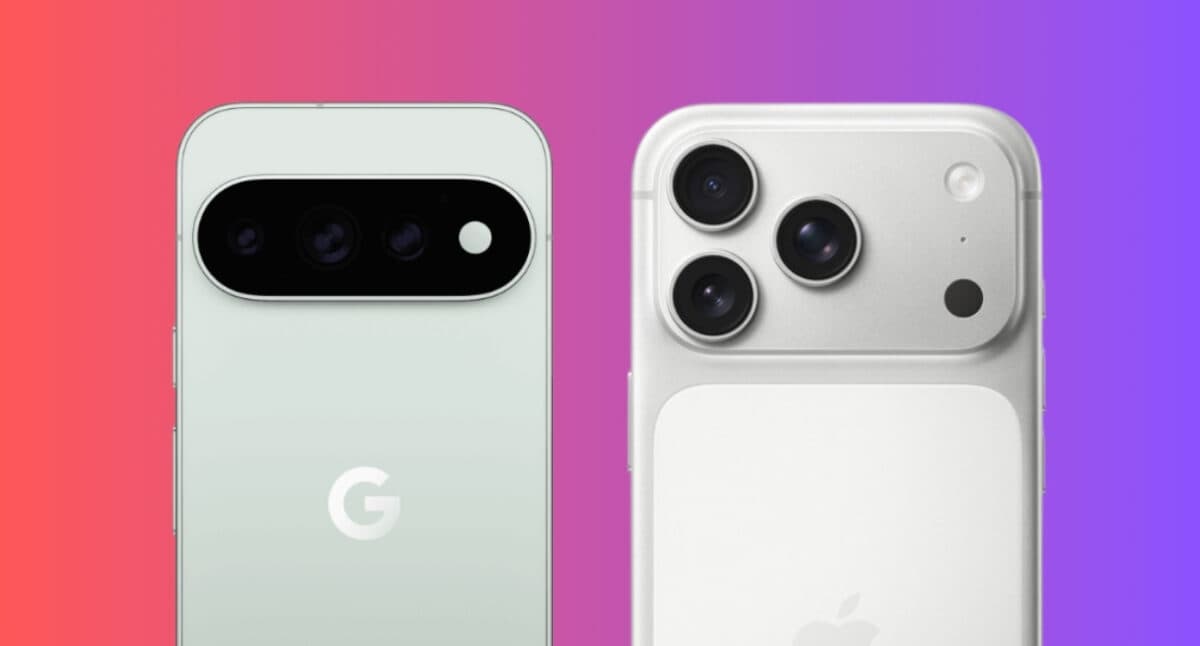
If you’re asking me where the Pixel 11 Pro starts becoming genuinely compelling, it’s the camera.
Pixel 11 Pro comes with a 50MP main camera, a 48MP ultrawide, a 48MP telephoto with OIS, and a 42MP autofocus front camera. Google also advertises up to 120x Pro Zoom, up to 50MP High-Res photos, 8K video, and Pro Stable Video. Combined with the Gemini AI assistance and editing features, that’s a serious camera system.
Camera Looks is my favorite addition. Instead of slapping a filter on a finished image, it changes how the Pixel processes the photograph at capture time. Similar to Apple’s Photographic Styles, you can choose styles such as Natural, Shadows, Vanilla, Digi, and Black Tie, then adjust elements like contrast and brightness.
Then there’s Magic Capture, which feels genuinely useful. You can record a moment and let Google’s AI automatically identify the best still images from the footage. I won’t have to worry about timing your shot perfectly anymore. Google has also added Instant Night Sight, which can capture low-light photos up to 4.5 times faster.
The iPhone 17 Pro has also stepped up its game. Apple now puts 48MP sensors across all three rear cameras. The telephoto uses a tetraprism design with a 56% larger sensor, offering a 4x optical telephoto and an 8x optical-quality option. You also get 48MP macro photography, ProRAW, and an extensive computational photography stack.
However, since I love recording videos, the iPhone 17 Pro remains my favorite. It can record 4K Dolby Vision at up to 120fps on the Fusion Main camera, supports ProRes up to 4K/120fps with external recording, ProRes RAW, Dual Capture, Cinematic mode, Audio Mix, and Spatial recording.
My verdict: The Pixel 11 Pro looks like the photographer’s phone; the iPhone 17 Pro remains the creator’s phone.
Battery life and charging: Pixel’s 30+ hour claim is hard to ignore
Battery capacity doesn’t tell the whole story, but the numbers here are interesting.
The Pixel 11 Pro packs a 4,850mAh Li-Ion battery, rated for 30+ hours of battery life. Google pairs that larger battery with 30W wired charging using PD 3.0/PPS, charging up to 55% in just 30 minutes in Extreme Charging Mode. It also supports 25W magnetic wireless charging with PixelSnap and Qi2.2 and reverse wired charging.
Meanwhile, the iPhone 17 Pro offers up to 33 hours of video playback. That gives Google a noticeable capacity advantage on paper. In terms of wired charging, it goes up to 50% in 20 minutes when paired with a compatible 40W+ AVS-supported power brick. Apple is also equipped with 25W wireless MagSafe/Qi2 and 4.5W reverse wired.
If Google has genuinely managed 30+ hours without making the phone unwieldy, that’s one of the Pixel 11 Pro’s biggest achievements.
My verdict: Pixel 11 Pro wins on battery capacity and everyday endurance potential; iPhone 17 Pro wins on charging speed.
AI and software: Android 17 vs. iOS 26
This is probably the biggest difference between the Pixel 11 Pro and iPhone 17 Pro: Google wants AI to feel like the phone itself, while Apple treats AI as a powerful layer across iOS.
The Pixel 11 Pro runs Android 17, with Gemini deeply integrated into the experience. I love how Gemini Intelligence helps me find information, take action, and automate tasks across apps. And the best part is that Pixel 11 Pro buyers get six months of Google AI Pro at no cost, which unlocks higher Gemini usage limits, deeper access to Gemini, and 5TB of cloud storage.
Apple takes a different route with iOS 26 and Apple Intelligence. Features are woven into apps and everyday tasks, including writing tools, Image Playground, Visual Intelligence, intelligent shortcuts, and Live Translation. Apple is also developing a much more capable Siri AI, with richer answers and more natural conversations coming later this year.
From my perspective, Gemini feels more ambitious, while iOS feels more controlled. Pixel gives me more reasons to actively use AI; iPhone makes AI feel like something quietly working in the background. Another major advantage of Pixel is longevity: Google promises seven years of OS and security updates, along with regular Pixel Drops.
My verdict: Pixel 11 Pro wins AI and long-term software value; iPhone 17 Pro wins software polish and ecosystem integration. If AI is genuinely part of how you use your phone, I’d take the Pixel.
Ecosystem: The decision that can matter more than specs
This is the category that can completely reverse my recommendation.
If you own a MacBook, iPad, and Apple Watch, buy the iPhone 17 Pro. Don’t overthink it. AirDrop, iCloud, FaceTime, Apple Watch integration, Continuity, and the overall Apple ecosystem create a level of frictionless interaction that is difficult to reproduce when you switch platforms.
The Pixel 11 Pro is the obvious choice if you’re already invested in Google services, Android, Pixel Buds, or Pixel Watch. All these devices work together through cross-device controls, automatic audio switching, and Gemini integration. Google is also making the transition easier, with new Tap to Share and upgraded transfer and setup tools for people switching to Pixel.
But ecosystems have gravity.
If your laptop features an Apple logo and your wrist has an Apple Watch, the iPhone 17 Pro isn’t simply another smartphone. It’s the missing piece of the ecosystem you’ve already built. That is why I wouldn’t recommend switching to Pixel, even if it wins this comparison.
My verdict: iPhone 17 Pro wins the ecosystem battle, and it’s not particularly close.
Storage, pricing, and long-term value
At this price, I don’t think storage should be an afterthought. Both phones start at 256 GB and are priced at $1,099.
The iPhone 17 Pro starts at $1,099 in the U.S. for the 256GB model, with Apple also offering 512 GB and 1 TB configurations. With Apple’s new Upgrade leasing program, you need to pay $31.99/month for 24 months, or $45.99/month for 12 months, before taxes and trade-in credits.
However, in terms of value for money, the Pixel 11 Pro stands out. Google offers the phone in 256GB with 12GB of RAM and 512GB and 1TB with 16GB of RAM. The higher configurations also use Zoned UFS storage, designed to improve storage performance and efficiency.
Google makes the launch more interesting. Buyers can choose $250 off the new Pixel Watch 5 or $200 in Google Store credit when purchasing the Pixel 11 Pro or Pro XL. There are also six months of Google AI Pro at no cost, including access to higher-level Gemini and additional AI benefits.
However, Apple has the advantage in resale value, while Google counters with long software support and a strong AI package.
My verdict: The Pixel 11 Pro offers better overall value, especially with 16 GB of RAM and the bundled Google AI Pro benefit. But if you upgrade frequently and care about resale value, the iPhone 17 Pro can make more financial sense over the long run.
Google Pixel 11 Pro vs. iPhone 17 Pro: Which one should you buy?
After spending time comparing these two, I don’t think there’s a single winner for everyone. The Pixel 11 Pro and iPhone 17 Pro are both excellent compact flagships, but they appeal to very different people.
Buy the Google Pixel 11 Pro if you want a more interesting compact flagship.
- Better point-and-shoot photography with Google’s computational photography, Camera Looks, and Magic Capture.
- Smarter AI experience with Gemini deeply integrated and six months of Google AI Pro included.
- More RAM and storage flexibility with 16 GB of RAM and up to 1 TB of storage.
- Brighter display that’s easier to see outdoors.
- Long-term support with seven years of OS and security updates.
- Bigger battery and strong everyday endurance.
- Better launch value, including $250 off Pixel Watch 5 or $200 Google Store credit.
Buy the iPhone 17 Pro if you want the most dependable all-rounder.
- Faster performance thanks to the A19 Pro chip.
- Better for video creators with Apple’s Pro video tools and recording capabilities.
- Best ecosystem integration if you own a Mac, iPad, Apple Watch, or AirPods.
- Polished iOS experience with strong hardware-software integration.
- Excellent camera system with three 48MP rear cameras and an improved telephoto.
- Stronger resale value and attractive upgrade/leasing options.
If you’re already deep in Apple’s ecosystem, don’t switch just because the Pixel has a better camera.
But if you’re platform-neutral and simply asking me, “Which compact flagship would you spend your own money on?” I’d pick the Google Pixel 11 Pro.
You might also like: