
French prosecutors are taking Apple to the Paris criminal court over alleged software and parts-pairing practices that block repairs outside Apple’s approved channels, including repairs with genuine parts. The first hearing, which sets the schedule, is on February 25, 2027. Arguments are expected over several days in June 2027.
The complaint came from HOP, Halte à l’Obsolescence Programmée, a French group against planned obsolescence. It was filed on December 7, 2022. The prosecutor’s decision followed four years of investigation. The charge is obstructing repair and refurbishment, which French law treats as an offense tied to planned obsolescence.
HOP alleges genuine parts still fail outside Apple’s channels
Parts pairing sits at the center of the case. HOP describes a system that ties each part’s serial number to one iPhone and flags when that part is replaced. HOP says the phone can malfunction when an unapproved repair happens, even with an identical, original part. The parts it names are screens, batteries and cameras, and the complaint covers 24 iPhone models.
Apple’s repair prices for the iPhone 17 show what is at stake for owners. At the 2025 launch, the base iPhone 17 battery cost $99, and a Pro Max screen cost $379. At those prices, a repair that works outside Apple’s channels matters to owners.
Apple disputes the claims and has expanded repair options
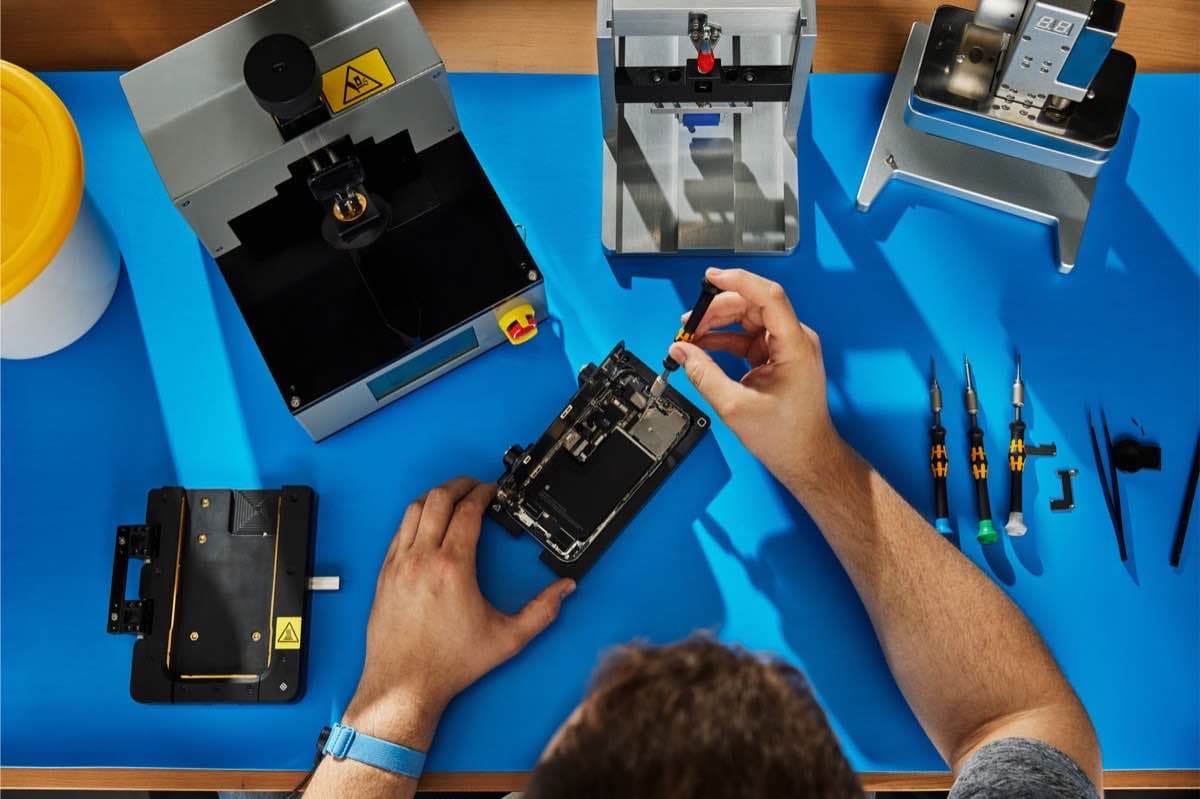
Apple strongly contests the allegations, calling them unfounded, and argues that pairing protects the privacy, security and safety of iPhone.
Apple has also expanded its repair options. In April 2024, it set out a plan for customers and independent repair providers to use used genuine Apple parts in repairs, starting with select iPhone models that fall. Calibration for genuine parts, new or used, would happen on the device after installation. Apple also extended Activation Lock to parts, so calibration is restricted for a part taken from a device with Activation Lock or Lost Mode enabled. Apple’s own Self Service Repair program supported 40 products in 33 countries and regions in 2024.
Apple’s own changes since 2022 limited serialization on new iPhones and let third parties validate some repairs, but HOP says those changes still need to be confirmed over time. The 2024 changes came more than a year after HOP filed its complaint.
The case has not reached a verdict, and the February 25 hearing only sets the schedule. An Unknown label means Apple cannot verify the part. It does not automatically prove the part is fake. After any screen or battery repair, open Settings > General > About and check Parts and Service History.