
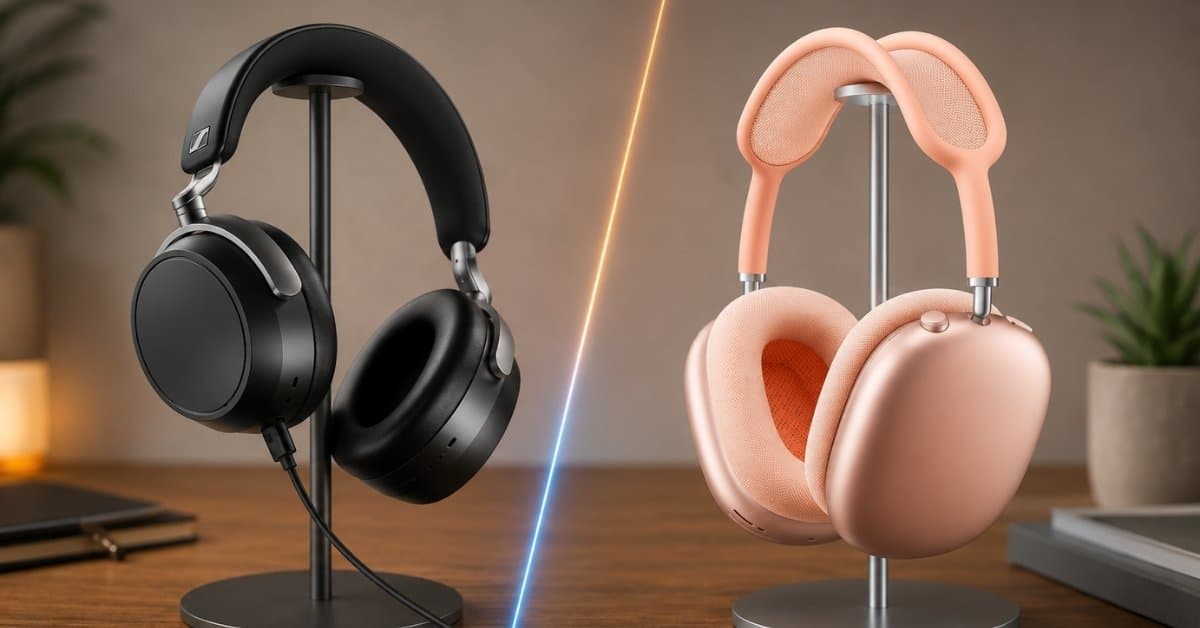
I expected the Apple AirPods Max 2 to walk into this comparison like the obvious premium winner. But after looking closely at what Apple and Sennheiser are actually offering, this is not a simple “which headphone is better?” fight.
If you are also confused between these two industry-leading audio devices, you are at the right place. In this AirPods Max 2 vs Sennheiser HDB 630 comparison, I’m looking at design, comfort, sound quality, ANC, battery life, connectivity, features, and value to see which one is really worth buying.
Quick comparison: AirPods Max 2 vs Sennheiser HDB 630
| Attribute | Apple AirPods Max 2 | Sennheiser HDB 630 |
|---|---|---|
| Headphone type | Over-ear wireless ANC headphones | Closed-back wireless ANC headphones |
| Chip / platform | H2 chip | BTD 700 Bluetooth USB-C dongle |
| Driver | Apple-designed 40mm dynamic driver | 42mm Sennheiser in-house transducer |
| Noise cancellation | Improved ANC, Adaptive Audio, Transparency mode | Adaptive noise cancellation |
| Battery life | Up to 20 hours with ANC and Spatial Audio | Up to 60 hours at standard resolution |
| Bluetooth | Bluetooth 5.3 | Bluetooth 5.2 |
| Codec focus | Apple ecosystem wireless experience | SBC, AAC, aptX, aptX HD, aptX Adaptive |
| Weight | 386.2g | 311g without cable |
Design and build: Apple feels more premium, Sennheiser is practical
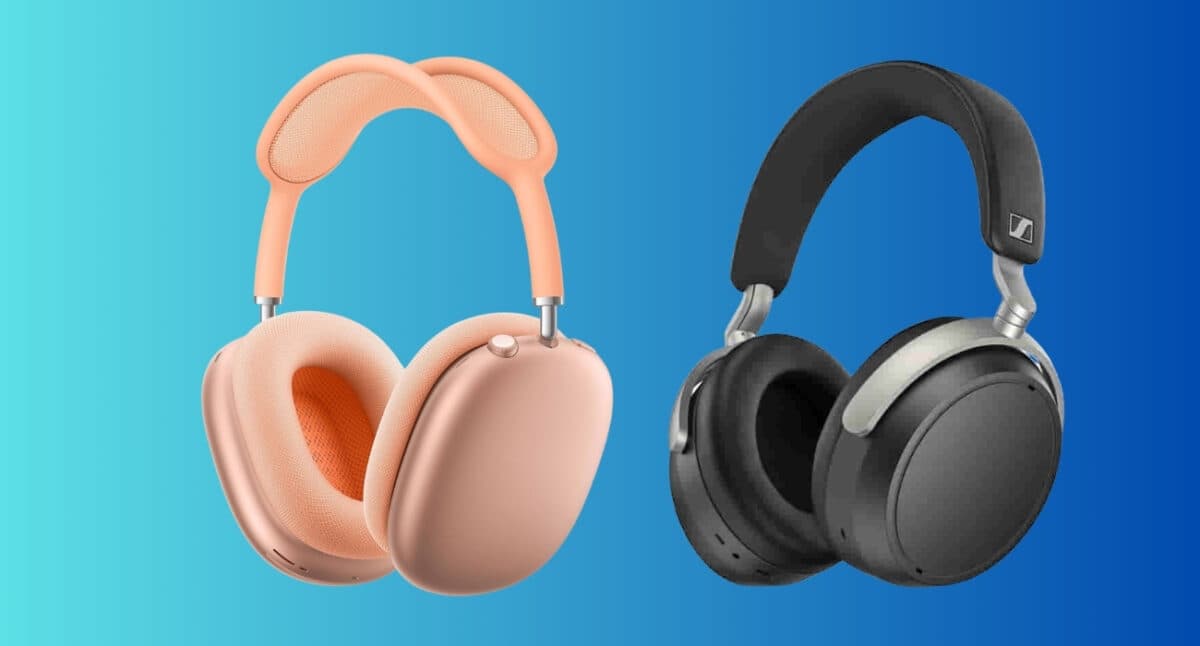
The AirPods Max 2 is clean, premium, and instantly recognizable. From anodized aluminum cups to a knit mesh canopy to a stainless steel frame, Apple’s design language is still the biggest flex here. You can even choose from five beautiful color options to match your style. However, you need to use a good case or cover to avoid scratching.
The Sennheiser HDB 630 goes in a different direction. It looks more like a serious listening tool than a fashion-first product. Sennheiser calls it a closed-back headphone and only comes in one color. The overall look is quite bulky.
If I were judging only by design language, I would say AirPods Max 2 feel more luxurious.
Comfort: the weight difference matters
This is one area where I would not ignore the numbers. Apple lists AirPods Max 2 at 386.2 grams, while Sennheiser lists the HDB 630 at 311 grams without cable. That is a meaningful difference for over-ear headphones, especially if you wear them for two or three hours at a time.
In my experience with heavy premium headphones, comfort is not only about soft cushions. Weight distribution, clamp force, headband pressure, and even heat buildup are equally important considerations. AirPods Max 2 can feel premium in the hand, but that metal-heavy build can become noticeable during long sessions.
The HDB 630 has the advantage because it is lighter and thus easier to wear for longer stretches.
Sound quality: Sennheiser is for serious music listeners
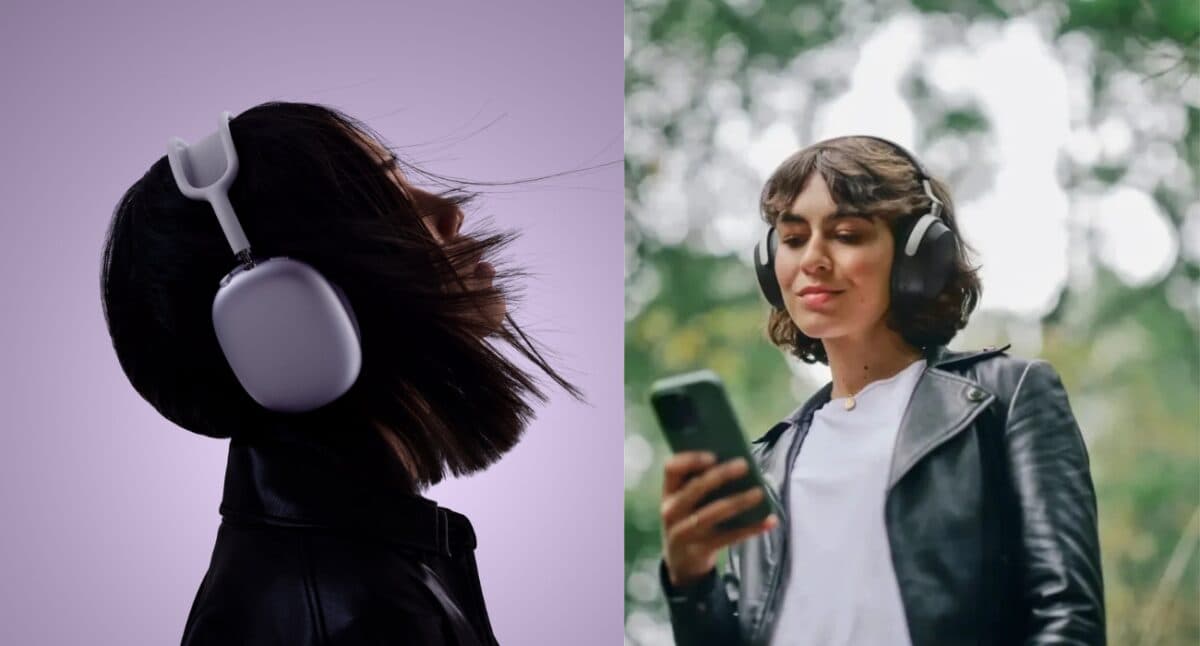
This is where the comparison gets interesting.
AirPods Max 2 doubles down on new features along wth Apple’s computational audio system, H2 chip, Adaptive EQ, Personalized Spatial Audio, and dynamic head tracking for a polished, immersive listening experience. That makes them especially appealing for high-fidelity music, movies, FaceTime, and general everyday listening.
Sennheiser is clearly aiming at people who are interested in sound controls and good signal quality. The HDB 630 comes with a 42mm in-house transducer, focuses on aptX HD/aptX Adaptive codec, and supports USB-C or analog input for lossless listening up to 24-bit/96kHz. I also customized the parametric equalizer and Crossfeed to shape the sound more precisely.
When I am listening casually while switching between my phone, MacBook, and Apple TV, AirPods Max 2 is a better choice. If I were sitting down to actually listen to an album, compare mixes, or tweak the sound to my taste, I would reach for the HDB 630.
ANC and transparency: Apple has the smarter noise control
Apple’s biggest advantage is its smart noise cancellation with lots of useful features. AirPods Max 2 offer up to 1.5x more Active Noise Cancellation compared to the original AirPods Max. It also brings Adaptive Audio, Transparency mode, Conversation Awareness, and Voice Isolation. Combining with nine built-in mics, my calls and meetings go uninterrupted.
Sennheiser also includes adaptive noise cancellation on the HDB 630, and the company says it is designed to block distractions without hurting clarity, dynamics, or tonal balance. That matters because some ANC headphones flatten the music when curbing noise. Sennheiser appears to be trying to avoid that.
For daily use, though, I feel AirPods Max 2 is smarter. Features like Conversation Awareness and Transparency mode are extremely useful when moving between calls, travel, office work, and quick conversations. Sennheiser holds its place strongly for focused listening.
Battery life: Sennheiser wins easily
This is the easiest win in the whole comparison. AirPods Max 2 offer up to 20 hours of listening time with Active Noise Cancellation enabled. I can go about 2-3 workdays and normal daily listening. Apple also says 5 minutes of charging gives around 1.5 hours of listening time.
Sennheiser lists the HDB 630 at up to 60 hours of battery operation. Moreover, the headphones can run up to 45 hours when using aptX Adaptive 24-bit/96kHz with the BTD 700 dongle.
That difference changes how I would use them. With AirPods Max 2, I would still think about charging every few days. With HDB 630, I could realistically go through a long listening stretch with far less battery anxiety.
If battery life is one of your top priorities, don’t overthink it. The Sennheiser HDB 630 is the better pick.
Connectivity and codecs: Apple simplicity vs Sennheiser flexibility
AirPods Max 2 are built for Apple users. They support automatic switching, Audio Sharing, and Spatial Audio across your devices. Apple also launched lossless audio and ultra-low latency audio through USB-C. If you live in the Apple ecosystem, this kind of integration is hard to beat.
The HDB 630 is more flexible outside Apple’s world. Sennheiser supports SBC, AAC, aptX, aptX HD, and aptX Adaptive. The included BTD 700 dongle is a big deal when I want better wireless quality from compatible USB-C devices. On top of that, it supports USB-C and analog input for lossless listening up to 24-bit/96kHz
This is where the buying decision becomes very personal. If most of my devices were Apple products, I would value the AirPods Max 2 experience more. However, as I have a mixed-device setup with Android, Windows and a USB-C tablet, my choice is Sennheiser.
Smart features: AirPods Max 2 feel more futuristic
AirPods Max 2 are not just headphones. They are Apple ecosystem accessories. As I already mentioned, Apple brings several ANC and transparency features along with Live Translation via Apple Intelligence, Loud Sound Reduction, Personalized Volume, and Siri on standby to the experience.
The Sennheiser HDB 630 is smart in a less flashy way. Its strongest features are not translation or head tracking. They are sound tools, such as a parametric equalizer, Crossfeed, codec support, and wired compatibility. These features are less exciting in an ad, but more useful when I actually care about tuning.
That is the difference. Apple makes the headphone smarter in my life. Sennheiser makes the headphone smarter around my music.
App and controls: easy vs advanced
Apple keeps things simple. AirPods Max 2 are controlled through the Digital Crown gestures, which let you control playback, adjust volume, take a photo or video, or mute yourself on calls. I like to use Siri for hands-free actions. Moreover, you can use the Settings app on your iPhone or Mac to access AirPods settings.
Sennheiser has a Smart Control Plus app for manual control. It’s ideal for people who like adjusting frequency bands instead of choosing basic presets.
Price and value
Apple’s AirPods Max line sits at $549, while the HDB 630 is priced around $499.95. That $50 difference is not huge, but Sennheiser gives me more practical audio value for the money.
The AirPods Max 2 make sense if you want the Apple experience and ecosystem convenience.
But if I judge headphone value by sound features, battery life, and flexibility, I would call the HDB 630 the better alternative to AirPods Max.
Who should buy AirPods Max 2?
I would buy AirPods Max 2 if I were already deep in the Apple ecosystem. They make the most sense for people who use iPhone, Mac, iPad, Apple TV, Apple Music, FaceTime, and Siri every day.
They are also the better choice if you care about smart ANC. All the exclusive features make it feel more like an intelligent Apple device than just a pair of headphones.
Buy AirPods Max 2 if you want:
- Strong ANC and Transparency mode
- Spatial Audio for movies and Apple Music
- Better call and ecosystem integration
- USB-C charging
- A premium design that feels instantly recognizable
Who should buy the Sennheiser HDB 630?
I will choose the Sennheiser HDB 630 if my top priorities are sound quality, battery life, and connection versatility. It is the better choice for people who use Android, Windows, USB-C sources, or non-Apple devices.
It also makes more sense if you care about codecs. Support for aptX, aptX HD, and aptX Adaptive gives it a stronger wireless audio story for compatible devices. The included BTD 700 dongle also makes it feel more complete for serious listening.
Buy HDB 630 if you want:
- Longer battery life
- More codec support
- USB-C and analog listening
- Parametric EQ and Crossfeed
- A lighter headphone on paper
- A more sound-first experience
Final verdict: Which one would I pick?
If I had to choose one for my Apple devices, I would pick AirPods Max 2. The H2 chip, improved ANC, smart features, and Apple ecosystem integration make them a more convenient everyday headphone.
But if I were to choose based on music performance, battery life, codecs, and versatility between wired and wireless connections, I would go with Sennheiser HDB 630.
So my final take is simple: AirPods Max 2 are the better smart headphones. Sennheiser HDB 630 are the better listening headphones.
You may like to read: AirPods 5 vs AirPods 4: Which one should you buy?