

Bitwarden is already one of the best password managers out there. It’s open source, secure, and works reliably across platforms. But if you’re using the default setup, your vault is still stored on Bitwarden’s cloud. For most people, that’s perfectly fine, but it’s worth understanding what that actually means.
Your encrypted vault still lives on Bitwarden’s servers, and some features, like built-in TOTP (two-factor authentication codes) and file attachments, are locked behind the paid plan. Bitwarden does offer an official way to self-host everything, but in practice, the setup isn’t as simple or beginner-friendly as it sounds.
Self hosting Bitwarden is possible, but not simple
The official Bitwarden server is built like a business service, not a personal tool. It requires multiple Docker containers, a longer setup process and database and service choices are more explicit (MSSQL by default on the standard stack).
Even with the newer Lite setup, you are still dealing with a more structured deployment and paid Bitwarden features like TOTP and file attachments are not available either.
Vaultwarden makes things simpler
- Defaults are simpler (SQLite, minimal config)
- Very lightweight to run compared to Bitwarden options (can even run on Raspberry Pi)
- You can start with just one container and no extra services
- Paid features like TOTP, file attachments, Send, organizations/sharing, and emergency access.
If your goal is just a personal password manager on your own machine or a small VPS, Vaultwarden becomes an obvious choice.
Also, you are just replacing the backend, so you can still use Bitwarden mobile apps, Bitwarden browser extensions and Bitwarden desktop app just like before. Same UI, same workflow. The only thing you change is the server URL in settings.
Bitwarden vs Vaultwarden (practical differences)
| Area | Bitwarden (official) | Vaultwarden |
|---|---|---|
| Setup complexity | Higher (server deployment) | Lower (single container) |
| Resource usage | ~200 MB+ (Bitwarden Lite) Full Bitwarden (2 GB minimum) | ~100–200 MB typical |
| Deployment | Multi-service / Lite image | Single container |
| Database | MSSQL default / multi DB | SQLite by default |
| Apps/UI | Bitwarden apps | Same Bitwarden apps |
| Passwords, notes, cards | Yes | Yes |
| Passkeys, SSH keys | Yes | Yes |
| Secrets Manager | Yes | No |
| SSO / enterprise features | Yes | No |
| Official support | Yes | No |
For most personal setups, everything you actually use works the same, unless you need secrets manager or some enterprise features.
How to set up Vaultwarden locally
You need two pieces: the Vaultwarden server itself, and a URL you can open in a browser and use inside Bitwarden apps.
Step 1: Run Vaultwarden
First, install Docker. If you don’t have it, install Docker Desktop (macOS/Windows) or Docker Engine (Linux) and make sure docker it runs in your terminal. Then run:
docker run -d \
  --name vaultwarden \
  -p 8080:80 \
  -v ~/vw-data:/data \
  -e SIGNUPS_ALLOWED=true \
  vaultwarden/server:latest
This starts the server on http://localhost:8080 and stores all data in ~/vw-data. At this point, the backend is up, but you’ll still want a proper URL for day‑to‑day use.
Step 2: Add a simple reverse proxy (gives you a secure HTTPS URL)
Bitwarden clients require HTTPS to connect to a self-hosted server. For local testing, the easiest option is Caddy with its built-in local certificate authority.
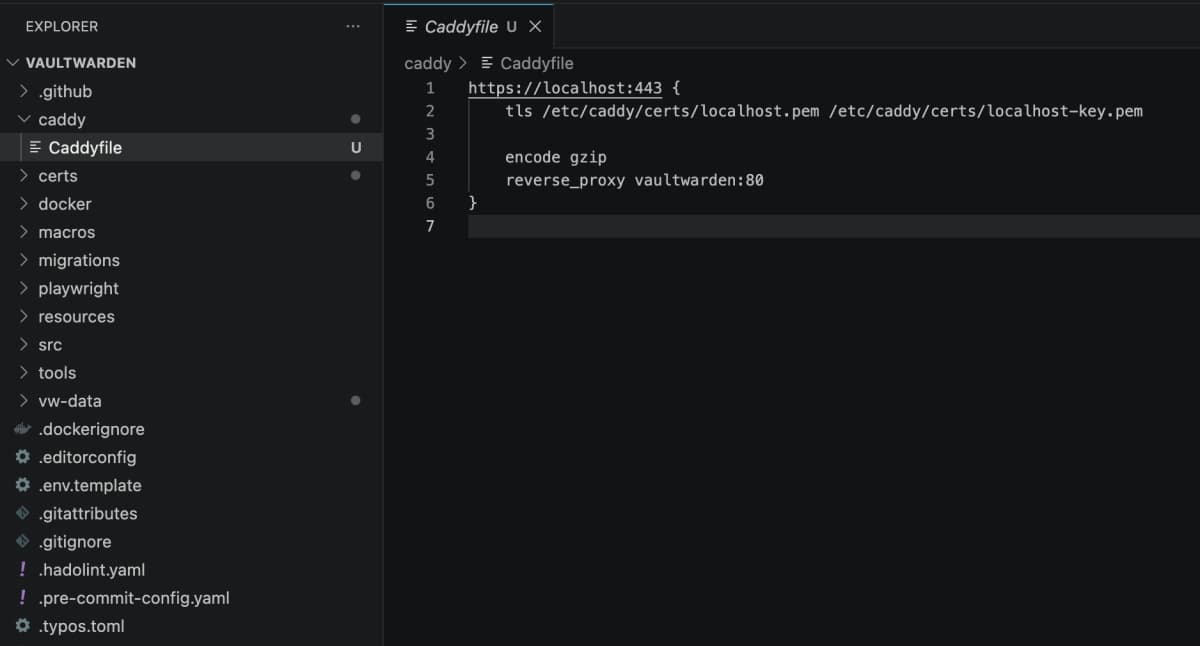
Create a file named Caddyfile:
vault.local {
  tls internal
  reverse_proxy 127.0.0.1:8080
}
The tls internal directive tells Caddy to generate a local certificate itself, since .local domains can’t use public certificate authorities like Let’s Encrypt.In the screenshot below, I am using localhost:443 instead.
Run Caddy:
docker run -d \
  --name caddy \
  --network host \
  -v $(pwd)/Caddyfile:/etc/caddy/Caddyfile \
  -v caddy_data:/data \
  -v caddy_config:/config \
  caddy
Map the hostname locally by editing your /etc/hosts file (or C:\Windows\System32\drivers\etc\hosts on Windows):
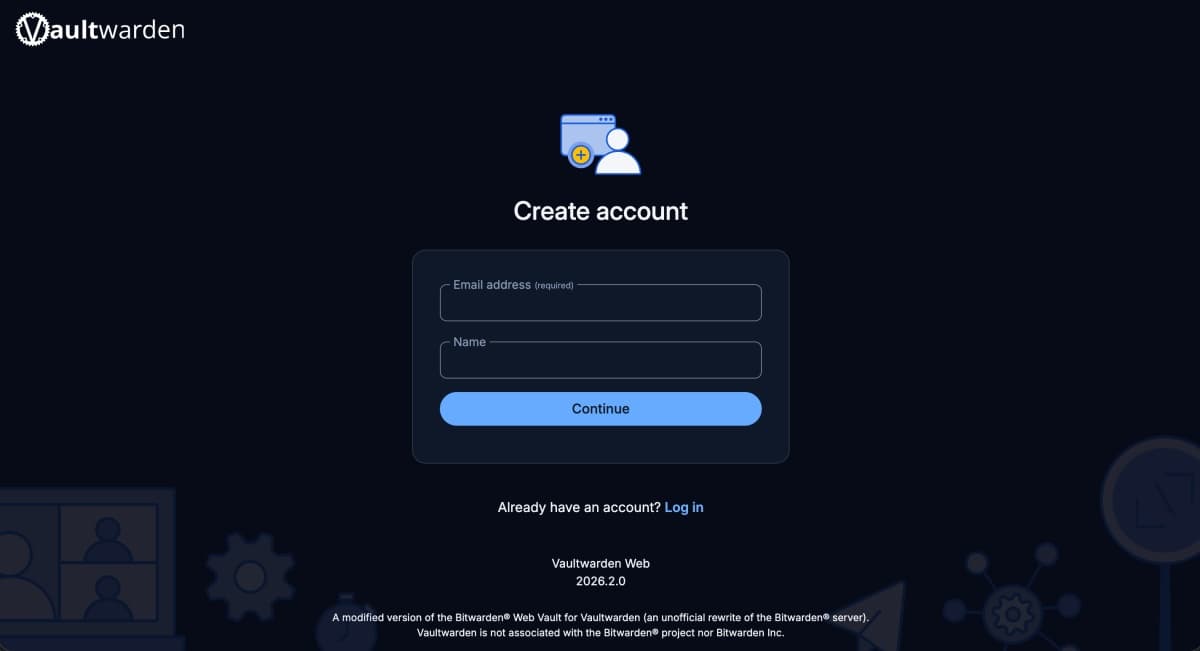
127.0.0.1 vault.localNow open https://vault.local in your browser. You will need to trust Caddy’s local root certificate the first time. Caddy places it in the caddy_data volume, and you can install it in your system trust store to avoid browser warnings.
For a proper deployment on a VPS with a real domain, you can remove tls internal and Caddy will automatically fetch a real Let’s Encrypt certificate.
Step 3: Create your account and connect to Bitwarden apps
Open https://vault.local and create your first account (this is your main vault). Once done:
- Open any Bitwarden app or extension
- On the login screen, switch from bitwarden.com to Self-hosted
- Enter
https://vault.localas the Server URL - Log in with the account you created
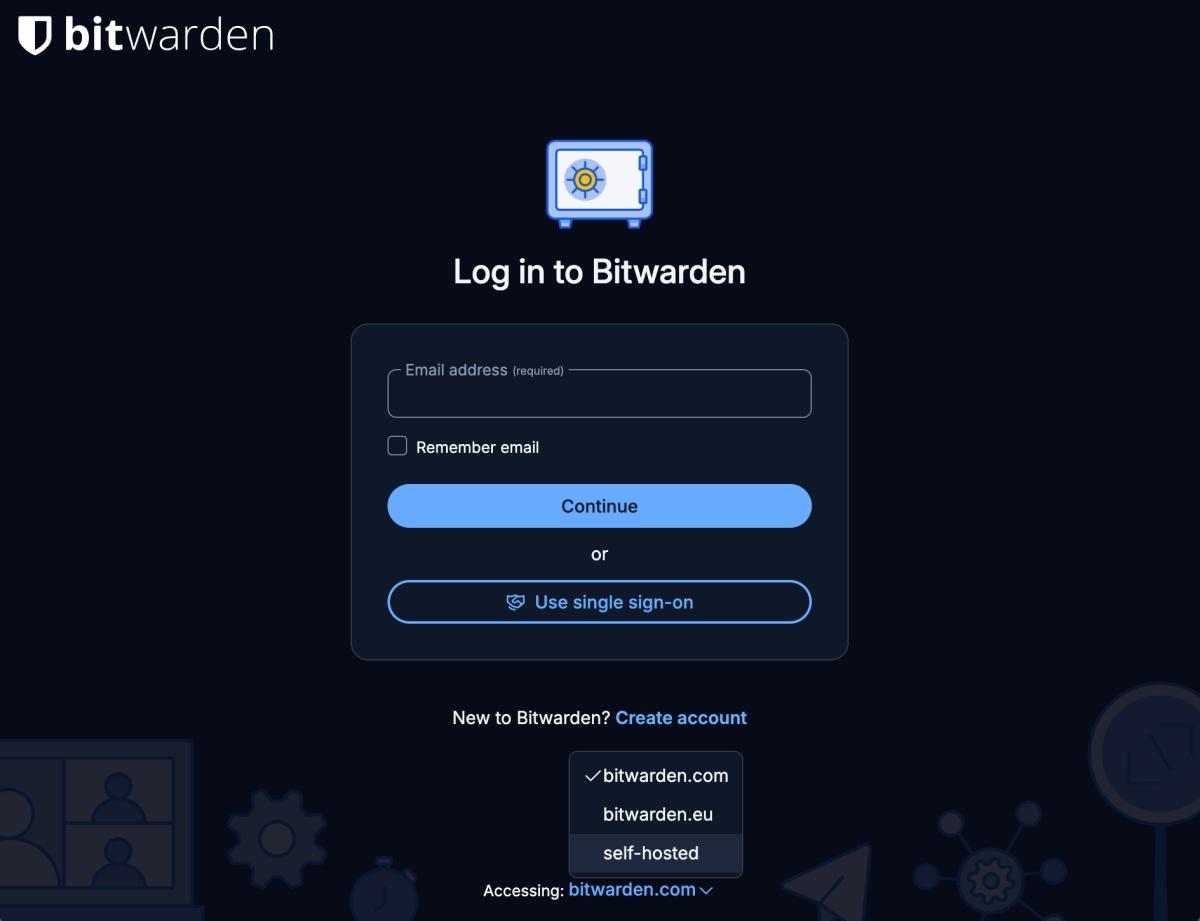
From here on, the experience is identical to Bitwarden Cloud; your apps just talk to your server instead.
Step: 4 Migrate to Actual Server
Once you are comfortable locally, you can move the Docker container to a VPS, NAS or even a Raspberry Pi.
- Copy your
vw-datafolder - Run the same container on your VPS
- Add HTTPS (via Nginx, Caddy, or Traefik)
- Point your apps to the new URL
Migrating from Bitwarden Cloud or another manager
If you are already using Bitwarden Cloud or another password manager, export your data as JSON (or ZIP if you need attachments) and import it into Vaultwarden. This carries over passwords, notes, cards, identities, SSH keys, TOTP seeds, and passkeys.
Important: You are now the admin
Self-hosting means trading convenience for control. A few things to keep in mind:
- Backups are your responsibility. All data lives in
~/vw-data. If you delete it without a backup, your vault is gone. Set up regular backups — a nightlytarorrsyncto another disk is usually enough. - Updates are your responsibility. Pull new images regularly so you stay current on security patches.
- Uptime is your responsibility. If your server is down, your apps fall back to their local cache, but new devices won’t be able to log in until the server is back up.
- Protect the admin panel. Set
ADMIN_TOKENwith a strong value if you plan to use the admin interface.
Final takeaway
For me, it came down to control without extra overhead.
The official Bitwarden server felt like overkill. Vaultwarden gives the same user experience with far less setup and maintenance. Everything I actually use works the same, including passkeys and SSH keys through the Bitwarden clients.
And I get to keep the backend under my control.