
Apple has officially unveiled the iPhone 18 Pro and iPhone 18 Pro Max at its “Surprise and Shine” event, with both new Pro models arriving with iOS 27. First announced at WWDC 2026, Apple’s latest iPhone software is set to roll out as a free update on September 14. In a surprise move, no iPhones are losing support this year.
If you’re wondering whether your existing iPhone will get the new software, here’s the full list of iOS 27-compatible devices.
iOS 27 supported devices
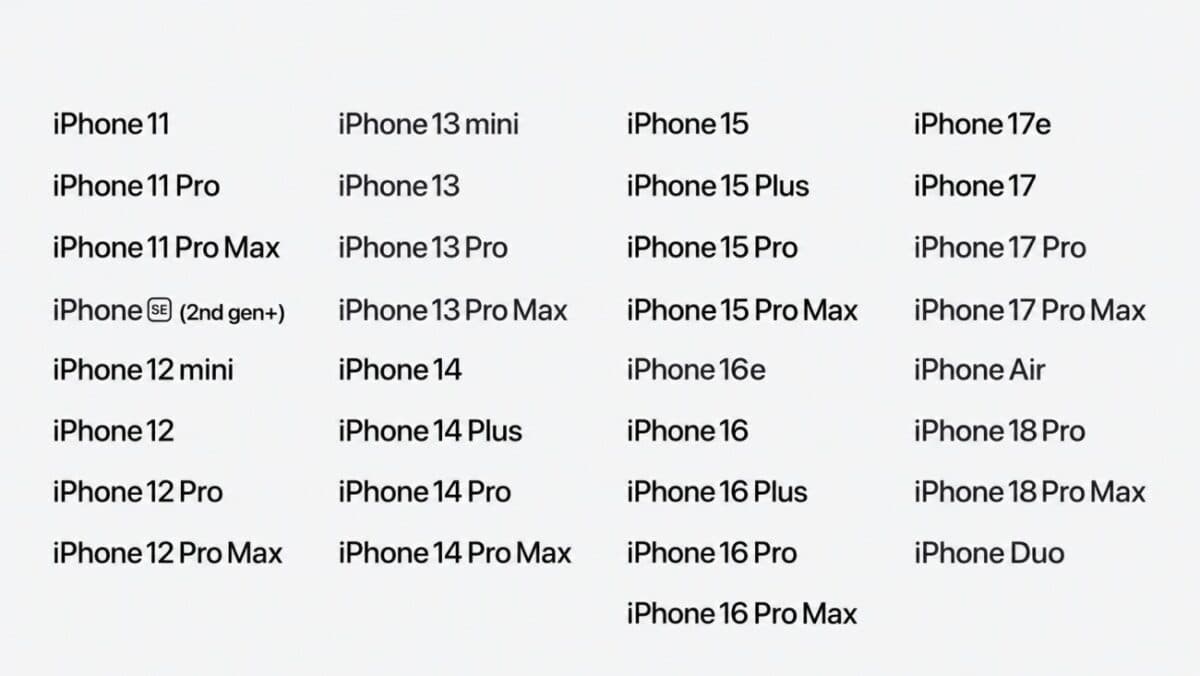
Apple has confirmed that iOS 27 supports every iPhone capable of running iOS 26, along with the newly launched iPhone lineup.
- iPhone Duo
- iPhone 18 Pro Max, iPhone 18 Pro
- iPhone 17, iPhone Air, iPhone 17 Pro, iPhone 17 Pro Max, iPhone 17e
- iPhone 16, iPhone 16 Plus, iPhone 16 Pro, iPhone 16 Pro Max, iPhone 16e
- iPhone 15, iPhone 15 Plus, iPhone 15 Pro, iPhone 15 Pro Max
- iPhone 14, iPhone 14 Plus, iPhone 14 Pro, iPhone 14 Pro Max
- iPhone 13, iPhone 13 mini, iPhone 13 Pro, iPhone 13 Pro Max
- iPhone 12, iPhone 12 mini, iPhone 12 Pro, iPhone 12 Pro Max
- iPhone SE (2nd generation) and newer
- iPhone 11, iPhone 11 Pro, iPhone 11 Pro Max
Apple isn’t ending support for any iPhone
The biggest surprise isn’t a new device gaining support. It’s the fact that Apple didn’t remove any.
As a result, the devices many expected to lose support remain compatible with iOS 27.
- iPhone 11
- iPhone 11 Pro
- iPhone 11 Pro Max
- iPhone SE (2nd generation)
That means the iPhone 11 lineup has now received another year of major iOS support, extending its software lifespan beyond many earlier expectations.
For users still holding onto these devices, iOS 27 extends their run of major software updates by another year.
Will every iPhone get every iOS 27 feature?
The compatibility list may be unchanged, but Apple’s hardware requirements for certain features aren’t. Apple Intelligence, for instance, continues to require an iPhone 15 Pro, iPhone 15 Pro Max, or a newer model. That means devices like the iPhone 11 and iPhone 12 series can install iOS 27 but won’t get Apple Intelligence features.
iOS 27 release timeline
Apple released the first developer beta of iOS 27 immediately after the WWDC 2026 keynote.
| Release Stage | Date |
|---|---|
| Announcement | June 8, 2026 |
| Developer Beta | June 8, 2026 |
| Public Beta | July 2026 |
| Public Release | 14 September 2026 |
Another year for the iPhone 11…
With iOS 27, Apple continues its long-standing software support streak by keeping every iPhone supported by iOS 26 on the compatibility list. While some of the newest features remain limited to newer hardware, iPhone 11 users get at least one more year of major iOS updates.
Is your iPhone getting iOS 27? Let us know which model you’re using and whether you plan to install the update in the comments below.