
How to Create and Use Personal Voice on iPhone with Live Speech
Want your iPhone to sound like you? Learn how to create your Personal Voice and use it with Live Speech for calls, messages, and conversations.
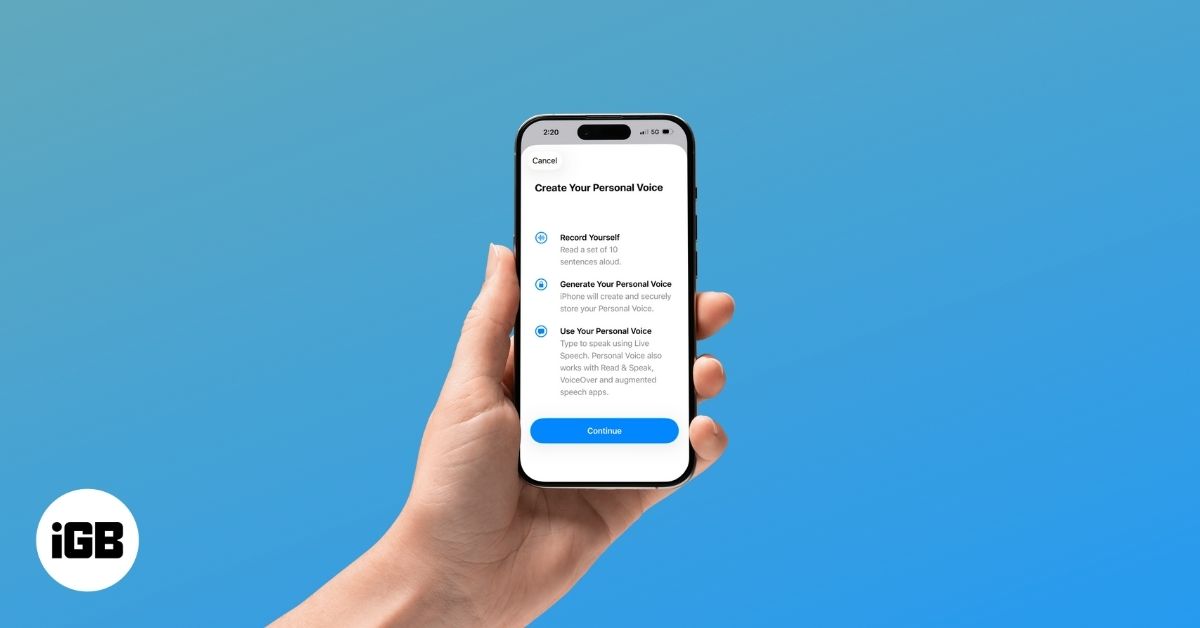
- What is Personal Voice on iPhone: Personal Voice lets you create a digital version of your own voice by recording 15 minutes of speech, processed privately on your device.
- How to Create Personal Voice: Go to Settings > Accessibility > Personal Voice, follow the prompts to record short phrases, and wait about an hour for the voice to generate.
- How to Use Personal Voice with Live Speech: After setup, enable Live Speech in Accessibility settings and triple-press the side button to speak using your Personal Voice in real-time.
- Why Personal Voice Matters: This feature helps preserve your unique voice and emotional tone, particularly valuable for people at risk of losing their ability to speak.
Losing your natural voice can make communication feel distant and impersonal. Apple’s Personal Voice feature changes that by letting you create a digital version of your voice on iPhone that sounds just like you. Whether you’re living with a condition that affects speech or you simply want to preserve your voice, this iPhone feature makes communication feel personal again.
Setting it up is simple, private, and secure. Here’s a complete guide on how to create and use your Personal Voice on iPhone, plus how to pair it with Live Speech for real-time conversations.
What is Personal Voice on iPhone?
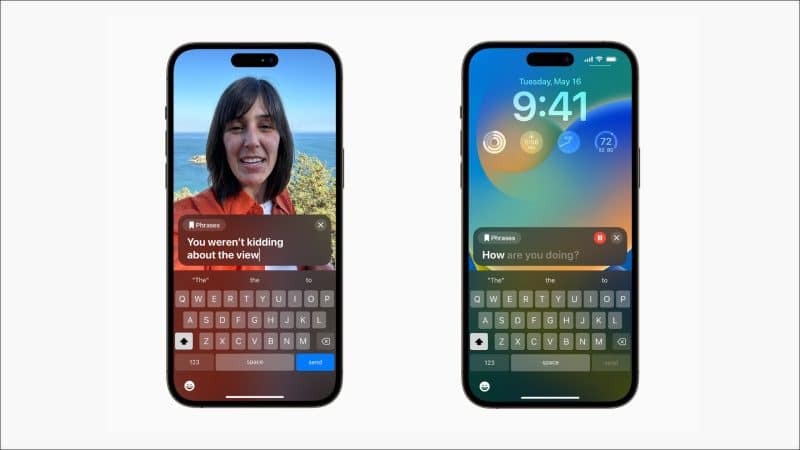
Personal Voice on iPhone is a breakthrough Apple accessibility feature designed to help users who may lose their ability to speak. It lets you record 15 minutes of your natural speech, and with on-device machine learning, your iPhone creates a personalized voice model that sounds remarkably close to your real voice.
Once your digital voice is created, you can use it through Live Speech, another accessibility tool that lets you type phrases your iPhone speaks aloud, whether during phone calls, FaceTime calls, or in-person conversations.
What makes Personal Voice special is that your recordings and voice data never leave your iPhone. Apple uses on-device processing supported by the Neural Engine, meaning your voice model is fully private and secure.
This feature is especially valuable for people with ALS (Amyotrophic Lateral Sclerosis) or other speech-affecting conditions, helping them keep their authentic voice and connect more meaningfully with loved ones.
How to Create a Personal Voice on iPhone
Before you begin your iPhone Personal Voice setup, ensure your device runs the latest iOS version and you’re in a quiet room. You’ll need about 15 minutes to record your voice.
- Open Settings → Accessibility.
- Scroll down and tap Personal Voice.
- Tap Create a Personal Voice, then tap Continue.
- Choose your preferred language, name your voice, and tap Continue again.
- Select your phrase length preference — Default Length or Shorter Length.
- Tap the Record icon and read each phrase displayed on your iPhone.
- When finished, tap Stop, then Listen to review your recording.
- If there’s background noise, move to a quieter space and tap Check Again.
- Continue recording until all phrases are complete. You can pause anytime and continue later.
- Once recording ends, your iPhone will generate your Personal Voice in the background.
The voice generation process may take a few minutes to an hour, depending on your iPhone. You’ll receive a notification once your digital voice model is ready to use.
If you want to restart, go to Settings → Accessibility → Personal Voice, select your recorded model, enter your passcode, and tap Delete Voice to record again.
How to Use Personal Voice on iPhone with Live Speech
Once your voice model is ready, you can use Live Speech with Personal Voice to make conversations easier. This feature lets you type phrases that your iPhone will speak in your digital voice, ideal for phone calls, FaceTime, or live discussions.
Here’s how to set it up:
- Go to Settings → Accessibility → Live Speech.
- Turn on Live Speech.
- Tap Phrases → Plus icon to add a new category.
- Give the category a name and symbol, then tap Add Category.
- Open the new category, tap the Plus icon, and type your phrase. Choose your language and tap Save.
- Return to the main Live Speech screen and tap Add Personal Voice.
- Select your Personal Voice model and preferred language.
- To use it, triple-press the side button on your iPhone to launch Live Speech.
- Type what you want to say or select a saved phrase, then tap Send.
Your iPhone will instantly speak the phrase using your custom digital voice, creating a natural, familiar tone during conversations.
Why Personal Voice on iPhone Matters
The Personal Voice feature in iOS 18 goes beyond accessibility, it’s about identity and emotional connection. It gives users a way to preserve their natural voice even when medical conditions make speaking difficult.
You can also use it to record the voices of loved ones, keeping their sound alive forever. It’s a deeply human use of technology that reflects Apple’s focus on inclusivity, empathy, and privacy.
Signing Off…
Personal Voice on iPhone is more than a feature, it’s a way to preserve what makes communication personal and emotional. Whether you’re setting it up for accessibility reasons or simply want to experiment with Apple’s latest voice technology, it’s a reminder of how far digital communication has come.
If you found this guide useful, share it with someone who could benefit from it. And if you have questions about how to use Personal Voice on iPhone or troubleshoot Live Speech settings, drop them in the comments below. we’ll help you out.
Frequently Asked Questions

Written by
Ayush PatelAyush is a writer with a keen interest in consumer technology and the Apple ecosystem. He has over three years of working experience at several big-name publications, including Guiding Tech, TechPP, and MobiGyaan. Here at iGeeksBlog, he specializes in crafting how-to guides, buying guides, and editorials related to all things Apple.
View all posts →