
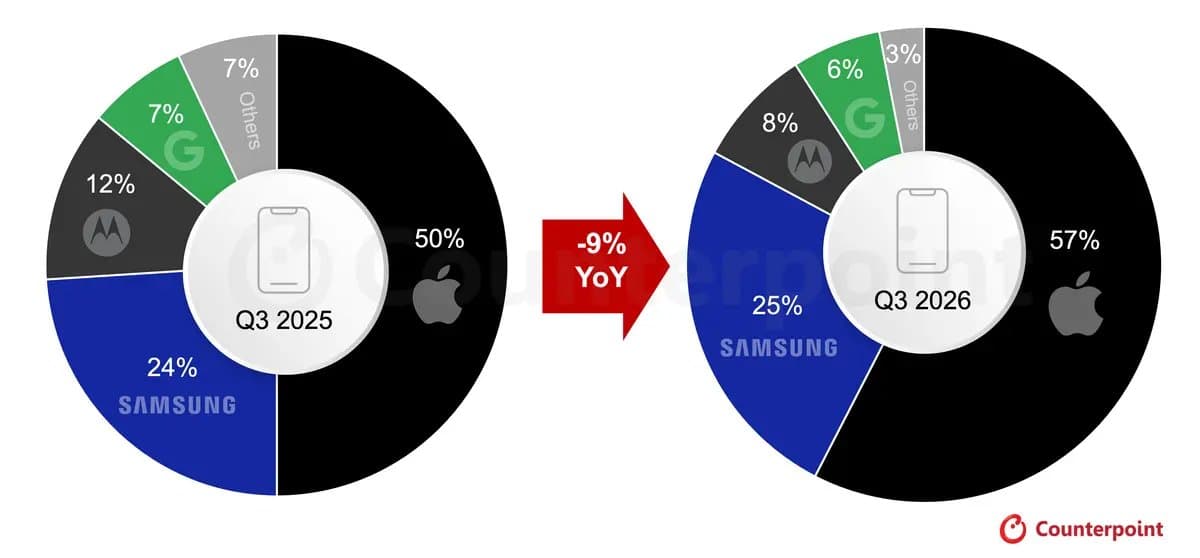
Apple shipped 57% of all smartphones in the US during the third quarter of 2026, a seven-point jump in a market that shrank 9% year over year. iPhone shipments held up while cheap Android phones fell away, and that gap did most of the work.
Counterpoint Research says Apple was the only major phone maker whose US shipments didn’t decline compared to Q3 2025. Its share climbed from 50% a year ago and from 54% in the previous quarter. Smartphone sales at the Big Three carriers (AT&T, Verizon, and T-Mobile) fell 4% year over year.
Memory costs are squeezing budget Android phones
The cause is the memory shortage that has pushed prices up across the industry all year. AI data centers are soaking up DRAM and storage, so phone makers pay more for every chip. Counterpoint senior analyst Emily Herbert says the low end of the Android market is taking the hardest hit. Brands that sell budget phones have little margin to absorb a pricier bill of materials, so they either raise prices or ship fewer phones.
Motorola shows this most clearly. Its share fell four points year over year to 8%, wiping out the gains it made in Q2, because its lineup leans so heavily on cheaper models. Google’s share slipped slightly too, and the Pixel 11 launch wasn’t enough to stop it. Samsung was the only major Android brand to gain, rising one point year over year to 25% on its Galaxy S and Z flagships plus Galaxy A budget models. Even that is down from 30% in Q2.
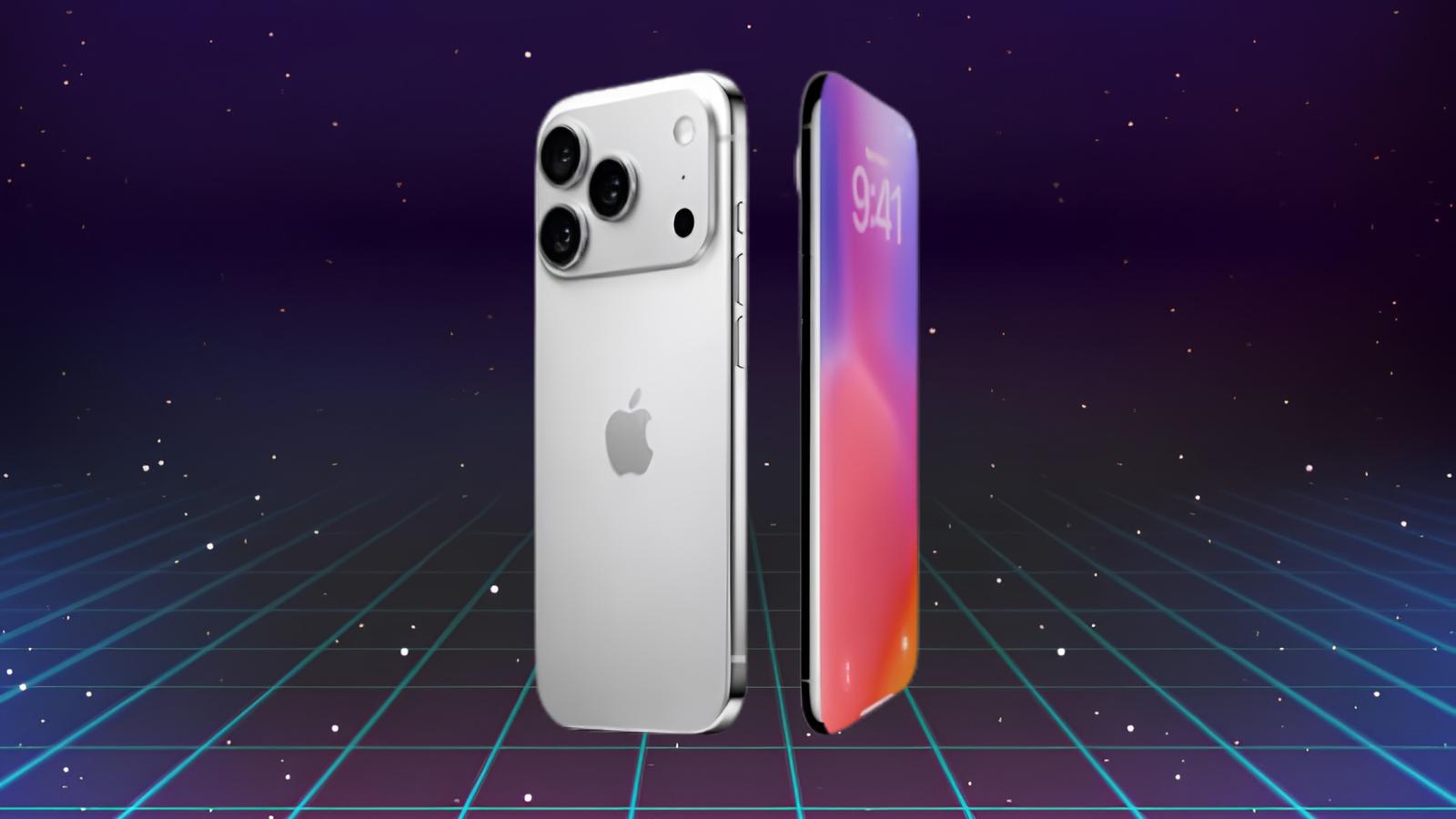
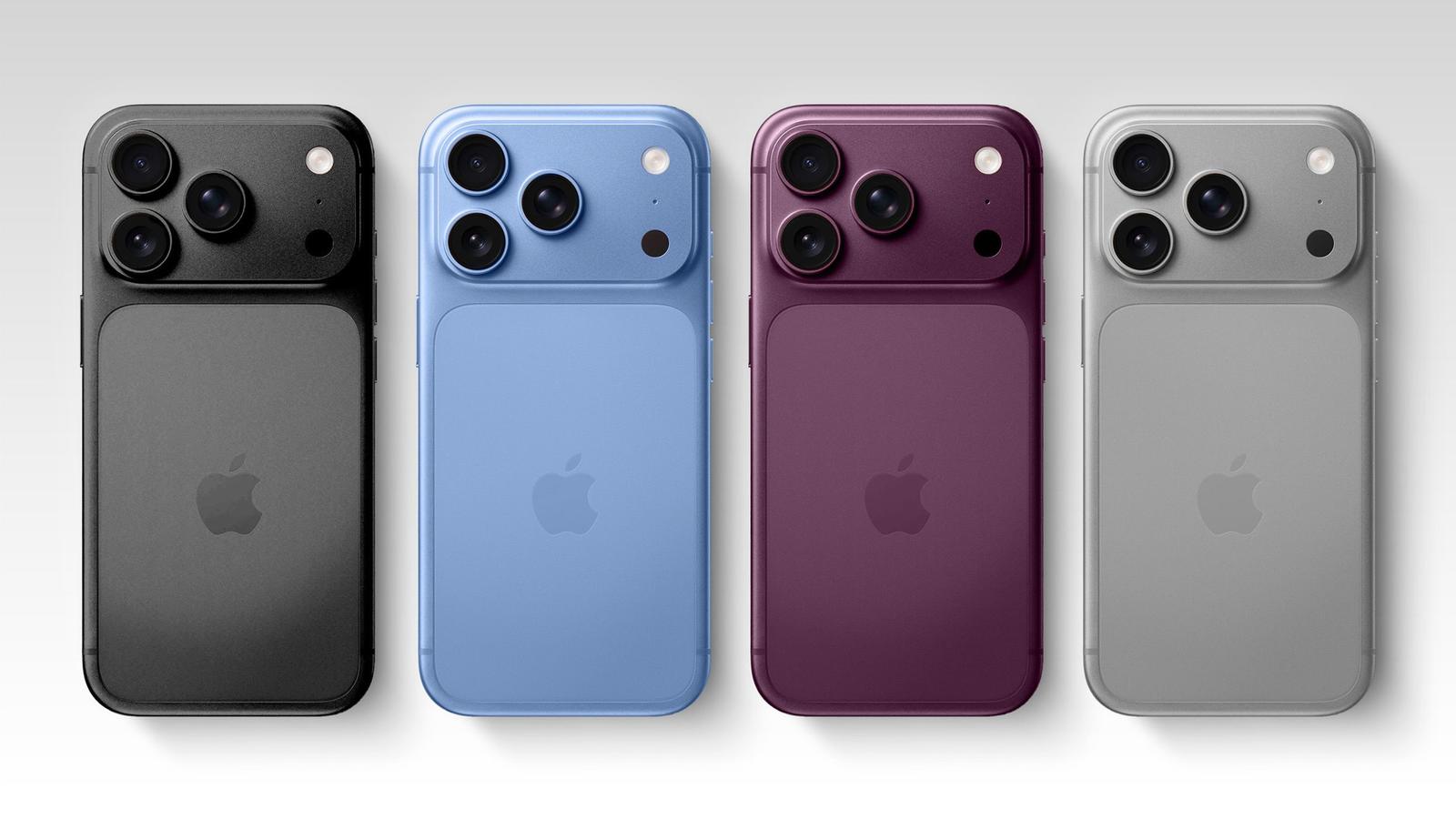
Apple had an easier quarter. It kept iPhone prices flat for most of the year, even after it raised prices on Macs, iPads, and other products in June. The iPhone increase arrived only in September, when the iPhone 18 Pro launched at $1,199, $100 more than the iPhone 17 Pro. Those phones went on sale September 18, so Q3 caught less than two weeks of them.
The US still held up better than the rest of the world. Counterpoint puts global Q3 shipments down 20%, the lowest third quarter since 2012, with Apple at a record 22% third-quarter share worldwide. That extends the run that began with Apple’s record 20% global share in Q2.
Expect fewer holiday deals this year
Q4 is normally the strongest quarter in the US, thanks to holiday promotions and a full three months of new iPhone sales. Counterpoint expects it to be weak this time. Memory costs are expected to stay high, price increases on both Android and iOS are likely to stick, and carriers will probably be pickier with promotions. Senior analyst Maurice Klaehne says buyers are timing purchases around the best deals more than ever, if they buy at all.
That leaves budget Android shoppers with the least room to wait, since the cheap end is where memory costs bite hardest. If a Black Friday carrier deal lands on a phone you already planned to buy, take it. Next year’s prices are unlikely to be friendlier.