
Your search engine choice shapes privacy, relevance, and even sustainability. With iOS 27, changing Safari’s default across your Apple devices is simple and puts you in control. No need to install another browser!
Whether you lean toward DuckDuckGo to leave fewer digital trails, use Ecosia to plant trees while browsing, or stick with Google because the results align with real-world work, this guide shows you the exact steps on iPhone, iPad, and Mac. I’ll also cover setting a different engine for Private Browsing, as well as quick fixes when Safari refuses to adhere to your choice.
By the end of this walkthrough, you will be able to control Safari search across all your Apple devices. No surprises—just the engine you picked.
What changing Safari’s search engine actually does (and what it doesn’t)
Before changing the setting, it’s worth knowing what it affects.
When you change Safari’s default search engine, it is used when you type a search query into Safari’s Smart Search field. That choice controls suggestions and the results page you land on.
This doesn’t mean every search feature on your iPhone suddenly switches to the same provider. Spotlight Search, swipe down on an iPhone or iPad, or press Command + Space on a Mac, and Siri continues to use its own blended results, regardless of Safari’s pick.
So, I think of it this way: you’re customizing Safari’s search engine, not the device’s entire search capabilities. Also, changing Safari’s search engine doesn’t turn Safari into a different browser. Your other browsers, such as Chrome or Firefox, have their own search settings.
Supported search engines in Safari
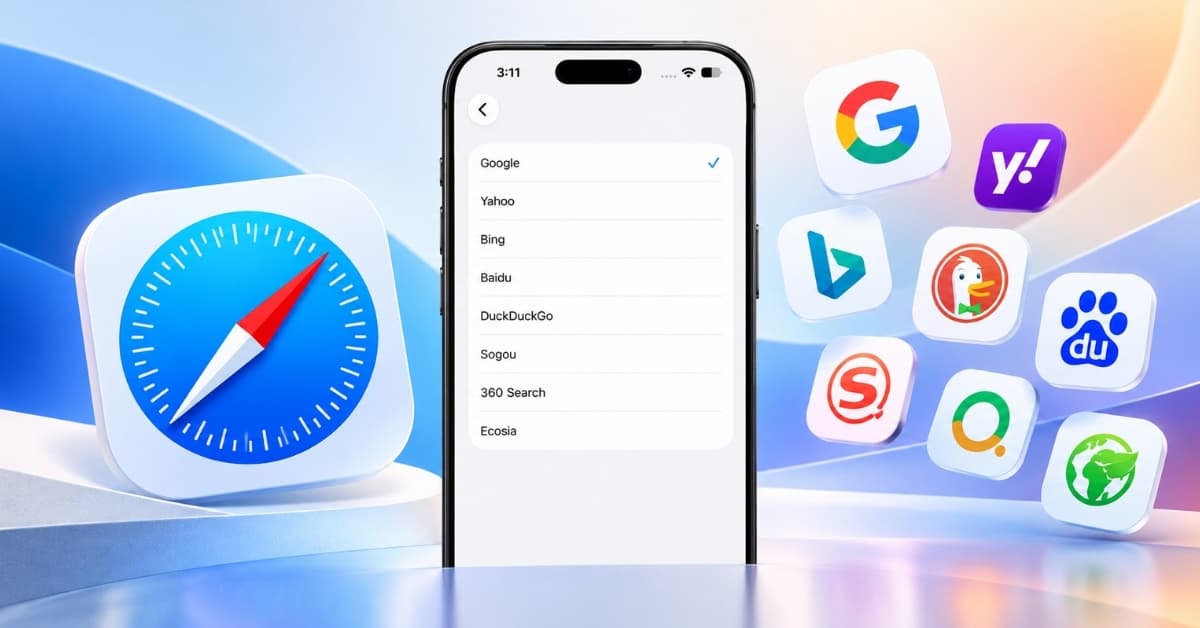
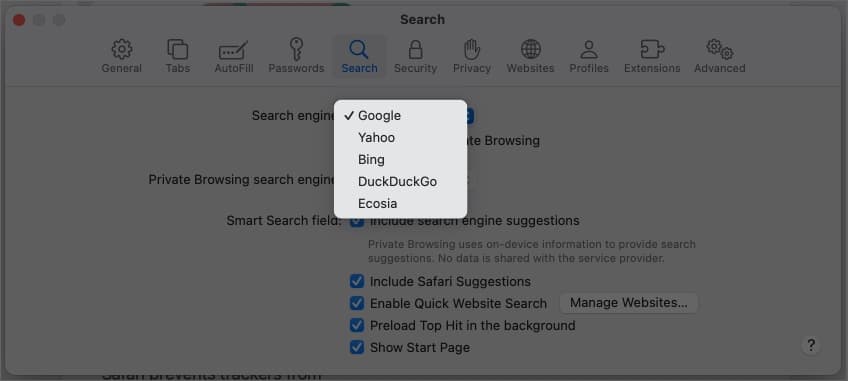
Safari typically includes five main search engine options, although availability can vary by region. You will find them in Safari Settings on iPhone, iPad, and Mac.
- Google: The most popular option with a comprehensive index.
- DuckDuckGo: Privacy-focused search that does not track your queries or build profiles.
- Ecosia: Environment-focused engine that uses ad revenue to plant trees.
- Bing: Microsoft’s search engine with integration across Microsoft services.
- Yahoo: Long-standing provider with curated content and news.
Each engine has distinct strengths, so choose based on priorities, whether that’s comprehensive results, privacy, environmental impact, or features you prefer. Simple.
Steps to change your default search engine in Safari
Change default search engine on iPhone and iPad
Changing your search engine on iOS is straightforward and takes just a few taps:
- Go to Settings → scroll down to Apps → tap on Safari.
- Tap on Search Engine under Search → Choose any search engine that fits your preference.
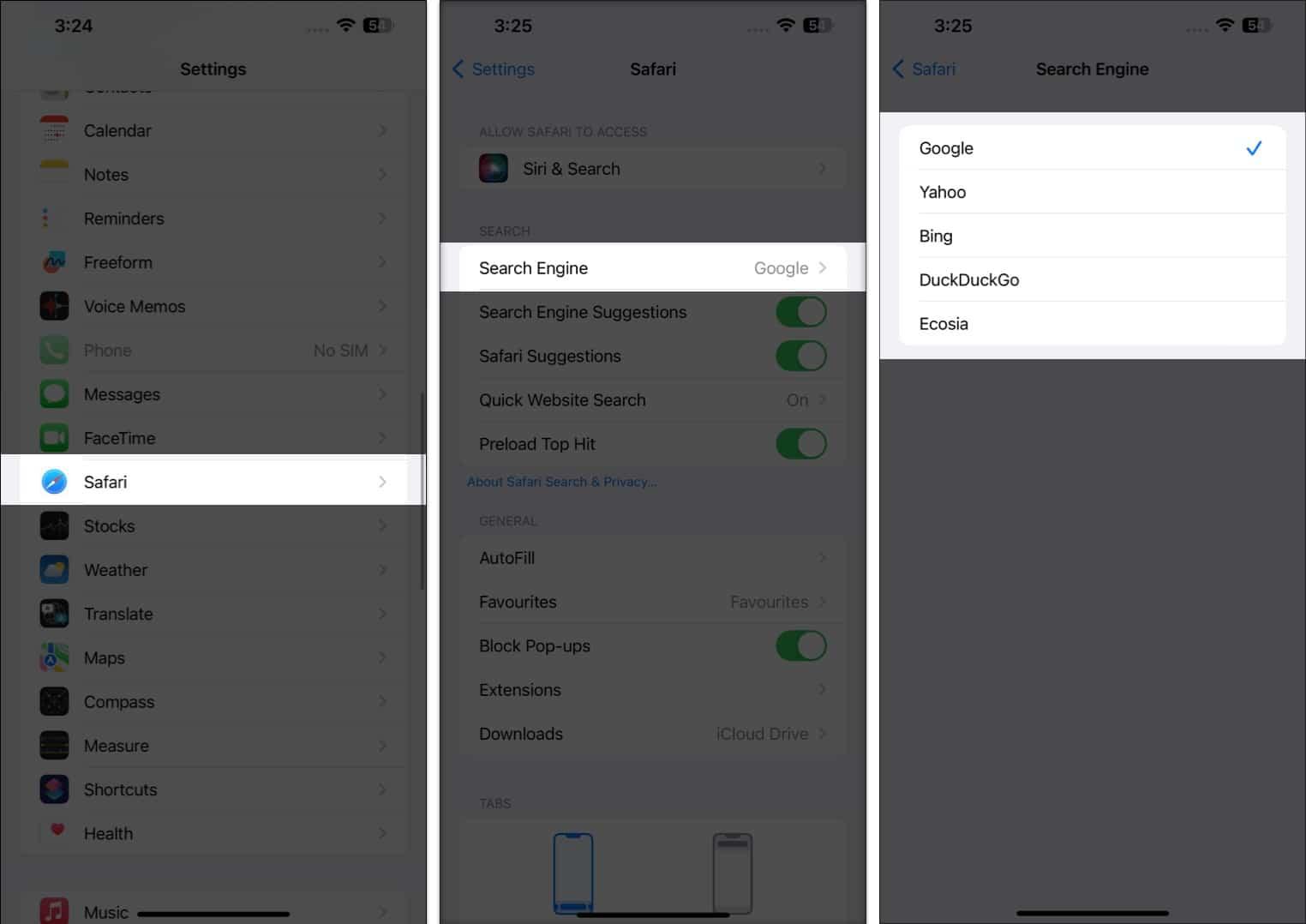
Your changes are saved automatically; there’s no need to tap “Done” or confirm anything. The next time you search in Safari, you will see results from your chosen engine.
Change default search engine on Mac
The process on Mac is equally simple:
- Launch the Safari browser.
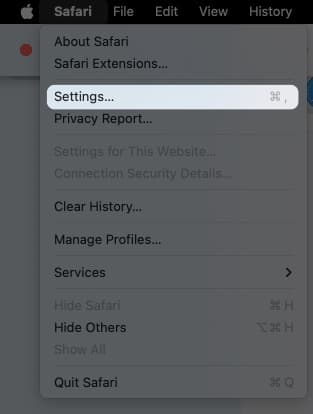
- From the menu bar at the top, select Safari → navigate to Settings.
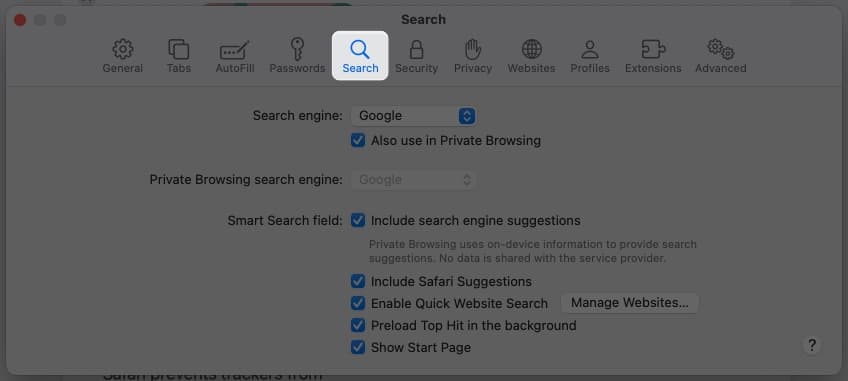
- Head to the Search tab.
- Click the drop-down menu next to the Search engine option to select your choice.
Your selection is applied immediately across all Safari windows and tabs. If the menu is grayed out, check Screen Time or a managed profile.
Note:
Alternatively, you can click the search icon from the search bar to switch between different search engines in a single click.
How to use a different search engine in Safari private browsing
This is one of the more useful Safari settings if you don’t want your normal and private searches going through the same search provider. This is perfect if Google’s wide results help day-to-day, and DuckDuckGo’s privacy matters for sensitive topics.
On Mac:
- Open the Safari settings as shown above and tap on the Search tab at the top.
- Deselect the Also use in Private Browsing checkbox.
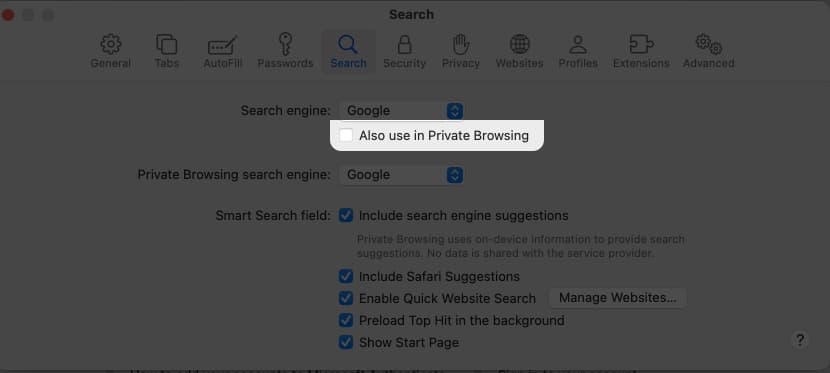
- Click the dropdown menu next to the Private Browsing search engine and choose your search engine of choice.
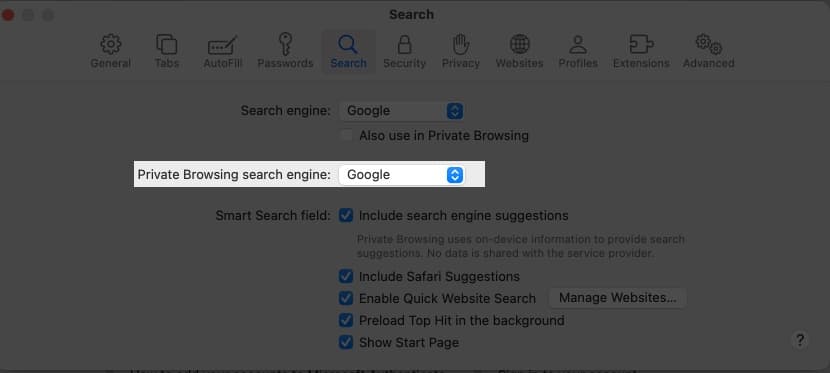
When you make this switch, Safari will use the search engine you chose in Private mode the next time you browse the web.
On iPhone/iPad:
- Go to Settings → Apps → Safari and toggle off Also Use in Private Browsing.
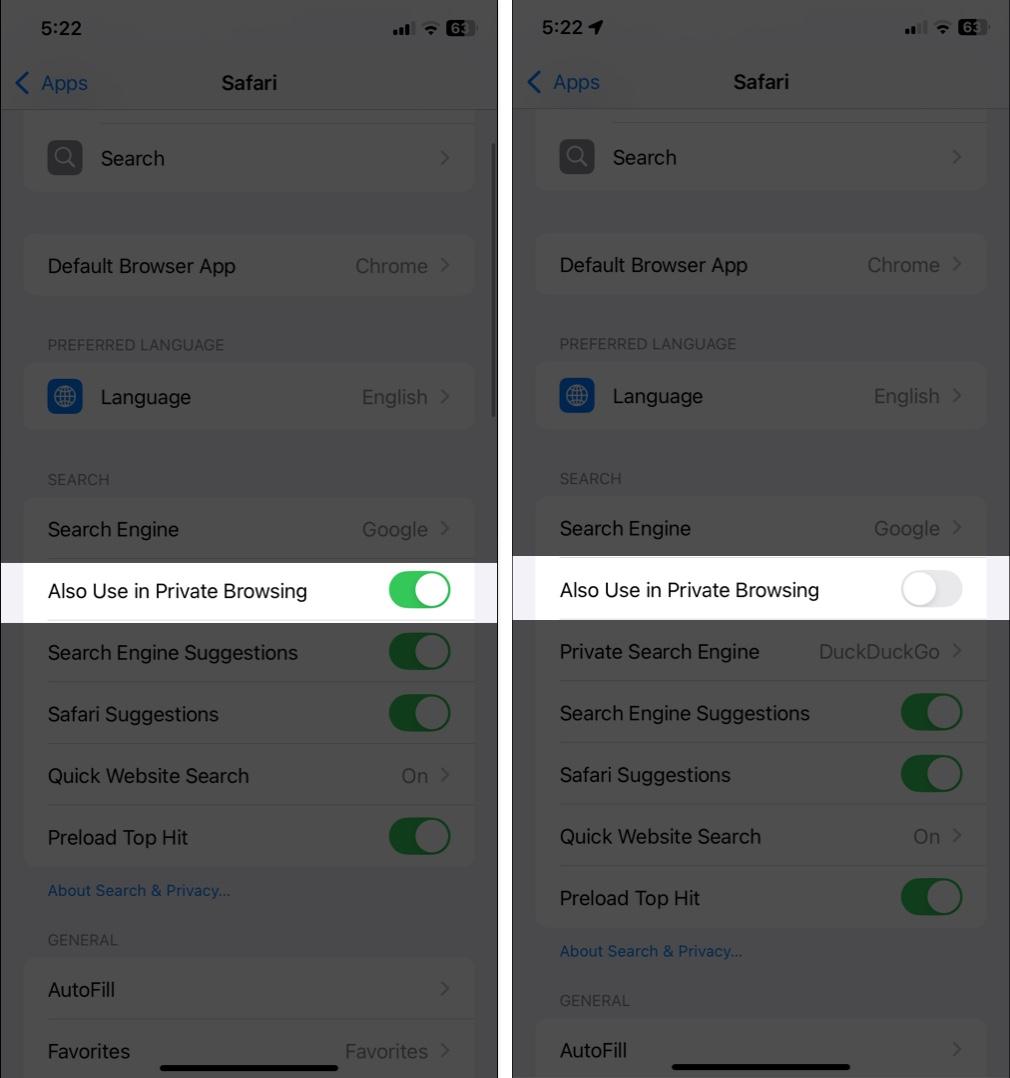
- Now, tap on Private Search Engine. You will see a list of search engines. Tap on the one you want to use for Private Browsing.
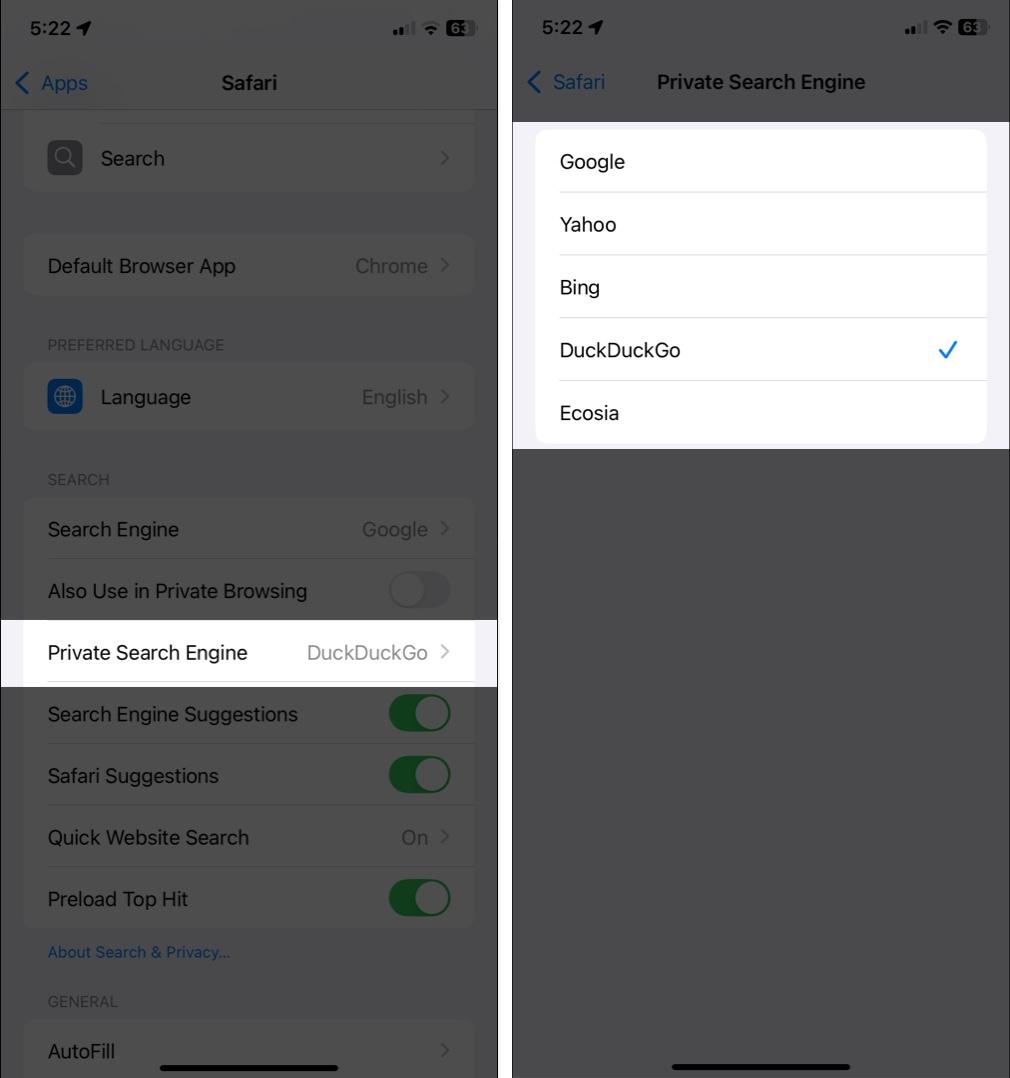
Once you have selected your preferred search engine, Safari will automatically use it whenever you open a new Private Browsing tab.
Using different engines with Safari profiles
Safari Profiles, like “Work” and “Personal”, keep contexts separate, but there is a key limitation. The default search engine typically applies across all profiles.
You cannot assign different default engines per profile, although you can search with different engines inside each profile when needed. Quick workaround: keep each engine’s homepage in Favorites and jump as required. This keeps profile-specific browsing tidy while search behavior stays consistent.
Why can’t I change my Search Engine? (Troubleshooting)
If changing the engine is not working, these are the usual culprits and fixes.
The option is greyed out:
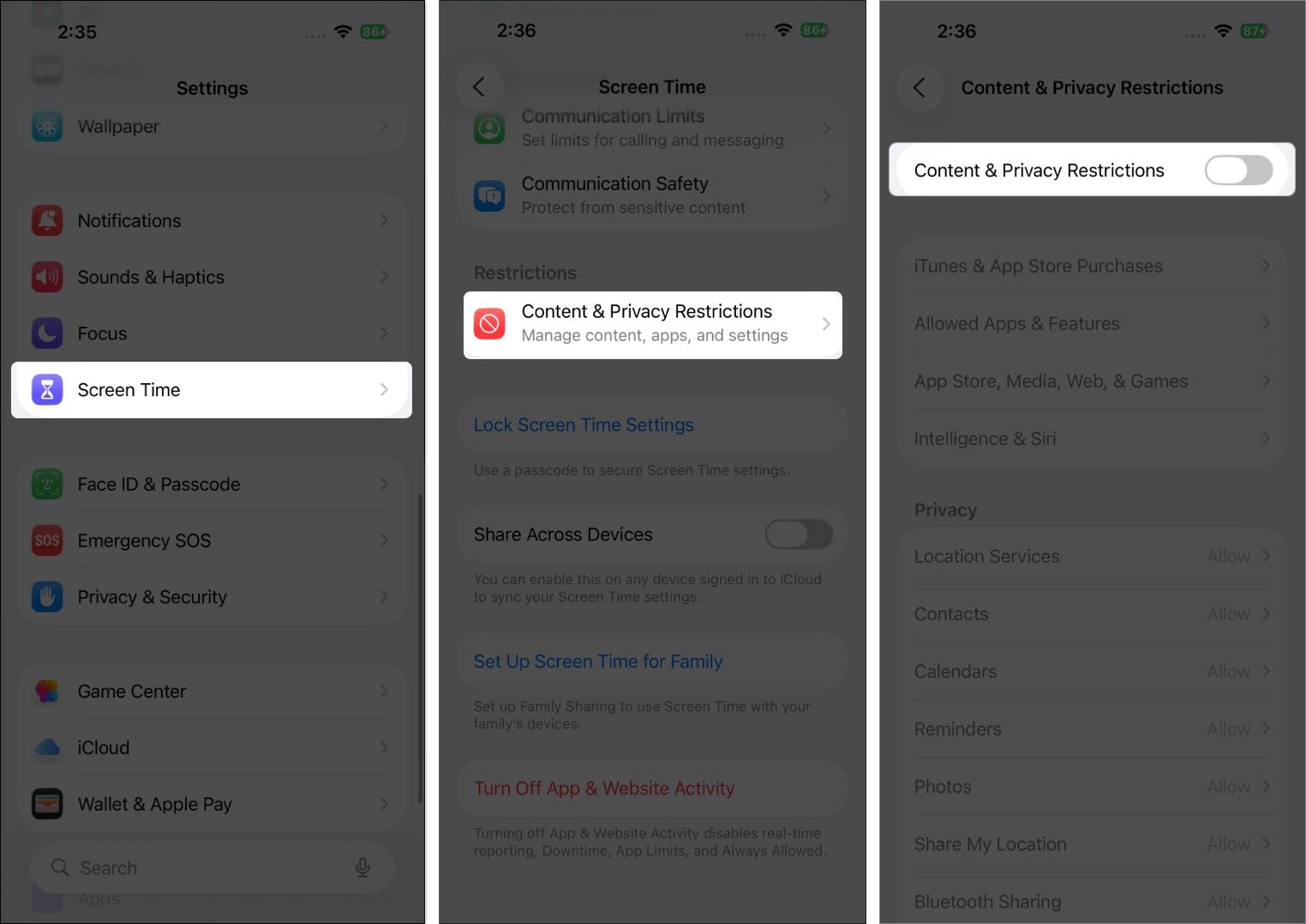
This almost always points to Screen Time limits. Annoying, but fixable:
- Go to Settings → Screen Time → Content & Privacy Restrictions.
- Turn Content & Privacy Restrictions off, or set Web Content to Unrestricted Access.
It’s a managed device:
If your iPhone, iPad, or Mac is managed by a school or company, policies may block changes. Contact your IT team if you need this adjusted.
Regional availability:
Some engines are not available in every country due to local regulations or licensing requirements. The list you see is what is available in your region. If you want another provider, bookmark its homepage and search from there.
Additional tips to improve the Safari experience
Troubleshooting common issues in the Safari browser can be a daunting task. To make things easier, we have compiled some helpful tips and tricks for the best Safari experience. Below are a few other hacks:
- Safari is regularly updated to fix bugs and add new features, so always install the latest version.
- Clearing the Safari cache and cookies on your iPhone and Mac can help you resolve website loading issues, so make sure you clear them periodically.
- Extensions and plug-ins can sometimes interfere with Safari. Try disabling them to see if they’re the cause of your issues.
- If you’re having issues with webpages loading, try changing your DNS server to a different one.
Should you change Safari’s search engine?
I don’t think there is one search engine that makes sense for everyone. After using different search engines, I would choose based on what I actually care about when searching.
If you want the search experience you’re already familiar with, you might stick with Google. If privacy is more important, consider DuckDuckGo. If you want to try something different, Bing or Ecosia are easy alternatives. The nice thing is that you’re not locked into the decision.
So, test a few engines and notice what works best for you!