
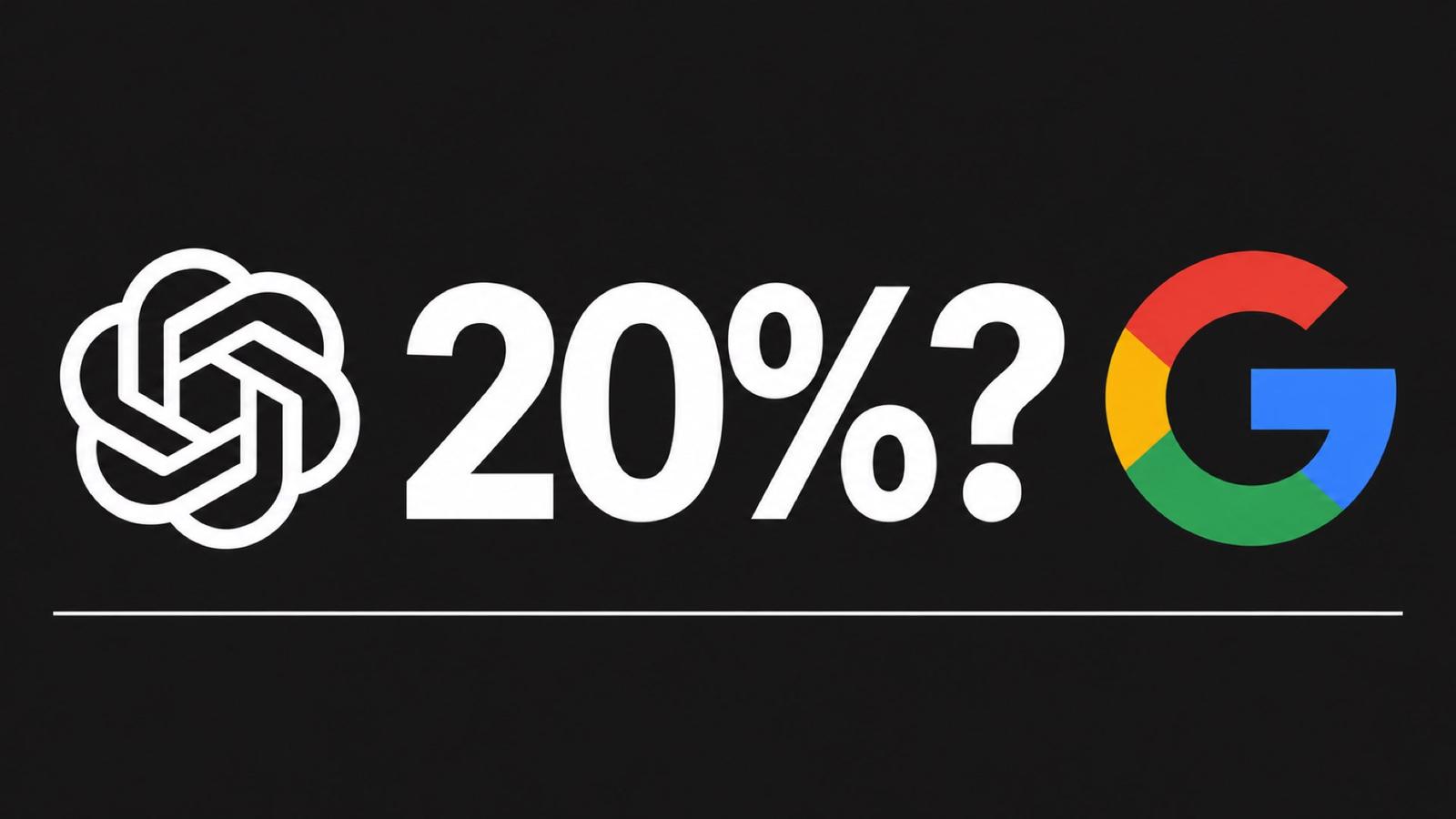
OpenAI says ChatGPT now handles about one-fifth as many search-style queries as Google. ChatGPT consumer product lead Adam Fry shared the figure at an OpenAI-hosted dinner in New York on November 2. That’s a big claim, but OpenAI hasn’t shared the data behind it. So for now, the 20% figure comes only from OpenAI itself.
OpenAI’s idea of a “search” is broad and unclear
According to OpenAI, a search is anything people used to look up on a search engine but now ask ChatGPT instead. OpenAI says people first used ChatGPT mostly for help with writing and coding. Now they also use it to look up information about people, places, and things.
OpenAI has said that every question that triggers a web search counts as one search. So if you send 20 prompts in one conversation and each one searches the web, that’s 20 searches, not one. What OpenAI hasn’t explained is how it decides which prompts count as “search-like” in the first place. The answer could change the total a lot.
We don’t know which Google number OpenAI used
OpenAI also hasn’t said which Google figure it compared against, what time period it covers, or which countries are included.
The latest public number from Google is a bit dated. In March 2025, Google said it handles more than 5 trillion searches a year, based on data from January 2025.
Outside estimates are much lower
Other estimates put ChatGPT well below 20%. In February, SEO software company Ahrefs estimated that ChatGPT gets about 12% of Google’s search volume.
However, Ahrefs only counted the kinds of searches people have traditionally done on Google. Since it measured things differently from OpenAI, you can’t compare the two numbers directly. Still, the gap between 12% and 20% shows how much the result depends on what you count as a search.
Ads are live, and Safari support is still a plan
ChatGPT started showing ads to Free and Go users in the U.S. in February, and as of October 21, ads are live in 89 countries. Ads don’t appear in conversations about health, mental health, or politics. Plus, Pro, Business, Enterprise, and Education subscribers don’t see ads at all.
OpenAI says its ads business passed $1 billion in annualized revenue within 200 days and that more than 100,000 advertisers have used it. But it hasn’t said how many free users see these ads or how much advertisers pay, so it’s hard to tell how big this business really is.
Apple, meanwhile, plans to let AI search engines such as ChatGPT into Safari. But during the Google antitrust case, Apple’s Eddy Cue testified that AI search engines probably won’t become Safari’s default option.
Google can also keep paying Apple to stay the default search engine. A 2025 ruling allows these deals as long as they aren’t exclusive and last no more than one year.
The bottom line
The 20% figure is interesting, but it can’t be checked yet. Until OpenAI shares which Google number it used and how it decides what counts as a search, it’s best to treat it as OpenAI’s own claim rather than an independent measurement.