
For years, my Gmail address felt like a mistake I couldn’t undo. I created it casually with random numbers, used it everywhere, and didn’t think much about it until I started using it for work. Suddenly, it didn’t feel professional anymore. So I did what most people do. I created a second Gmail account just for work.
That solved one problem but created another. My old account still had all my emails, subscriptions, and app logins. I couldn’t just abandon it. Managing two accounts quickly became frustrating. That’s why this new change from Google stands out.
You can now update your Gmail username without creating a new account, and after trying it, it feels like something that should have existed years ago.
Can you really change your Gmail address?
At first, I assumed this would be another workaround, something like creating a new email and linking it to your old account.
But that’s not what Google is doing here.
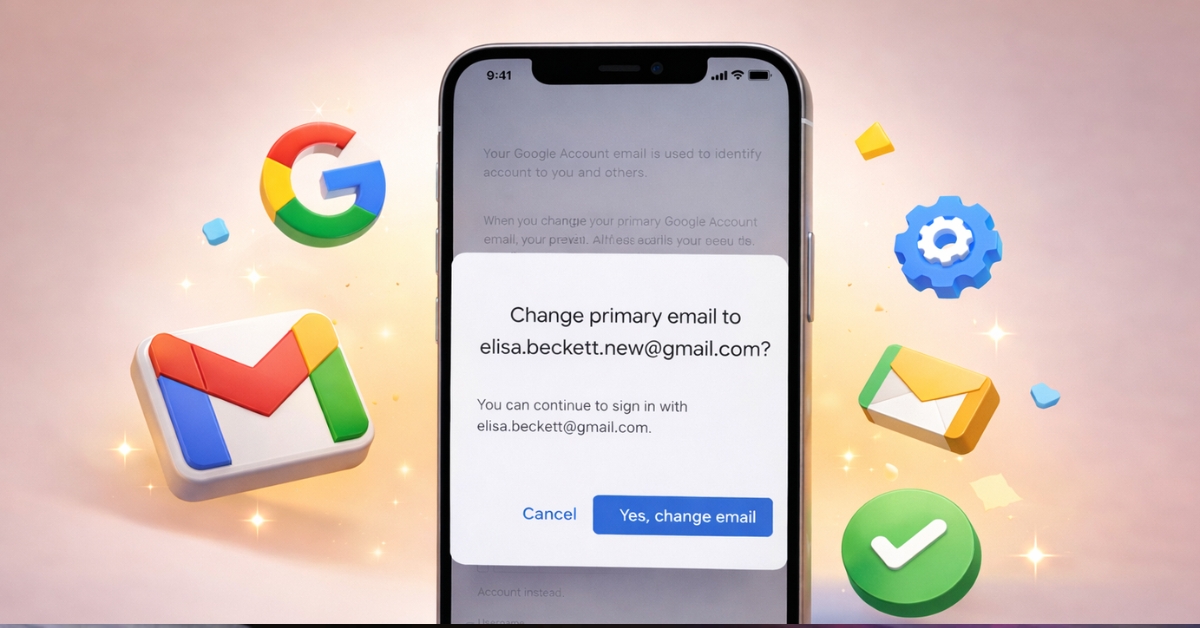
You can actually change the username part of your Gmail address, the text before @gmail.com, while keeping your account completely intact.
When I tested this, the transition felt more like renaming an account than creating a new one.
- My inbox stayed exactly the same
- All emails and attachments were still there
- Apps and services connected to my Gmail kept working
There was no migration, no re-login chaos, nothing broke. That’s what makes this feature genuinely useful.
What happens when you change your Gmail address
This is where things get simple.
What changes
- Your Gmail username (before @gmail.com)
- Your primary email for sending and logging in.
- Your displayed email across Google services.
What doesn’t change
- Inbox, emails, and attachments.
- Google Drive, Photos, and files.
- Connected apps and subscriptions.
- Account settings and saved data.
From a user perspective, everything important stays untouched.
What happens to your old Gmail address?
This was one of my biggest concerns before trying it.
Thankfully, your old Gmail doesn’t disappear.
- It becomes an alias linked to your account.
- Emails sent to the old address still reach your inbox.
- You don’t need to update everything immediately.
- Existing logins continue to work.
That alone makes the transition much less stressful.
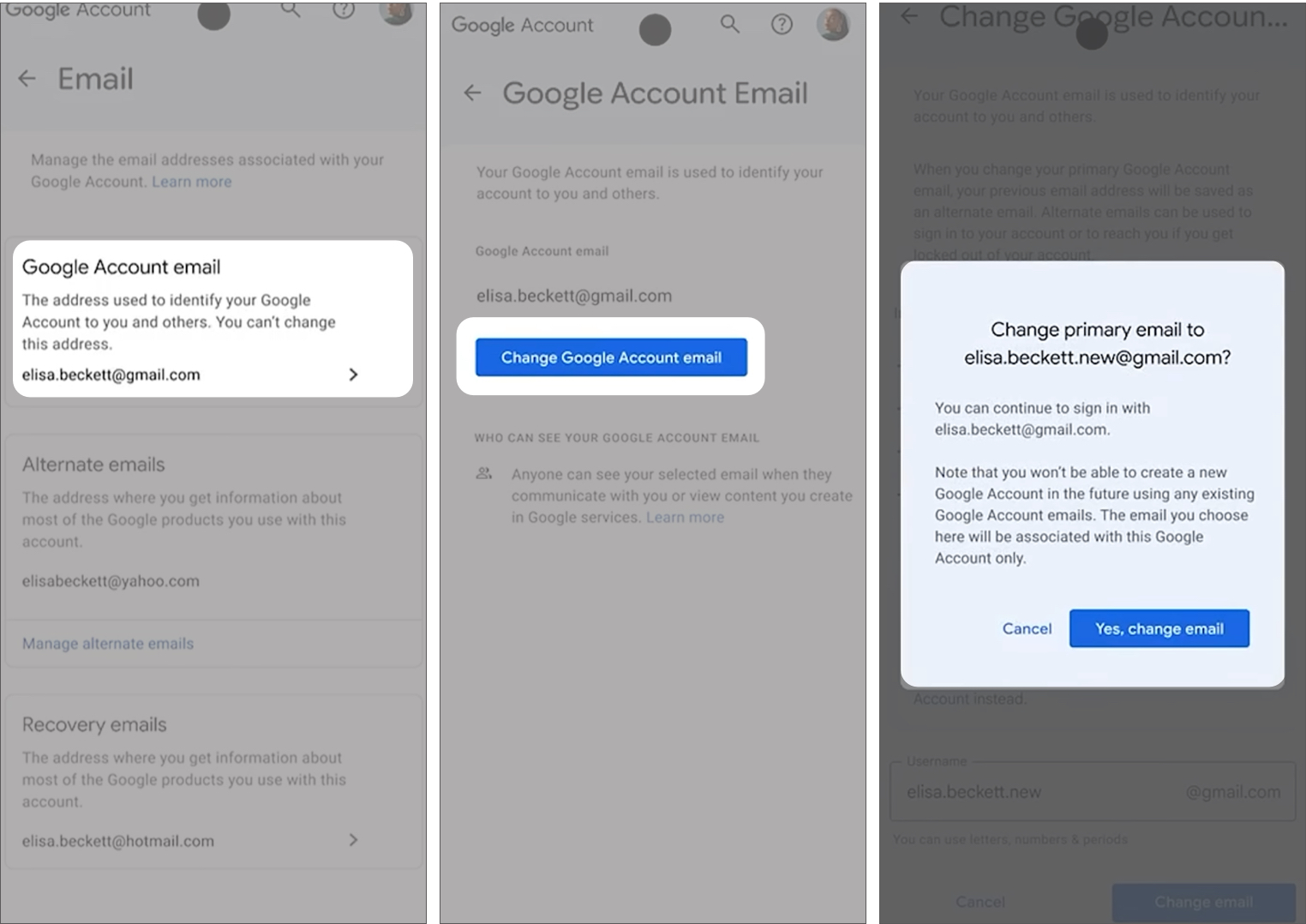
How to change your Gmail address
The steps are straightforward and the same across devices:
- Go to your Google Account settings.
- Here, tap Personal info.
- Next, tap Email.
- Now, tap Google Account email.
- Finally, tap the Change Google Account email button, then enter your new username and check availability in real time.
- Confirm the change.
Limitations you should know
Before confirming, it’s worth noting that this isn’t something you can keep changing repeatedly. Google allows only limited changes over time, and there are restrictions on how often you can create or switch between addresses. You can switch back to a previous Gmail in some cases, but the overall flexibility is limited.
- The option to change the username is currently available only to users in the United States.
- Google is rolling out this feature gradually, so global access isn’t confirmed yet.
- You can only create one new Gmail address per year.
- You can change your Gmail username up to 3 times.
- A maximum of four email addresses can be tied to the same account over time.
- Switching back to a previously used Gmail address is possible in some cases.
- Some managed or older accounts may not support address change.
Should you change your Gmail address?
After using this feature, it feels most useful if you’ve outgrown your current email.
That was exactly my situation. The old address worked, but it didn’t represent me anymore, especially in professional settings.
Switching to a cleaner email made a noticeable difference. It feels more aligned, and I didn’t have to deal with the usual hassle of migrating data or updating dozens of logins.
If your current Gmail already looks clean, you probably won’t feel the need to change it. But if you’ve been stuck with something outdated or awkward, this solves a real problem.
Signing off…
This update quietly removes one of Gmail’s biggest limitations. Instead of forcing users to start over, Google now allows you to update your identity without losing your data. It’s a small change on the surface, but in real use, it makes account management much simpler.
What do you think? Would you change your Gmail address or stick with your current one? Share your thoughts.